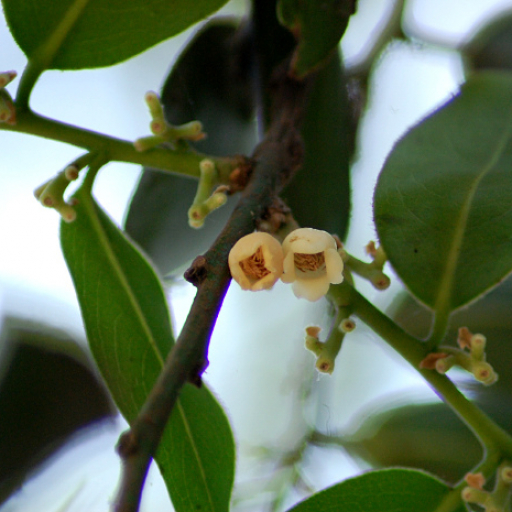
Plant Overview
Known as the Gaub Tree or the Malabar Ebony, Diospyros malabarica is a lush, evergreen beauty that has been a staple of South Asian landscapes for centuries. While it produces fruit that looks like a small, velvety persimmon, this tree is historically prized more for its "magic" chemistry—its tannin-rich juices were once the primary way sailors waterproofed their boats and nets.
🔍 How to Identify
- 🍃 The Foliage: Large, leathery, and oblong leaves that boast a deep, glossy green. New growth often emerges in a striking shade of pink or burgundy.
- 🌑 The Bark: True to its Ebony family heritage, the trunk is dark, almost black, and develops a rugged, furrowed texture as the tree matures.
- 🍑 The Fruit: Round, apple-sized fruits covered in a distinctive rusty-red or yellowish velvety fuzz. When sliced open, the pulp is sticky and contains several large seeds.
🏡 In Your Garden
- 💧 Thirsty Roots: Unlike some of its drought-tolerant cousins, the Malabar Ebony thrives near water sources. It prefers consistently moist, well-draining soil and will struggle if left to bake in dry, compacted earth.
- 🌳 A Generous Canopy: This is a slow-growing tree that rewards patience with a massive, umbrella-like shade canopy. It requires significant space, so it is best suited for large backyards or estates rather than small patio containers.
- ☁️ Humidity Lover: It craves the "steamy" atmosphere of the tropics. If you live in a dry climate, providing extra mulch to retain root moisture is essential for its survival.
⚠️ Safety & Toxicity
- 👅 Astringency Alert: While the ripe fruit is technically edible, the unripe fruit is incredibly high in tannins. Eating it before it is fully soft will result in an intense, unpleasant "puckering" sensation in the mouth.
- 🐾 Pet Caution: While not listed as highly toxic, the high tannin content in the fruit and bark can cause digestive upset (vomiting or diarrhea) in curious dogs or cats. It is best to keep fallen fruit cleared away from pets.
✨ Fun Fact
In traditional Indian craftsmanship, the juice of the unripe Gaub fruit was used as a natural glue and a permanent black dye. It was so effective at preserving wood that it was the "gold standard" for painting the bottom of wooden boats to prevent rot!

Detailed Care Instructions
To grow Diospyros malabarica, also known as the Malabar ebony or tendu plant, you can follow these steps:
- Climate and soil requirements: Ensure that you live in a tropical or subtropical climate, as the plant thrives in warm and humid conditions. The soil should be well-draining and rich in organic matter.
- Obtain seeds or saplings: You can acquire seeds or saplings from a nursery or online. Choose healthy and disease-free ones.
- Planting in a pot or ground: If you are starting with seeds, sow them directly in nursery bags or pots filled with potting mix. If you have saplings, dig a hole in your garden or a larger pot and place the sapling while ensuring the root ball is well-covered with soil.
- Sunlight and water: Place the plant where it can receive full sun or partial shade. Water the plant regularly to keep the soil moist but not waterlogged. Increase watering frequency during hot and dry periods.
- Mulching and fertilizing: Apply a layer of organic mulch around the plant to retain moisture and suppress weed growth. Use a balanced organic fertilizer or compost once every few months to provide necessary nutrients.
- Pruning and shaping: Prune the plant to remove any dead or diseased branches. You can also shape the plant into a desired form, such as a bush or a small tree, by selectively cutting back branches.
- Pests and diseases: Monitor the plant for common pests like aphids, scale insects, or spider mites. Treat them using organic pest control methods or appropriate insecticides if necessary. Prevent fungal diseases by avoiding excessive watering and providing adequate air circulation.
- Harvesting: The Malabar ebony tree produces oblong-shaped fruits that are usually harvested when ripe. The fruits can be consumed or used in various traditional preparations.
It is important to note that growing trees from seeds can take several years before they reach maturity and start producing fruit. Patience and care are key to successfully growing and cultivating Diospyros malabarica.
The best way to water this plant is to deeply water the soil around the base of the plant, but avoid getting water directly on the leaves or stem. Prior to watering, check the soil moisture level by sticking your finger into the soil about an inch deep. If it's moist at this depth, hold off on watering until it dries out a bit. When watering, aim for an inch of water per week, and adjust based on your climate and soil type. Use a watering can or hose with a gentle stream to avoid over-watering or erosion of the soil. It's also important to keep the soil consistently moist but not soaked, as the plant doesn't tolerate drought well.
To fertilize this plant, you should apply a balanced fertilizer with a ratio of 10-10-10 every two months during the growing season. Be sure to water the plant thoroughly after fertilizing to help the nutrients reach the roots. It's important not to over-fertilize, as this can damage the plant and cause it to produce fewer fruits. If you notice yellowing leaves or slow growth, reduce the frequency of fertilization or switch to a lower concentration fertilizer.
Diospyros Malabarica plants require soil with a neutral to slightly acidic pH level, between 6.0 and 7.5. The soil should be well-draining with a rich organic content. A mixture of loam, sand, and compost would be suitable for the plant. The soil should also be moist, but not waterlogged, as excessive moisture can lead to root rot. Additionally, the plant requires some amount of sunlight, so it should be placed in an area where it can get partial to full sun exposure. Fertilizing the plant with a balanced fertilizer during the growing season can also help keep it healthy.
To propagate this plant, take semi-hardwood cuttings in late winter or early spring. Cuttings should be about 4 to 6 inches long, with at least one node and several leaves. Remove the lower leaves, dip the cut end in rooting hormone, and plant in a well-draining potting mix. Water thoroughly and keep the soil moist but not soaking. Place in a warm, bright location but out of direct sunlight. With proper care, the cuttings should root within 4 to 6 weeks.








