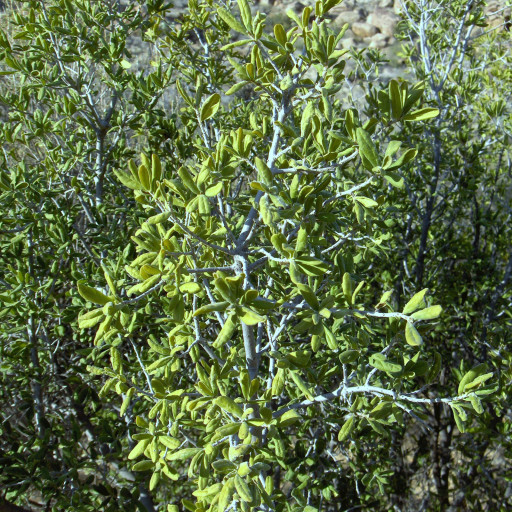
Plant Overview
Often called the Texas Persimmon or Chapote, this native beauty is a master of the rugged Southwestern landscape. Known for its stunning, sculptural trunk and smooth, silver-gray bark that peels away like parchment, it adds an artistic touch to any garden. While it looks like a delicate ornamental, it is actually a tough-as-nails survivor that produces sweet, ink-black fruits beloved by humans and wildlife alike.
🔍 How to Identify
- 🪵 Peeling Bark: The most striking feature is its smooth, gray bark that flakes off in thin, papery patches to reveal shades of white, pink, or dove-gray underneath.
- 🍃 Small Leathery Leaves: It features petite, dark green leaves with rounded tips. They are thick and leathery to the touch, often with slightly fuzzy undersides to help conserve moisture.
- 🌑 Ink-Black Fruit: In late summer, female trees produce round berries (about 1 inch wide) that transition from green to a glossy, deep black when fully ripe.
🏡 In Your Garden
- 🌵 Drought Champion: This plant is incredibly water-wise and thrives in the alkaline, rocky limestone soils of Texas and Mexico. Once established, it can survive the harshest droughts without flinching.
- 🦋 Wildlife Hub: It serves as a vital larval host for the Henry’s Elfin butterfly. Additionally, the high-sugar fruit provides a critical energy source for birds, foxes, and raccoons during the hottest months of the year.
- ⏳ Slow and Steady: Because it develops a deep, sturdy taproot, it is a slow grower. This makes it a "permanent" resident; choose its location carefully, as it strongly dislikes being transplanted once it has matured.
⚠️ Safety & Toxicity
- ✅ Edible Fruit: The fruit is safe and quite sweet when it is mushy and jet-black. It is often used to make traditional jellies or dyes.
- 👅 Pucker Factor: Be warned—unripe green fruit is intensely astringent. If you bite into one too early, the tannins will make your mouth feel dry and "fuzzy" for quite a while.
- 🐾 Pet & Skin Safety: The plant is non-toxic to pets and humans. However, the juice of the ripe fruit is a powerful natural dye; it will stain skin, clothing, and concrete surfaces a deep purple-black.
✨ Fun Fact
The Texas Persimmon is a member of the Ebony family (Ebenaceae). Its heartwood is jet-black, incredibly dense, and so heavy that it will actually sink in water. It is highly prized by woodworkers for making high-end tool handles and intricate carvings.

Detailed Care Instructions
To grow a Diospyros texana plant, also known as Texas persimmon, you can follow these steps:
- Obtain seeds or seedlings: You can purchase seeds or young seedlings from a local nursery or online. Make sure to choose a reputable source.
- Prepare the planting site: Texas persimmons prefer well-draining soil, so ensure the planting area has good drainage. You can amend heavy clay soil with organic matter, such as compost, to improve drainage. Also, select a location that receives full sun to partial shade.
- Germinate seeds (if using seeds): If you have seeds, you may need to stratify them to trigger germination. To do this, place the seeds in a moist paper towel, seal them in a plastic bag, and refrigerate for about 30-45 days. After stratification, sow the seeds in containers filled with potting mix.
- Plant seeds or seedlings: If using seeds, plant them about 1 inch deep in containers or directly in the prepared planting site. For seedlings, dig a hole that accommodates the root ball and place the seedling in the hole, ensuring the top of the root ball is level with the soil surface. Space multiple plants about 10-15 feet apart.
- Water and mulch: Ensure the soil is consistently moist but not waterlogged, especially during the establishment period. After planting, water thoroughly and apply a layer of organic mulch around the plant to help retain moisture and suppress weeds.
- Care and maintenance: Provide regular watering during dry periods, but allow the soil to dry slightly between waterings to prevent overwatering. Fertilization is generally not necessary, but you can apply a balanced slow-release fertilizer in early spring if desired. Prune only to remove dead, damaged, or crossing branches.
- Protect from wildlife: To protect the plants from wildlife, such as deer or rabbits, you may need to install fencing or use deterrents. Texas persimmon is typically not bothered by many pests or diseases.
- Patience: It's important to note that Diospyros texana can be slow-growing, and it may take several years for the plant to reach maturity and produce fruit. Be patient and continue to provide proper care.
With proper care and maintenance, your Diospyros texana plant should grow and thrive, eventually providing you with its unique fruits.

Place in a window with dappled sun or a spot in the middle of a room. Or directly in a window facing west or east.

The best way to water this plant is to deeply water the soil around its roots, making sure to give enough water for the water to penetrate deep into the soil. It is important to avoid getting the foliage wet, as this can lead to fungal diseases. The frequency of watering will depend on the environment and soil type, but typically this plant requires regular watering during periods of drought or heat. It is important to not over-water the plant as this can lead to root rot. As a general rule, it is better to water less frequently but deeply, rather than giving small amounts of water frequently.
To fertilize this plant, you should apply a balanced slow-release fertilizer in the spring, just before new growth begins. Use a fertilizer with a nitrogen-phosphorus-potassium (N-P-K) ratio of 10-10-10. Apply the fertilizer according to the manufacturer's instructions, and be careful not to over-fertilize. It's also important to water the plant deeply after fertilizing to help distribute the nutrients evenly throughout the soil. Avoid fertilizing in the fall or winter, as this can encourage new growth and make the plant more vulnerable to cold weather damage.
The soil that is suitable for growing this particular plant should be well-draining, nutrient-rich, and slightly acidic. It should contain organic matter and should not be too compacted or heavy. Additionally, it is important to avoid soils that are too alkaline, as this can cause issues with nutrient availability and overall plant health. A good soil mix for this plant might include a combination of sand, compost, and a high-quality potting mix or topsoil. It is also recommended to amend the soil with fertilizers and other amendments as needed to provide the best possible growing conditions for this plant.
- Choose a healthy parent plant that is disease-free and has ripe fruits.
- Pick the fruit and let it ripen until it feels soft.
- Cut the fruit open and remove the seeds.
- Rinse the seeds thoroughly with water to remove any remaining fruit flesh.
- Stratify the seeds by placing them in a moist paper towel and refrigerate for 60-90 days. This mimics winter conditions and prepares the seeds for germination.
- After stratification, sow the seeds in a well-draining soil mix in a container with drainage holes. Cover the seeds with a thin layer of soil.
- Water the soil until it is moist but not waterlogged.
- Place the container in a warm spot with plenty of light, but not in direct sunlight.
- Keep the soil moist by misting it regularly.
- Germination can take up to 6 weeks. Once the seedlings have grown their first set of true leaves, they can be transplanted into their own pots with well-draining soil.
Common pests of the texas persimmon include Scale insect. Make a habit of checking your texas persimmon frequently for pests so that any infestations can be caught and managed early.








