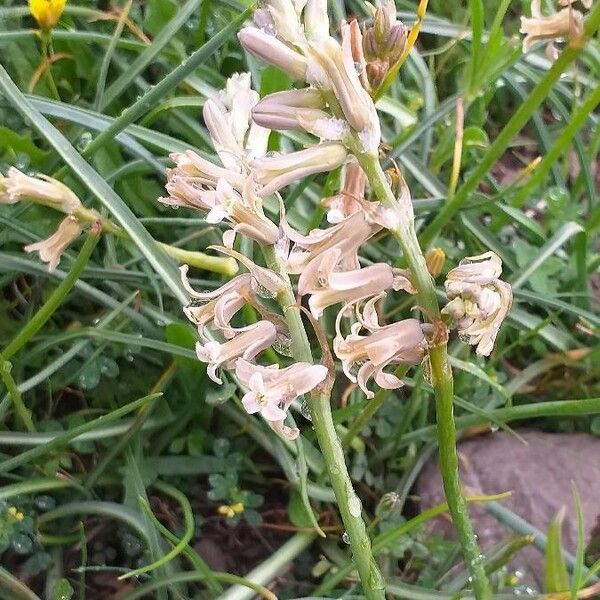
Plant Overview
Often called the Brown Bluebell or the Late-flowering Dipcadi, this plant is the moody, sophisticated cousin of the common woodland bluebell. Unlike its vibrant purple relatives, it wears a coat of copper, amber, and earthy greens, making it a favorite for collectors who appreciate "vintage-looking" or unusual flora. It hails from the sun-drenched, rocky landscapes of the Mediterranean, where it waits for the warmth of late spring to reveal its subtle, nodding bells.
🔍 How to Identify
- 🔔 Unique Flowers: The blossoms are narrow, tubular bells that hang downward. The three outer petals are distinctively recurved, curling back at the tips like tiny horns.
- 🎨 Earthy Palette: The color is its most striking feature—a blend of brownish-orange, dull yellow, and olive green that can make it blend into dry grass.
- 🌱 Slender Foliage: It produces long, narrow, grayish-green leaves that are channelled down the center. Interestingly, these leaves often begin to wither just as the plant reaches full bloom.
🏡 In Your Garden
- ☀️ The Sun-Seeker: Because it originates from dry, stony regions, it thrives in "neglect" zones. It is perfect for rock gardens or xeriscaping where the soil is gritty and the drainage is sharp.
- 🧘 Root Stability: This plant grows from a deep-seated bulb and is notoriously grumpy about being moved. It’s best to plant it in its "forever home" to avoid transplant shock to its sensitive root system.
⚠️ Safety & Toxicity
- 🚫 Non-Edible: Like many members of the Asparagaceae family, the bulbs and leaves are not safe for consumption.
- 🐾 Pet & Child Safety: It contains alkaloids that can cause nausea or stomach upset if chewed on by curious pets or toddlers. While not typically considered "deadly," it should be kept out of reach of those who like to sample the scenery.
✨ Fun Fact
The species name serotinum comes from the Latin word for "late," referring to its habit of blooming much later in the season than most other spring-flowering bulbs. While its cousins are finishing their display, the Dipcadi is just getting started!

Detailed Care Instructions

Place in a bright room that is sun drenched almost all day. Or directly in a south-facing window.

To water this particular plant, you should first check the moisture level of the soil by inserting your finger about 1-2 inches deep into the soil. If the soil feels dry to the touch, it is time to water it. Use a watering can with a spout or a hose with a gentle spray nozzle. Water the soil around the plant base slowly and evenly, allowing the water to soak into the soil and reach the roots. Avoid watering the leaves or flowers directly, as this can cause damage or promote disease. You should water this plant regularly, but be careful not to overwater it, as this can lead to root rot. It is important to allow the soil surface to dry out slightly between waterings. Additionally, it is recommended to water the plant in the early morning or late afternoon to avoid evaporation.
Dipcadi Serotinum plant prefers well-drained soil with a neutral or slightly acidic pH level. The soil should be rich in organic matter and nutrients, as this plant requires a lot of nutrients to grow and thrive. A good mix for this plant would include a blend of garden soil, compost, and sand or perlite to improve drainage. It is important not to overwater the plant, as that can lead to root rot. Therefore, it is best to plant Dipcadi Serotinum in a pot with drainage holes or in well-drained soil in the garden.








