Plant Overview
Known as Hasselt's Keruing, this majestic giant is a cornerstone of Southeast Asian rainforests. Often reaching heights that pierce the jungle canopy, it is part of the famous Dipterocarp family, which defines the structure of Asian tropical forests. It is highly valued not just for its straight, noble trunk, but for the aromatic resin it produces, which has been used by local communities for centuries.
🔍 How to Identify
- 🍃 Winged Seeds: The most iconic feature is the fruit, which has two long, paddle-like wings that cause the seed to spin like a helicopter as it falls from the canopy.
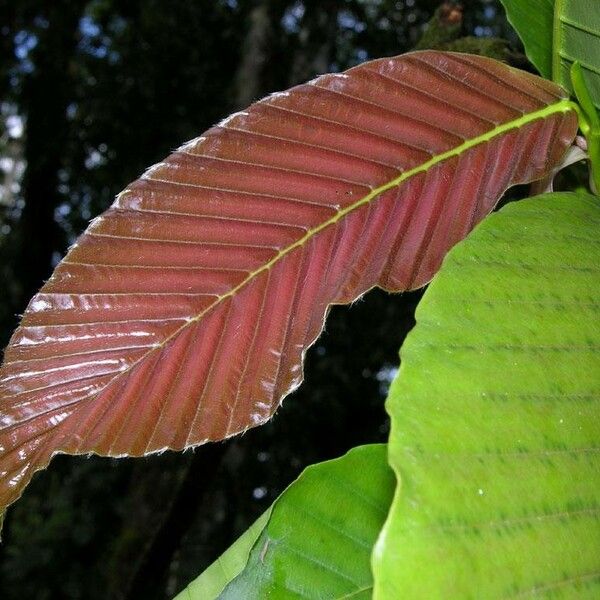
- 🌿 Pleated Leaves: The leaves are large, leathery, and oval-shaped, featuring prominent, parallel veins that give them a distinct "folded" or pleated appearance.
- 🪵 Columnar Trunk: In the wild, it grows as a perfectly straight, branchless pillar for many meters before spreading out into a dense, rounded crown.
🏡 In Your Garden
- 💧 Tropical Requirements: This is not a typical "backyard" plant unless you live in a tropical climate; it requires high humidity, consistent year-round warmth, and deep, well-draining soil.
- 🌳 The Space Giant: Because of its massive mature size and deep taproot, it is rarely used in home landscaping and is instead a star of botanical gardens or reforestation projects. It hates being moved once its roots are set.
- ☀️ Light Transitions: While young saplings can tolerate the shade of the forest floor, they eventually "bolt" toward the sky, requiring full, intense sun to reach maturity.
⚠️ Safety & Toxicity
- ✅ Generally Safe: Dipterocarpus hasseltii is not known to be toxic to humans, dogs, or cats.
- 🧤 Sticky Resin: The tree produces a thick oleoresin (wood oil). While not poisonous, this resin is incredibly sticky and can be difficult to wash off skin or clothes, occasionally causing mild irritation to those with very sensitive skin.
✨ Fun Fact
The name "Dipterocarpus" comes from the Greek words di (two), pteron (wing), and karpos (fruit). This "two-winged fruit" design is nature's clever engineering, allowing the seeds to "fly" away from the parent tree to find their own space to grow!

Detailed Care Instructions








