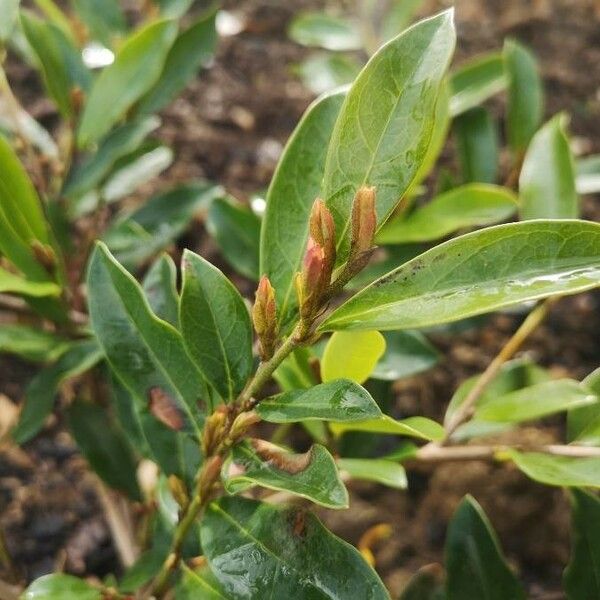
Plant Overview
Often called the Isu Tree or Evergreen Witch Hazel, Distylium racemosum is the unsung hero of the modern landscape. Native to the coastal forests of Japan, Korea, and Taiwan, this plant is celebrated for its "bulletproof" nature and elegant, understated beauty. It is a favorite among gardeners who want a lush, green backdrop that remains vibrant even in the face of harsh conditions.
🔍 How to Identify
- 🍃 Leathery Foliage: The leaves are thick, oblong, and glossy, with a deep emerald hue. Unlike many evergreens, they have a smooth, "clean" look that rarely shows spots or damage.
- 🏮 Petal-less Flowers: In late winter or early spring, look closely at the stems. You’ll find tiny, unusual clusters of bright red stamens. They lack petals entirely, giving them a fuzzy, alien-like appearance.
- 🌿 Graceful Growth: It typically grows with a spreading, slightly arching habit, creating a dense mound of green that feels soft rather than rigid.
🏡 In Your Garden
- 🛡️ The Ultimate Workhorse: This plant is incredibly resilient to "The Big Three": heat, drought, and pests. It is particularly valued in coastal regions because it handles salt spray and high humidity better than almost any other shrub.
- 🌗 Sun or Shade Adaptability: One of its greatest strengths is its versatility. While it loves the sun, it can thrive in partial shade, making it a perfect "filler" for those tricky spots where light is inconsistent.
- ⛰️ Soil & Drainage: While it isn't picky about pH, it hates "wet feet." Ensure your soil is well-drained, as its deep roots prefer to dry out slightly between waterings once established.
⚠️ Safety & Toxicity
- ✅ Safe Status: Distylium racemosum is generally considered non-toxic to humans, cats, and dogs. It is a safe choice for family-friendly yards.
- 🧤 Pruning Note: While not poisonous, the wood is very dense and the sap can be sticky. It is always a good idea to wear gloves when pruning to avoid minor skin irritation or getting sap on your hands.
✨ Fun Fact
- 🪮 The Artisan's Wood: In Japan, the wood of the Isu tree is legendary for its extreme density and hardness. For centuries, it has been the preferred material for crafting high-quality traditional hair combs and specialized charcoal used for polishing fine lacquerware!

Detailed Care Instructions
To grow Distylium racemosum (Isu Tree), follow these steps:
- Location: Choose a suitable location for planting. Distylium racemosum thrives in full sun to partial shade and can tolerate a range of soil types, including well-draining sandy or loamy soil.
- Soil preparation: Prepare the soil by removing any weeds or grasses and loosening it with a garden fork or tiller. Amend the soil with compost or organic matter to improve its fertility and drainage if necessary.
- Planting time: Ideally, plant Distylium racemosum in early spring or fall when the weather is cool and the soil is not too dry or frozen.
- Digging the hole: Dig a hole slightly wider and deeper than the root ball of the plant. The hole should be large enough to accommodate the roots without bending or crowding them.
- Planting the tree: Place the plant into the hole, making sure that it is positioned at the same depth as it was in the container or root ball. Backfill the hole with soil, gently packing it around the roots to eliminate air pockets.
- Watering: After planting, water the Distylium racemosum thoroughly to settle the soil and encourage root establishment. Provide regular watering during the first year or until the plant becomes established, aiming to keep the soil consistently moist but not waterlogged.
- Mulching: Apply a layer of mulch around the base of the plant to help conserve moisture, suppress weeds, and regulate soil temperature. Maintain a mulch depth of 2-3 inches, keeping it a few inches away from the base of the trunk.
- Pruning: Distylium racemosum requires minimal pruning. Remove any dead, damaged, or diseased branches. Light pruning can be done to shape the plant or remove unwanted growth. Prune during late winter or early spring before new growth starts.
- Fertilizing: Distylium racemosum generally does not need much fertilizer. However, you can apply a balanced slow-release fertilizer in early spring to provide essential nutrients.
- Maintenance: Regularly monitor the health of the plant, checking for any signs of pests or diseases. Water as needed, especially during dry periods, and provide protection from extreme weather conditions like strong winds or frost.
With proper care and maintenance, your Distylium racemosum plant should grow and thrive, providing attractive foliage and flowers throughout the year.

Place in a window with dappled sun or a spot in the middle of a room. Or directly in a window facing west or east.

To water this particular plant, it is recommended to thoroughly soak the soil around the base of the plant until the water begins to drain from the bottom of the pot or the surrounding soil. It is important to avoid getting water on the leaves or blooms of the plant to prevent any damage that may occur. It is also important to avoid overwatering as this can lead to root rot and other issues. It is recommended to water this plant when the soil feels dry to the touch, but not completely dried out. It is important to monitor the moisture levels of the soil regularly and adjust watering as needed based on the plant's individual needs and growing conditions.
To fertilize the plant, use a slow-release fertilizer with a balanced N-P-K ratio. Follow the instructions on the fertilizer package for application rates and timing. Apply the fertilizer evenly around the base of the plant, avoiding direct contact with the trunk or leaves. Water the plant after fertilization, to help the nutrients reach the roots. Repeat fertilization in spring and fall.
The ideal soil for Distylium Racemosum plant is a well-draining soil mixture that is rich in organic matter. The soil pH should be acidic to neutral, with a range of around 5.5 to 7.0. The soil needs to be able to retain moisture, but not be waterlogged or too dense. Adding sand or perlite to the soil can help improve drainage if it is naturally heavy. The plant prefers soil that is moist but not overly wet, and will not tolerate drought conditions. Regular applications of mulch around the base of the plant can help maintain moisture levels in the soil and suppress weeds. Overall, the key is to provide a nutrient-rich soil that drains well and provides adequate moisture for the plant's growth and development.
Distylium racemosum is a flowering plant that can be propagated through various methods. The easiest way to propagate this plant is through stem cuttings. To propagate Distylium racemosum using stem cuttings, follow these steps:
- Gather a healthy stem from the parent plant that is at least six inches long.
- Cut the stem using a sharp, sterile pruning tool.
- Remove all the leaves from the bottom half of the stem. This will provide enough room for the roots to grow.
- Dip the cut end of the stem in a rooting hormone powder. This will help stimulate root growth.
- Fill a pot with well-draining soil and make a hole in the center.
- Insert the bottom half of the stem cutting into the hole, burying it at least an inch deep.
- Water the soil around the stem cutting and place it in a warm, shady location.
- Keep the soil consistently moist but not waterlogged.
- After a few weeks, the stem cutting should start to form roots. You can check by gently tugging on the stem. If there is resistance, it means the roots have formed.
- Once established, you can transplant the rooted cutting into a larger container or outdoor garden bed.
It's important to note that Distylium racemosum is a slow-growing plant, so it may take some time for it to establish and grow. However, with proper care and attention, it can thrive and provide beautiful foliage and blooms.








