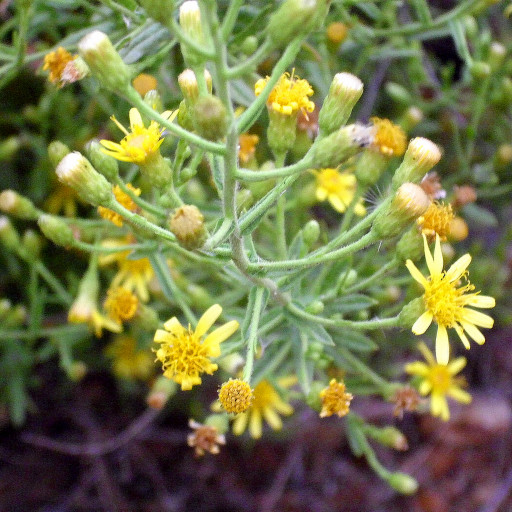
Plant Overview
Known to many as the False Yellowhead or Sticky Fleabane, Dittrichia viscosa is a hardy Mediterranean native that straddles the line between a resilient wildflower and a useful garden ally. In its home region, it is often called the "Yellow Balsam" due to its intense, camphor-like aroma and the sticky resin that coats its leaves. While it might look like a common roadside weed, it plays a massive role in traditional medicine and organic pest control.
🔍 How to Identify
- 🌼 Golden Blooms: It features small, daisy-like yellow flowers that appear in dense clusters at the top of the stems, usually blooming late in the summer and autumn.
- 🌿 Sticky Foliage: The narrow, lance-shaped leaves are covered in glandular hairs that secrete a tacky, resinous substance—if you touch it, your fingers will definitely stick!
- 👃 Strong Scent: When brushed against or crushed, the plant releases a powerful, medicinal odor reminiscent of turpentine or resin.
🏡 In Your Garden
- 🐝 The Insect Hotel: This plant is a superstar for biodiversity. It is a primary host for beneficial predatory insects (like Macrolophus pygmaeus) that naturally hunt garden pests like whiteflies and spider mites.
- 🏜️ Pioneer Spirit: It thrives in "bad" soil—think rocky, dry, or salty coastal areas. It has a deep root system that helps prevent erosion, making it perfect for stabilizing slopes where other plants refuse to grow.
⚠️ Safety & Toxicity
- 🚫 Skin Irritant: The same resin that protects the plant can cause "Contact Dermatitis" in humans. If you have sensitive skin, handling it without gloves may lead to an itchy red rash.
- 🐾 Pet Caution: While not known to be lethally toxic, the sticky coating can get matted into the fur of cats and dogs, and the bitter taste usually discourages them from eating it.
✨ Fun Fact
In many Mediterranean cultures, Dittrichia viscosa was historically used as a "living flytrap." Bunches of the sticky plant were hung in houses or stables; flies would be attracted to the scent and become permanently stuck to the resinous leaves!

Detailed Care Instructions
To grow Dittrichia Viscosa, also known as false yellowhead, you can follow these steps:
- Climate and Soil: This plant thrives in temperate regions with full sun exposure. It can grow in various soil types, but well-draining soil is preferred.
- Propagation: You can propagate Dittrichia Viscosa from seeds or cuttings. If using seeds, sow them in a tray or pot filled with moist, well-draining soil. Cover the seeds lightly with a thin layer of soil and keep them moist until germination. Transplant the seedlings into individual pots once they are strong enough.
- Watering: Water the plants regularly to keep the soil evenly moist, especially during dry periods. However, avoid overwatering, as excessive moisture may cause root rot.
- Fertilizer: Dittrichia Viscosa is a moderately nutrient-demanding plant. Use a balanced, slow-release fertilizer in early spring to provide essential nutrients for healthy growth. Follow the instructions on the fertilizer packaging for application rates.
- Pruning: Regularly prune the plant to maintain its shape and encourage bushy growth. Pinch off or trim the top shoots to promote branching.
- Pests and diseases: False yellowhead plants are relatively resistant to pests and diseases. However, keep an eye out for common garden pests like aphids or spider mites. If necessary, treat the infestations with natural or chemical insecticides.
- Mulching: Apply a layer of organic mulch around the plants to conserve moisture, suppress weed growth, and improve soil fertility. Ensure the mulch is not in direct contact with the plant stems.
- Winter care: In regions with cold winters, provide protection to the plant by covering it with a layer of mulch or straw. This will help insulate the roots and protect them from freezing temperatures.
Overall, Dittrichia Viscosa is a relatively easy plant to grow, provided it receives adequate sunlight, water, and care.

Place in a bright room that is sun drenched almost all day. Or directly in a south-facing window.

The best way to water this plant is to provide it with regular, moderate watering. While it does not require constant moisture, it prefers evenly moist soil to prevent dehydration and stress.
Ensure that the plant is planted in well-draining soil to prevent waterlogging, which can lead to root rot and other fungal issues. You can also add a drainage layer to the plant's container to facilitate water flow and prevent standing water.
During the growing season, which typically runs from late spring through summer, water the plant when the top portion of soil becomes dry to the touch. This may require watering once or twice a week, depending on the plant's environment and growing conditions.
In the winter months, when the plant is dormant, water less frequently, reducing the frequency by one-half or more. It is generally better to err on the side of underwatering rather than overwatering, as this plant can be sensitive to excess moisture.
Finally, try to avoid wetting the foliage or flowers when watering, as this can encourage the growth of fungal diseases. Instead, aim for watering the soil directly at the base of the plant.
To fertilize this plant, start by choosing a balanced fertilizer that has equal amounts of nitrogen, phosphorus, and potassium. Mix the fertilizer with water according to the instructions on the package. Apply the fertilizer to the soil around the base of the plant, being careful not to get any on the leaves. Water the plant thoroughly after fertilizing. Fertilize every 4-6 weeks during the growing season.
The ideal soil for the plant referred to has a pH level of 6 to 7, which is slightly acidic to neutral. It prefers well-draining soil that is rich in nutrients and organic matter. The soil should be moist but not waterlogged, as overwatering can cause root damage and lead to plant death. It grows well in a variety of soil types, including sandy loam, clay loam, and loamy soil. It is important to avoid using soil that has been treated with chemicals or has high levels of salt, as this can harm the plant. Regularly amending the soil with organic matter such as compost or peat moss can help to improve its nutrient content and overall health.
To propagate this plant, you can take stem cuttings in the spring or summer when the plant is actively growing. Choose a healthy stem that is around 4-6 inches long and has several leaves on it. Using a clean, sharp pair of scissors or pruners, cut the stem just below a node (where a leaf attaches to the stem). Remove any leaves from the bottom 2 inches of the stem.
Dip the cut end of the stem into rooting hormone powder and gently tap off any excess. Plant the stem cutting into a small pot filled with well-draining potting soil. Water the cutting thoroughly and place it in a bright, but indirect location. Keep the soil moist, but not too wet, and avoid letting the cutting dry out.
After a few weeks, you should start to see new growth on the cutting, which indicates that it has successfully rooted. You can transfer it to a larger pot or outdoors once it becomes established.








