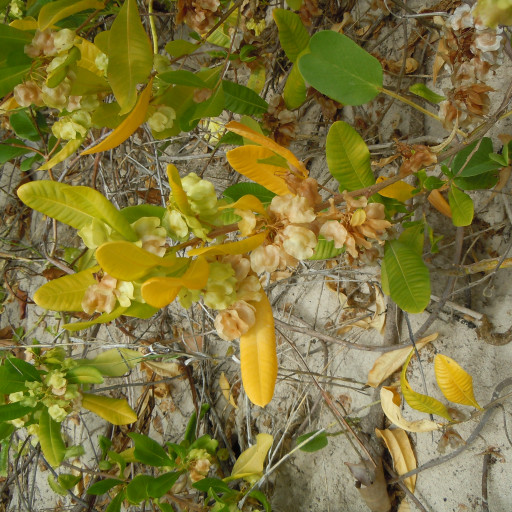
Plant Overview
Often called the Hopbush or Sticky Hopbush, this resilient traveler is a master of adaptation found in coastal and desert regions worldwide. Its common name comes from early settlers who used its bitter, papery seed pods as a substitute for hops in beer brewing. With its vibrant winged fruits and glossy foliage, it adds a splash of structural beauty to any landscape while acting as a tough-as-nails survivor.
🔍 How to Identify
- 🍃 Resinous Leaves: The foliage is narrow, spoon-shaped, and coated in a thin, sticky resin that gives the plant a polished, lacquer-like sheen.
- 🦋 Winged Seed Pods: The "flowers" are actually inconspicuous, but they are followed by stunning clusters of 2-to-4-winged papery pods that shift from lime green to brilliant shades of pink, red, and bronze.
- 🌳 Growth Habit: It typically grows as a dense, multi-stemmed evergreen shrub, though it can be trained into a small, airy tree reaching up to 15 feet in height.
🏡 In Your Garden
- 💨 The Ultimate Windbreak: Because it is incredibly flexible and salt-tolerant, gardeners frequently use it as a "living fence" or screen to protect more delicate plants from harsh coastal winds or road salt.
- 🏜️ Drought Specialist: It thrives in poor, sandy, or rocky soils where other plants might wither. The "secret" to its success is its deep root system; however, this means it hates being moved once planted, so choose its forever home carefully.
⚠️ Safety & Toxicity
- 🐾 Pet & Child Safety: The plant contains saponins, which are natural soap-like compounds. While not usually life-threatening, ingesting the leaves or seeds can cause nausea or stomach upset in curious pets or toddlers.
- 🧴 Skin Sensitivity: The sticky resin that protects the leaves from drying out can occasionally cause mild skin irritation or contact dermatitis in sensitive individuals—wearing gloves during pruning is recommended.
✨ Fun Fact
The Dodonaea viscosa is a "cosmopolitan" species, meaning it is found on almost every continent. Its seeds are so hardy they can survive floating across entire oceans, allowing the plant to colonize remote volcanic islands and distant coastlines naturally!

Detailed Care Instructions
| Invasive | Weed |
| Plant Type | Evergreen Shrub |
| Mature Size | From 4 To 20 Feet In Height |
| Sun Exposure | Full Sun |
| Hardiness Zones | 9-11 |
To grow Dodonaea Viscosa, also known as hopbush or Akeake, you can follow these steps:
- Obtain seeds or a small cutting: You can either buy seeds online or at a plant nursery, or take a small cutting from an existing plant.
- Prepare well-draining soil: Dodonaea Viscosa prefers well-draining soil, so make sure to create a suitable planting area. Adding compost or organic matter to the soil can improve drainage and fertility.
- Choose a sunny location: Dodonaea Viscosa thrives in full sun, so select a location in your garden that receives direct sunlight for at least 6-8 hours a day.
- Sow the seeds or plant the cutting: If using seeds, plant them about 1/4 inch deep in the prepared soil. If using a cutting, plant it directly in the soil, making sure it has good contact with the ground.
- Water regularly: Keep the soil consistently moist but not waterlogged. Water the plant regularly, especially during hot weather or dry periods.
- Prune and shape the plant: As the plant grows, you can prune and shape it to desired size and form. Prune off any dead, damaged, or overgrown branches.
- Monitor for pests: Keep an eye out for any pests like spider mites or aphids, and take necessary steps to control them if they become a problem.
- Provide support if needed: Dodonaea Viscosa can grow quite tall, so if you want it to have a more upright form, provide supports like stakes or a trellis to keep it stable.
- Fertilize when necessary: Feed the plant with a balanced fertilizer in spring or early summer to promote healthy growth.
- Maintain a mulch layer: Adding a layer of organic mulch around the base of the plant helps conserve moisture, suppress weeds, and improve soil fertility.
With proper care, Dodonaea Viscosa can grow into an attractive shrub with its distinctive foliage and clusters of flowers.

Place in a bright room that is sun drenched almost all day. Or directly in a south-facing window.

To properly water this plant, you should first check the soil moisture level by sticking your finger about one inch into the soil. If it feels dry, it's time to water. Water thoroughly until water comes out the drainage holes at the bottom of the pot or until the soil is moist. Be sure not to overwater, as this can cause root rot. Wait until the soil dries out again before watering. During the winter months, the plant may require less frequent watering. It's important to note that this plant prefers well-draining soil and does not like to sit in standing water.
To fertilize this plant, apply a balanced, slow-release fertilizer once per growing season. Use a granular fertilizer with an NPK ratio of 10-10-10 or 12-12-12, and apply it evenly to the soil surface around the base of the plant. Water thoroughly after fertilizing to help the nutrients reach the roots. Avoid applying fertilizer too close to the stem or foliage as this can burn the plant. Additionally, it is important not to over-fertilize, as this can lead to salt buildup in the soil and damage to the plant.
The most suitable soil for this plant is a well-draining and fertile soil that is not too heavy or compact. It should be slightly acidic to neutral, with a pH range of 5.5 to 7.5. A combination of loamy and sandy soil works well for Dodonaea Viscosa. It is important to avoid using soil that is waterlogged or too dry, as this can stunt growth and damage the roots. Adding organic matter such as compost or leaf litter to the soil can help improve its quality and provide nutrients to the plant. Overall, the ideal soil for Dodonaea Viscosa should be rich, moist, and well-draining.
To propagate this plant, you can collect seeds from mature pods that have turned brown and dry. Soak the seeds in warm water for about 24 hours before sowing them in a moist and well-draining potting mix. Keep the soil evenly moist and warm (around 70-75°F) until the seeds germinate, which can take 2-4 weeks. Once the seedlings emerge, provide bright light but protect them from direct sun.
Another way to propagate this plant is through stem cuttings taken in spring or summer. Cut a 4-6 inch long stem with clean and sharp garden shears, making the cut just below a leaf node. Remove the bottom leaves and dip the cut end in rooting hormone if desired. Plant the cutting in a pot filled with moist potting mix and enclose it in a clear plastic bag to create a mini greenhouse. Place the pot in a bright and warm spot away from direct sun and mist the cutting regularly to keep the humidity high. After a few weeks, check for roots by gently tugging on the stem. Once the cutting has rooted, remove the plastic bag and gradually acclimate the new plant to normal conditions.
Common pests of the florida hopbush include Scale insect, mealybugs. Make a habit of checking your florida hopbush frequently for pests so that any infestations can be caught and managed early.








