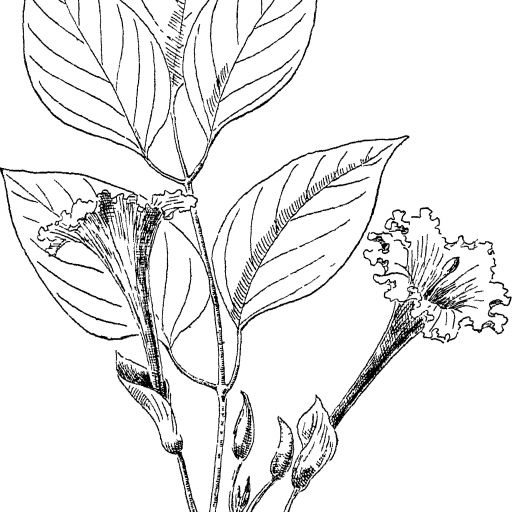
Plant Overview
Known as the Mangrove Trumpet Tree or "Tui," this coastal beauty is a moon-blooming marvel found across Southeast Asia and the Pacific. It is famous for its large, pristine white flowers that look like ghostly trumpets hanging against the dark backdrop of the mangroves. In many cultures, its wood is prized for carving, and its presence signals the transition from land to the mysterious world of the sea.
🔍 How to Identify
- 🎺 The Bloom: Large, snow-white, trumpet-shaped flowers with delicate, ruffled edges. They are nocturnal, opening at dusk to release a faint fragrance.
- 🗡️ The Seed Pod: Remarkable, long, curved pods that look like green swords or giant beans, often hanging in clusters after the flowers fade.
- 🍃 The Foliage: Bright green, compound leaves (pinnate) that grow in pairs, giving the tree a lush, feathery appearance even when not in bloom.
🏡 In Your Garden
- 💧 Thirst for Life: Unlike many garden trees, the Mangrove Trumpet thrives with its "feet wet." It is naturally adapted to swamps and riverbanks, making it an excellent choice for stabilizing pond edges or boggy areas in your landscape.
- ☀️ Sun & Salt: This is a hardy survivor that laughs at salty sea breezes. It requires full sun to produce its iconic flowers; if kept in the shade, it will focus on leafy growth but may refuse to bloom.
- 🌱 Root Space: Because it is a medium-sized tree that enjoys moist environments, ensure it has plenty of room for its root system to spread without competing with delicate perennials.
⚠️ Safety & Toxicity
- 🟢 General Safety: Dolichandrone spathacea is generally considered non-toxic to humans and is even used in traditional folk medicine in some regions.
- 🐾 Pet Watch: While there are no widespread reports of toxicity to cats or dogs, the seeds and bark contain various phytochemicals. It is always best to discourage pets from chewing on the fallen pods or woody stems to avoid digestive upset.
✨ Fun Fact
The Mangrove Trumpet Tree is a "one-night-only" performer! Its flowers open specifically at night to attract specialized hawk moths for pollination. By the time the sun fully rises the next morning, the beautiful white trumpets detach and fall to the ground, creating a snowy carpet beneath the tree.

Detailed Care Instructions
Growing Dolichandrone spathacea, commonly known as the Mangrove Trumpet Tree, requires specific conditions to thrive. Here is a step-by-step guide to help you successfully grow this plant:
1. Climate and Location
- Climate: Dolichandrone spathacea flourishes in tropical and subtropical climates. It is not frost-tolerant.
- Location: Select a sunny to partially shaded location. The plant prefers full sun to partial shade and needs plenty of light to grow well.
2. Soil Requirements
- Soil Type: The plant prefers well-draining soil. It can grow in sandy, loamy, or clay soils, but the key is good drainage to prevent waterlogging.
- pH Range: A neutral to slightly alkaline pH is ideal, around 6.5 to 7.5.
3. Planting
- Propagation: You can propagate Dolichandrone spathacea from seeds or cuttings.
- Seeds: Collect seeds from mature pods. Soak them in water for 24 hours to speed up germination. Plant seeds in well-draining soil and water them regularly.
- Cuttings: Take semi-hardwood cuttings about 10-15 cm long. Dip the cut end in rooting hormone and plant it in a pot with a mixture of sand and peat. Keep the soil moist until roots develop.
4. Watering
- Seeds: Collect seeds from mature pods. Soak them in water for 24 hours to speed up germination. Plant seeds in well-draining soil and water them regularly.
- Young Plants: Keep the soil consistently moist but not waterlogged. Water deeply but allow the top inch of soil to dry out between waterings.
- Mature Plants: Once established, the plant is somewhat drought tolerant but performs best with regular watering.
5. Fertilizing
- Frequency: Fertilize during the growing season (spring and summer).
- Type: Use a balanced, slow-release fertilizer to provide all necessary nutrients. Organic compost can also be beneficial.
6. Pruning
- Purpose: Prune to shape the plant and promote better air circulation.
- Timing: Pruning can be done after flowering to encourage new growth and blooms for the next season.
7. Pests and Diseases
- Common Pests: Look out for aphids, mites, and scale insects. Use insecticidal soap or neem oil if necessary.
- Common Diseases: The plant is relatively disease-resistant but ensure proper spacing and air circulation to prevent fungal diseases.
8. Maintenance
- Mulching: Apply a layer of organic mulch around the base of the plant to conserve moisture and suppress weeds.
- Support: Young trees might require staking to help them grow upright.
9. Special Considerations
- Salt Tolerance: Dolichandrone spathacea has moderate tolerance to salty conditions, making it suitable for coastal gardens.
- Container Growth: It can be grown in containers for patios or small gardens, but ensure the pot has adequate drainage and use a high-quality potting mix.
By providing the right conditions and care, your Dolichandrone spathacea should grow successfully and bring an exotic touch to your garden with its attractive leaves and trumpet-shaped flowers.

Place in a bright room that is sun drenched almost all day. Or directly in a south-facing window.

Dolichandrone spathacea, a tropical tree, requires specific care when it comes to watering to ensure healthy growth. Here are detailed guidelines on how to properly water this plant:
### Soil and Watering Frequency:
1. Well-Drained Soil: Ensure the plant is potted in or planted in soil that has good drainage. This prevents water from sitting at the roots, which can cause root rot.
2. Consistent Moisture: Aim to maintain consistently moist soil. The soil should not be waterlogged, nor should it be completely dry. During the growing season (spring and summer), this typically means watering it more frequently, depending on the climate and soil conditions.
### Watering Technique:
3. Deep Watering: Water deeply so that the moisture reaches the deeper roots. This encourages the plant to grow a strong root system. Apply water until it starts to come out of the drainage holes if it's in a pot, or until the surrounding ground is thoroughly moist if it’s planted in the ground.
4. Adjust for Weather: During hot or dry periods, increase the frequency of watering, ensuring the soil doesn’t dry out completely. Conversely, during rainy periods or cooler months, reduce the watering frequency to prevent overwatering.
### Monitoring and Adjustments:
5. Check Soil Moisture: Regularly check the soil moisture level by inserting your finger about an inch into the soil. If it feels dry at that depth, it’s time to water.
6. Mulching: Applying mulch around the base can help retain soil moisture and regulate temperature. Ensure the mulch doesn’t touch the trunk directly to prevent rot.
7. Watering Time: Early morning or late afternoon are ideal times to water, as this reduces evaporation and allows the plant to absorb moisture more effectively.
### Seasonal Considerations:
8. Dormant Period: During the plant's dormant period, typically in the cooler months, reduce watering but do not allow the soil to dry out completely.
By following these guidelines, you can ensure that Dolichandrone spathacea receives the appropriate amount of water for optimal growth and health.
To fertilize Dolichandrone Spathacea, follow these steps:
- Choosing the Fertilizer:
- Use a balanced, slow-release granular fertilizer with an N-P-K ratio like 10-10-10 or 14-14-14.
- Alternatively, you can use a liquid fertilizer diluted to half the recommended strength.
- Use a balanced, slow-release granular fertilizer with an N-P-K ratio like 10-10-10 or 14-14-14.
- Timing:
- Fertilize the plant during its active growing season, typically in the spring and summer.
- Avoid fertilizing in late fall and winter when the plant is dormant.
- Fertilize the plant during its active growing season, typically in the spring and summer.
- Application:
- For granular fertilizers, apply evenly around the base of the plant, keeping it at least a few inches away from the trunk to prevent root burn.
- For liquid fertilizers, water the plant first to ensure the soil is moist. Then, apply the diluted solution around the base of the plant.
- For granular fertilizers, apply evenly around the base of the plant, keeping it at least a few inches away from the trunk to prevent root burn.
- Frequency:
- Granular fertilizers are usually applied once every 2-3 months during the growing season.
- Liquid fertilizers can be applied every 4-6 weeks during the growing season.
- Granular fertilizers are usually applied once every 2-3 months during the growing season.
- Quantity:
- Follow the instructions on the fertilizer package for the recommended amount based on the size and age of the plant.
- Be cautious not to over-fertilize, as this can lead to nutrient burn or excessive foliage growth at the expense of flowers.
- Follow the instructions on the fertilizer package for the recommended amount based on the size and age of the plant.
- Watering:
- After applying granular fertilizer, water the plant thoroughly to help the nutrients reach the root zone.
- Ensure the soil remains consistently moist but not waterlogged.
- After applying granular fertilizer, water the plant thoroughly to help the nutrients reach the root zone.
- Mulching:
- Consider adding a layer of organic mulch around the base of the plant to help retain moisture and provide additional nutrients as it decomposes.
By following these guidelines, you should be able to provide your Dolichandrone Spathacea with the nutrients it needs to thrive.
- Consider adding a layer of organic mulch around the base of the plant to help retain moisture and provide additional nutrients as it decomposes.
Dolichandrone spathacea thrives best in well-draining, loamy soil with good moisture retention capabilities. The ideal soil composition should include a balanced mixture of sand, silt, and clay to ensure proper aeration while still holding enough moisture. Here are the key details for preparing the optimal soil for this plant:
Composition:
- Sand (30-40%):
- Enhances drainage, prevents waterlogging, and helps in root aeration.
- Enhances drainage, prevents waterlogging, and helps in root aeration.
- Silt (30-40%):
- Provides moderate drainage and moisture retention, facilitating nutrient availability.
- Provides moderate drainage and moisture retention, facilitating nutrient availability.
- Clay (20-30%):
- Retains nutrients and moisture over longer periods, crucial for steady plant growth.
Soil pH:
- Retains nutrients and moisture over longer periods, crucial for steady plant growth.
- The plant prefers a slightly acidic to neutral pH range, about 6.0 to 7.0. Test the soil pH and amend if necessary using garden lime (to raise pH) or sulfur (to lower pH).
Organic Matter:
- Incorporate organic compost or well-rotted manure to enrich the soil with essential nutrients and improve its structure.
Drainage:
- Ensure the planting site has good drainage to avoid water stagnation around the root zone. Raised beds or mounds can be beneficial in areas prone to waterlogging.
Fertility:
- Although not overly demanding, the plant responds well to fertile soil. A balanced fertilizer mix, applied periodically, can support robust growth and flowering.
Additional Tips:
- Mulching around the base of the plant can help maintain soil moisture and temperature while suppressing weed growth.
- Regular watering during dry periods is essential to keep the soil consistently moist, especially during the establishment phase.
By following these guidelines, the soil will provide an optimal growing environment, promoting healthy growth and vigorous development.
Propagating Dolichandrone spathacea can be done effectively through seeds or cuttings. Here are the detailed steps for each method:
Propagation by Seeds
- Seed Collection:
- Harvest seeds when the seed pods are mature. The pods turn from green to brownish and start to crack open.
- Collect the seeds from the opened pods.
- Harvest seeds when the seed pods are mature. The pods turn from green to brownish and start to crack open.
- Seed Preparation:
- Clean the seeds to remove any debris or remaining pod material.
- Soaking the seeds in water for about 24 hours can help improve germination rates.
- Clean the seeds to remove any debris or remaining pod material.
- Sowing the Seeds:
- Choose seed trays or pots with a well-draining potting mix. A mix of sand, compost, and garden soil works well.
- Sow the seeds on the surface of the soil and cover them lightly with a thin layer of soil or sand.
- Water gently to moisten the soil, but avoid waterlogging.
- Choose seed trays or pots with a well-draining potting mix. A mix of sand, compost, and garden soil works well.
- Germination:
- Place the trays or pots in a warm, partially shaded area.
- Keep the soil consistently moist by watering regularly.
- Germination should occur within a few weeks to a couple of months, depending on temperature and conditions.
- Place the trays or pots in a warm, partially shaded area.
- Transplanting:
- Once the seedlings are large enough to handle and have developed a few true leaves, they can be transplanted into individual pots or directly into the ground.
- Ensure the chosen location has well-draining soil and is either in full sun or partial shade.
Propagation by Cuttings
- Once the seedlings are large enough to handle and have developed a few true leaves, they can be transplanted into individual pots or directly into the ground.
- Selecting Cuttings:
- Choose healthy, semi-hardwood cuttings from the plant. These are typically taken from the current season's growth.
- Cut a section about 15-20 cm (6-8 inches) long, making sure it includes at least three to four nodes (points where leaves attach).
- Choose healthy, semi-hardwood cuttings from the plant. These are typically taken from the current season's growth.
- Preparing the Cuttings:
- Remove the leaves from the lower half of the cutting to reduce water loss and focus the plant's energy on root development.
- Optionally, dip the cut end in rooting hormone to encourage root growth.
- Remove the leaves from the lower half of the cutting to reduce water loss and focus the plant's energy on root development.
- Planting the Cuttings:
- Insert the cuttings into a well-draining potting mix, burying the lower nodes in the soil.
- Firmly press the soil around the base of the cuttings to ensure good contact and stability.
- Insert the cuttings into a well-draining potting mix, burying the lower nodes in the soil.
- Care for Cuttings:
- Water the cuttings well and place them in a warm, humid environment with indirect light.
- Covering the cuttings with a plastic bag can help maintain humidity, but ensure there's some airflow to prevent mold.
- Water the cuttings well and place them in a warm, humid environment with indirect light.
- Root Development:
- Roots should begin to form within a few weeks. Tug gently on the cuttings to check for resistance, indicating root growth.
- Once the cuttings have a strong root system, they can be transplanted into larger pots or directly into the garden.
General Care Tips for Newly Propagated Plants
- Roots should begin to form within a few weeks. Tug gently on the cuttings to check for resistance, indicating root growth.
- Watering: Keep the soil consistently moist but not waterlogged. Overwatering can lead to root rot.
- Light: Provide bright, indirect sunlight for cuttings and young seedlings. Mature plants can handle full sun to partial shade.
- Soil: Ensure the soil is well-draining to avoid waterlogging issues.
- Fertilizing: Begin feeding young plants with a balanced, diluted fertilizer once they are established and show new growth.
Following these steps should give you a good success rate in propagating Dolichandrone spathacea plants.








