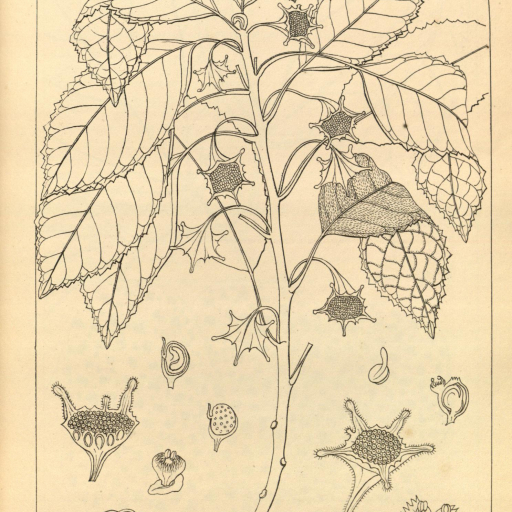
Plant Overview
Commonly known as the Indian Shield Flower, Dorstenia indica is a botanical curiosity that looks like it belongs in a prehistoric jungle rather than a modern windowsill. A relative of the common Fig, this plant foregoes traditional petals for a bizarre, alien-looking green disk. It is a favorite among "oddity" collectors who enjoy plants that challenge the traditional definition of a flower.
🔍 How to Identify
- 🛸 The "Flower": The most striking feature is the green, star-shaped receptacle (called a hypanthodium). It looks like a tiny, flat satellite dish fringed with long, tentacle-like bracts.
- 🍃 Lush Foliage: The leaves are deep green, slightly glossy, and ovate with wavy or serrated edges, often appearing in a bushy, compact cluster.
- 🌱 Growth Habit: It stays relatively small, rarely exceeding 10-12 inches in height, making it a perfect candidate for terrariums or shaded windowsills.
🏡 In Your Garden
- 🌦️ The Understory Lifestyle: Because it originates from the shaded forest floors of India and Sri Lanka, it thrives in dappled light. Direct afternoon sun will scorch its delicate disks, so treat it like a tropical fern rather than a desert succulent.
- 💧 The Humidity Factor: Unlike its succulent cousins, Dorstenia indica appreciates consistent moisture. If the air is too dry, it may drop its leaves in protest. It loves the "micro-climate" created by grouping it with other leafy plants.
- 🚀 Voluntary Propagation: Be prepared for surprises! This plant is famous for "shooting" its seeds across the room when they are ripe. You might find baby Dorstenias popping up in neighboring pots several feet away.
⚠️ Safety & Toxicity
- 🧤 Mild Irritant: Like many members of the Moraceae (Fig) family, this plant contains a milky white sap (latex).
- 🐱 Pet & Child Safety: While not considered deadly, the sap can cause skin irritation or rashes upon contact. If ingested, it may cause mild stomach upset or nausea in pets and small children. It is best kept on a high shelf out of reach.
✨ Fun Fact
The Dorstenia genus is named after the German physician and botanist Theodor Dorsten. Its seed dispersal method is a masterpiece of natural engineering: the plant builds up internal pressure in the flowering disk until it "fires" the seeds out at high velocity to ensure its offspring don't compete with the parent for soil nutrients!

Detailed Care Instructions








