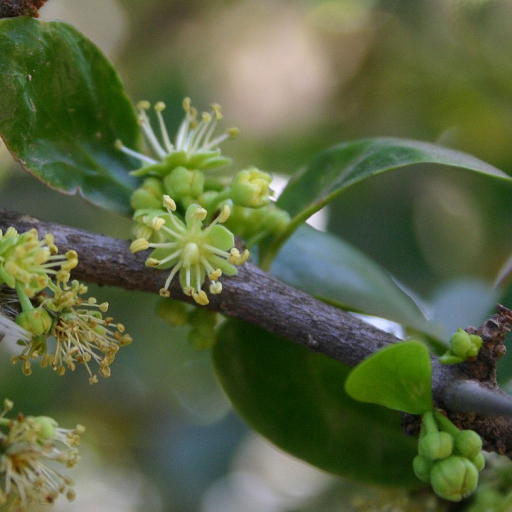
Plant Overview
Known affectionately as the Kei Apple or "Umkokola," this resilient evergreen is a legendary "living fence" hailing from the Great Kei River region of South Africa. While it produces a vibrant, apricot-like fruit that is a favorite for jams, it is most famous for its role as nature’s barbed wire, forming an impenetrable thicket that keeps unwanted visitors out of the garden.
🔍 How to Identify
- ⚔️ The Spines: The most defining feature is the presence of long, sharp, woody thorns (up to 2 inches long) that emerge from the leaf axils, making the inner branches very intimidating.
- 🍃 The Foliage: Small, waxy, bright green leaves are clustered in tufts. They are "obovate" (teardrop-shaped) and provide a lush, dense canopy year-round.
- 🟡 The Fruit: In late summer, female plants produce velvety, bright yellow-to-orange globes. They look like small, round apples or apricots and have a distinct, highly acidic aroma.
🏡 In Your Garden
- 🛡️ Natural Security: Because of its fierce thorns and dense growth, it is one of the best choices for a defensive hedge. It can be pruned into a tight shape, creating a wall that even the most determined intruder—or wandering neighborhood dog—won't try to push through.
- 🌊 Coastal Warrior: This plant is incredibly "tough-as-nails." It is highly salt-tolerant and drought-resistant, making it a perfect candidate for coastal gardens where other plants might wither under the sea spray and dry winds.
⚠️ Safety & Toxicity
- ✅ Status: Non-toxic but physically hazardous.
- 🩹 Details: The fruit is safe and highly nutritious (packed with Vitamin C), though extremely sour if eaten raw. However, the thorns are a major safety concern. They are sharp enough to puncture skin and tires. Keep this plant away from high-traffic play areas where children might run into it.
✨ Fun Fact
The Kei Apple is "dioecious," which means there are distinct male and female plants. If you want those tart yellow fruits for your morning marmalade, you’ll need to plant at least one male "pollinator" for every few female plants!

Detailed Care Instructions
To grow Dovyalis Caffra (also known as Kei apple or wild apricot), you can follow these steps:
- Choose the right location: Dovyalis Caffra requires full sun, so pick a spot in your garden that receives at least 6-8 hours of direct sunlight each day.
- Prepare the soil: The plant prefers well-draining soil with a pH between 5.5 and 7.5. If your soil is heavy with clay, improve the drainage by adding organic matter or compost.
- Planting: Dig a hole large enough to accommodate the root ball of the plant. Place the plant in the hole, making sure it sits at the same level as it was in the container. Backfill the hole with soil and gently firm it around the roots.
- Watering: Initially, water the plant thoroughly to help it establish its roots. Afterward, water regularly, keeping the soil evenly moist but not waterlogged. These plants are fairly drought-tolerant but do better with consistent moisture.
- Mulching: Apply a layer of organic mulch around the plant to help retain moisture, suppress weeds, and regulate soil temperature. Leave some space around the trunk to avoid moisture accumulation around the stem.
- Pruning: Dovyalis Caffra can handle a light pruning if needed. Regular pruning can help maintain its shape and encourage bushier growth. It's best to prune after the fruiting season to avoid removing potential fruiting wood.
- Fertilizing: Apply a balanced fertilizer during the growing season, following the manufacturer's instructions. It's generally recommended to fertilize in early spring and mid-summer.
- Pest and disease control: Keep an eye out for pests like aphids and scale insects. Apply appropriate organic or chemical controls if needed. Dovyalis Caffra is generally resistant to diseases but can be susceptible to root rot if overwatered.
- Harvesting: The fruit of Dovyalis Caffra is edible. Harvest the fruits when they turn yellow and slightly soft. They are sweet with a tart flavor and can be eaten fresh or used in jams, jellies, or desserts.
Remember to check if Dovyalis Caffra is suitable for your specific climate and conditions, as it thrives in warm subtropical regions.

Place in a bright room that is sun drenched almost all day. Or directly in a south-facing window.

To properly water this plant, you should ensure that the soil is moist but not waterlogged. It is important to water deeply to encourage root growth and allow the plant to absorb water efficiently. You can test the moisture level of the soil by inserting your finger into the top inch of the soil and checking for dryness. If the soil feels dry, it is time to water the plant. The frequency of watering will depend on the climate, humidity, and the soil type. It is important to avoid watering during periods of extreme heat or cold. Additionally, making sure the plant has proper drainage and is not sitting in standing water will help prevent root rot.
For optimal growth and fruiting of this plant, it is recommended to fertilize with a balanced slow-release fertilizer twice a year, in early spring and in late summer. The fertilizer should have equal amounts of nitrogen, phosphorus, and potassium. Follow the manufacturer's instructions for the recommended amount to use based on the size of the plant. Additionally, supplement with small amounts of organic fertilizer or compost throughout the growing season to promote healthy soil and microbial activity. Avoid over-fertilizing, as this can lead to excessive vegetative growth with reduced fruiting.
The Dovyalis Caffra plant prefers well-drained soil that is rich in organic matter. The soil should have a pH level between 6.0 to 6.5 and should be loamy in texture. It is recommended to use a soil mix that contains sand, peat moss, and perlite for better drainage and aeration. The plant requires moderate watering and should not be kept in soggy soil. The soil should be kept moist but not wet. It is important to avoid using heavy clay soils or soils that are not well-draining as they can lead to root rot and other fungal diseases.
To propagate this plant, first select a healthy mature plant. Take a cutting of a stem that is at least 6 inches long and has at least 3 nodes on it. Remove the bottom leaves of the cutting. Dip the end of the cutting in rooting hormone, then plant it in a pot filled with well-draining soil. Water the cutting thoroughly and place it in a warm, bright location but out of direct sunlight. Keep the soil moist but not waterlogged. After a few weeks, roots should start to form. Once the cutting has established roots, it can be transplanted into a larger pot or into a garden bed.








