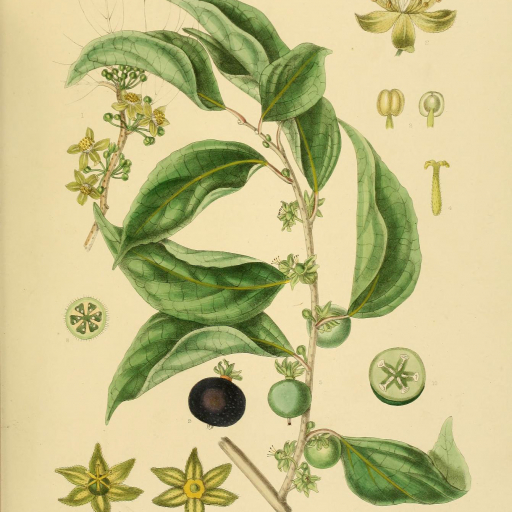
Plant Overview
Known as the "Ketembilla" or "Ceylon Gooseberry," this plant is a velvety treasure originating from the tropical forests of Sri Lanka and Southern India. While its berries look like deep purple jewels, the plant itself is a formidable guardian of the garden, often used as a "living barbed wire" due to its intense protective spines. It’s a favorite among rare fruit collectors who enjoy the sharp, acidic punch of its juice.
🔍 How to Identify
- 🍃 The Foliage: The leaves are simple, alternate, and oval-shaped, featuring a soft, velvety texture and slightly wavy margins.
- 🟣 The Fruit: Small, round berries that transition from green to a striking royal purple. They are covered in a fine, suede-like down (the name hebecarpa literally means "downy fruit").
- 🗡️ The Spines: Look closely at the stems—long, sharp, woody thorns are scattered along the branches, particularly on younger growth.
🏡 In Your Garden
- 🛡️ Natural Security: Because of its dense growth habit and sharp spines, the Ketembilla makes an impenetrable hedge. It’s a functional choice for property borders where you want both privacy and a "no-entry" zone.
- 🥣 The Flavor Profile: The fruit is extremely tart—too sour for most to eat fresh off the bush. However, it is prized for making deep red jellies, jams, and syrups that rival the flavor of English gooseberries.
- ✂️ Vigorous Growth: This is a fast-growing shrub that can quickly become a tangled thicket. Regular pruning is essential not just for shape, but to ensure light reaches the center of the plant to stimulate fruit production.
⚠️ Safety & Toxicity
- 🌵 Physical Hazard: The primary safety concern is the thorns. They are sharp and brittle, meaning they can break off under the skin. Always wear thick leather gloves and long sleeves when maintenance is required.
- 🐾 Pet & Child Safety: While the fruit is non-toxic and safe for consumption, the plant should be placed away from high-traffic areas or play zones to prevent accidental "stabbings" from the long spines.
- 👅 Acidic Punch: The fruit is very high in Vitamin C and acid; eating large quantities of raw fruit may cause mild stomach upset or mouth irritation in sensitive individuals.
✨ Fun Fact
The Ketembilla is so rich in natural pectin that it is often called a "Jam Maker's Dream." You rarely need to add store-bought thickeners to turn its juice into a perfect, shimmering jelly!

Detailed Care Instructions
To grow Dovyalis Hebecarpa plant, also known as the Ceylon gooseberry or Ketembilla, follow these steps:
- Climate and soil requirements: Dovyalis Hebecarpa thrives in warm climates with average temperatures ranging from 25°C to 30°C (77°F to 86°F). It requires well-draining soil with a pH level between 5.5 and 7.5.
- Choose the right location: Find a sunny spot in your garden or choose a container with enough space for the plant to grow. The plant needs a minimum of 6-8 hours of direct sunlight daily.
- Obtain a healthy plant: Purchase a healthy sapling from a reputable nursery or propagate from the seeds or cuttings.
- Planting: Dig a hole twice as wide and deep as the root ball. Place the sapling in the hole, ensuring that the top of the root ball is level with or slightly above the soil surface. Backfill the hole with the soil, gently firming it around the base of the plant. Water thoroughly.
- Watering: Dovyalis Hebecarpa requires regular watering, but over-watering can lead to root rot. Water the plant deeply once or twice a week, allowing the soil to dry out between waterings. Adjust watering frequency based on the weather conditions and moisture level of the soil.
- Fertilization: Apply a balanced, slow-release organic fertilizer during the growing season to promote healthy growth. Follow the package instructions for dosages and frequency.
- Pruning: Trim any dead, damaged, or diseased branches. Prune to shape the plant after fruiting or in early spring before new growth begins.
- Mulching: Apply a layer of organic mulch around the base of the plant to conserve moisture, suppress weed growth, and regulate soil temperature.
- Protection from pests and diseases: Monitor the plant for any signs of pests or diseases, such as aphids or fungal infections. Apply appropriate organic insecticides or fungicides if necessary.
- Harvesting: Dovyalis Hebecarpa produces fruit from late summer to early winter. Harvest the fruit when they are fully ripe and have turned a bright red or orange color. Gently twist the fruit to detach it from the plant.
With proper care and attention, your Dovyalis Hebecarpa plant should thrive and produce delicious fruit for you to enjoy.

Place in a bright room that is sun drenched almost all day. Or directly in a south-facing window.

When watering this particular plant species, it is important to first consider the soil moisture level. It is best to wait until the top layer of soil has dried out before watering again. Over-watering can lead to root rot and other problems, so it is important to err on the side of under-watering rather than over-watering.
When you do water, make sure to give the plant a thorough soaking, allowing the water to penetrate deep into the soil. This will encourage the plant's roots to grow deeper and establish a stronger foundation.
It is also important to avoid getting the leaves wet when watering, as this can lead to fungal growth and other issues. To prevent this, water at the base of the plant and avoid spraying the leaves.
In terms of frequency, the amount of water required will depend on a variety of factors such as the plant's size, the temperature and humidity of the environment, and the type of soil it is growing in. As a general rule of thumb, aim to water this plant species every 7-10 days, but adjust the frequency as needed based on the soil moisture level.
To fertilize this plant, use a balanced fertilizer with equal amounts of nitrogen, phosphorus, and potassium. Apply the fertilizer during the growing season, from spring to fall, every month or every other month depending on the plant's growth. Water the plant before fertilizing to prevent burning the roots. Spread the fertilizer around the base of the plant, and water again after application. Avoid getting the fertilizer on the leaves or stems as this can cause damage and burning.
The ideal soil for Dovyalis Hebecarpa plant is a well-draining potting mix that is loose and fast-draining. The mix should consist of a combination of organic matter such as compost or peat moss, sand or perlite, and loam or topsoil. The pH level of the soil should be between 6.5 and 7.5, which is slightly acidic to neutral. Avoid using heavy soils that retain moisture as they can cause the plant's roots to rot. It is important to ensure that the soil is kept moist but not waterlogged. The plant requires regular fertilization to ensure healthy growth, and the soil should be regularly amended with organic matter to maintain good soil health.
To propagate this plant, carefully take cuttings from a healthy, mature plant. Select a stem that has at least two sets of leaves and is approximately 6 inches long. Using clean, sharp scissors or pruning shears, make a clean, angled cut just below a leaf node. Remove any leaves or buds from the bottom half of the cutting. Dip the cut end into rooting hormone powder and plant it in a well-draining potting mix. Water the cutting and cover it with a plastic bag to create a humid environment. Place the cutting in a warm, bright location, but out of direct sunlight. Mist the plant occasionally to keep the leaves hydrated. After several weeks, the cutting should start to develop roots and new growth. Once the cutting has a few inches of new growth, it can be transplanted into a larger pot or outdoor garden.








