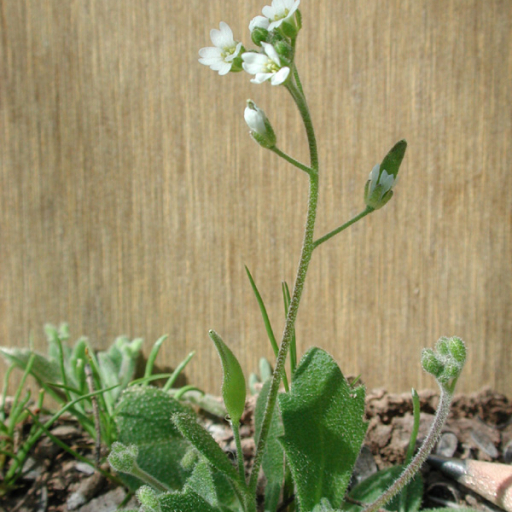
Plant Overview
Often called Wedgeleaf Draba or Whitlow Grass, this modest little wildflower is one of nature’s true "early risers." While other plants are still sleeping off the winter chill, this resilient annual is already blooming across rocky slopes and open prairies. Historically, it earned the name "Whitlow Grass" because ancient herbalists believed its tiny leaves could cure painful infections on the fingertips.
🔍 How to Identify
- 🍃 The Foliage: Look for a small "rosette" of leaves at the base that are distinctly wedge-shaped (broad at the tip and narrowing toward the stem). They are often covered in tiny, star-shaped hairs that give them a slightly fuzzy, grayish appearance.
- 🌸 The Blooms: It produces clusters of tiny, four-petaled white flowers. Each petal is slightly notched at the tip, giving the flower a delicate, clover-like silhouette.
- 📏 The Stature: This is a low-profile plant, usually staying under 8 inches tall. It focuses its energy on quick growth rather than height to beat the summer heat.
🏡 In Your Garden
- 🌱 Rock Specialist: Because it naturally thrives in limestone barrens and desert edges, this plant is a perfect candidate for a "neglected" rock garden. It doesn't want rich, heavy potting soil; it craves gritty, fast-draining earth and doesn't mind a bit of gravel.
- ⏳ A Short Life: This is an "ephemeral" annual. It completes its entire life cycle—from sprout to seed—in just a few weeks during the spring. Once the summer sun gets intense, the plant will wither away, leaving its seeds behind to wait for the next year.
⚠️ Safety & Toxicity
- ✅ Status: Generally considered non-toxic and safe.
- 🐾 Pet & Kid Friendly: There are no recorded toxicities for dogs, cats, or humans. While it isn't a culinary herb and shouldn't be consumed, it won't cause harm if a curious pet takes a nibble.
✨ Fun Fact
The genus name Draba comes from the Greek word "drabe," meaning "acrid" or "biting," referring to the peppery taste common in many plants within the mustard family (Brassicaceae), to which this little wildflower belongs!

Detailed Care Instructions
To grow Draba cuneifolia, follow these guidelines:
- Climate: Draba cuneifolia is native to alpine regions and prefers cool climate conditions. It can tolerate frost and cold temperatures. Ensure your growing region provides a suitable climate.
- Soil: This plant prefers well-draining soil with a pH level around neutral (6.5-7.5). Sandy or loamy soil types are ideal. Amend the soil with organic matter, such as compost, to improve drainage and fertility.
- Sunlight: Draba cuneifolia thrives in full sun to partial shade. Provide at least 4-6 hours of direct sunlight per day. Insufficient sunlight may result in weak growth and reduced flowering.
- Watering: This plant has low to moderate water requirements. Allow the soil to dry slightly between waterings to prevent overwatering, as it is susceptible to root rot. Provide regular watering during the growing season, but reduce watering in the winter when the plant is dormant.
- Planting: Plant Draba cuneifolia seeds or seedlings in spring or early summer when the soil has warmed up. Dig a hole wide and deep enough to accommodate the roots. Space multiple plants approximately 15-30 cm (6-12 inches) apart to allow for proper airflow and growth.
- Mulching: Apply a thin layer of organic mulch, such as straw or wood chips, around the base of the plants. This helps retain moisture, suppress weeds, and maintain a more consistent soil temperature.
- Fertilizer: Draba cuneifolia grows well in nutrient-poor soils, so it typically does not require much fertilizer. However, you can apply a slow-release, balanced fertilizer in early spring or top dress with compost for added nutrients.
- Pruning: Deadhead the spent flowers to encourage continued blooming and prevent self-seeding. Prune back any old or diseased foliage to maintain plant health.
- Pests and diseases: Draba cuneifolia is generally resistant to pests and diseases. However, watch out for slugs, snails, and aphids. Monitor the plants regularly and take appropriate action if needed, such as using organic pest control methods.
- Winter care: This plant is cold-hardy, but if you live in an extremely cold region, you can provide some protection by covering the plant with a layer of mulch or straw during the winter months.
With proper care and suitable growing conditions, your Draba cuneifolia should grow well and produce attractive flowers.

Place in a bright room that is sun drenched almost all day. Or directly in a south-facing window.

Draba cuneifolia is a plant that requires consistent and moderate watering throughout its growing season. When watering this plant, it is important to avoid overwatering or allowing the soil to become waterlogged.
To water Draba cuneifolia, gently pour water onto the soil around the base of the plant, avoiding the leaves and stems. This will help prevent fungal diseases and damage to the plant.
Water the plant regularly, but allow the soil to dry out slightly between waterings. The frequency of watering will depend on the climate and growing conditions, but generally, Draba cuneifolia will require watering every 5-7 days.
To determine if the plant needs watering, check the soil moisture level by inserting a finger into the top inch of soil. If the soil feels dry, it is time to water the plant.
It is also important to provide good drainage for the plant, as it does not tolerate standing water. Ensure that the soil is well-draining, and remove any excess water from saucers or trays beneath the plant.
Overall, watering Draba cuneifolia requires careful attention and moderation to ensure the best growth and health of the plant.
To fertilize this plant, it is recommended to mix a balanced fertilizer, such as a 10-10-10 or 20-20-20 blend, into the soil around the base of the plant in early spring as new growth begins. This can be repeated in midsummer to promote continued healthy growth. Avoid over-fertilizing, as this can lead to burning or damaging the plant roots. Additionally, it is recommended to water the plant thoroughly before and after applying fertilizer to avoid any potential stress to the plant.
Draba cuneifolia is a plant that requires well-draining soil with a neutral to slightly acidic pH. The soil should be composed of loam or sandy loam that is fertile and rich in organic matter. The addition of compost or well-rotted manure can help improve soil quality. Avoid heavy, clay soils as they can retain too much moisture, leading to root rot. It is important to ensure that the soil is consistently moist but not waterlogged to prevent stress or damage to the plant.
Draba cuneifolia plant can be propagated through various methods such as seed propagation and vegetative propagation.
Seed propagation involves collecting the seeds from the mature plants during the flowering season and storing them in cool, dry conditions. Once the growing season begins, the seeds can be sown in well-draining soil and kept moist until germination occurs.
Vegetative propagation involves taking stem cuttings from the parent plant and rooting them in a suitable medium, such as moist sand or vermiculite. Once roots have formed, the cuttings can be transplanted into pots to establish themselves before planting them outside in the garden. It is recommended to take cuttings from healthy plants during the active growing season for best results.
It is important to note that Draba cuneifolia has specific growing requirements, including well-draining soil and full sun exposure. Propagation success rates are higher when these requirements are met, and proper care and maintenance of the new plants are essential for their survival and growth.








