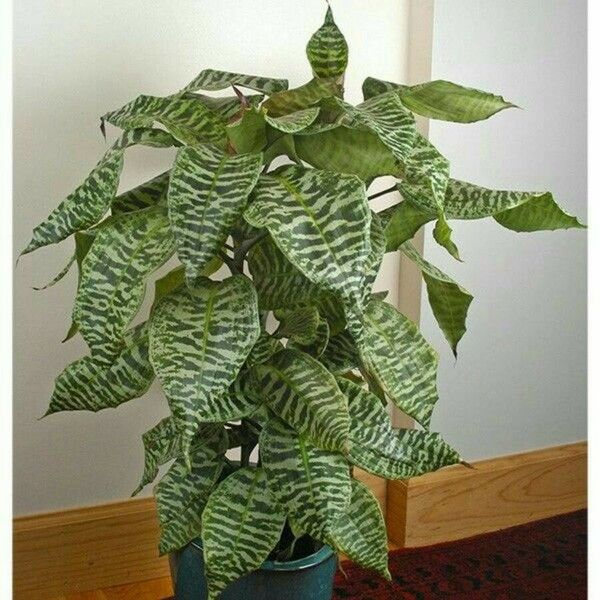
Plant Overview
Often hailed as the "Queen of Dracaenas," this West African royal is a showstopper for serious plant collectors. Unlike its lanky relatives, the Dracaena goldieana sports a striking zebra-print pattern that looks almost hand-painted. It is considered a "boutique" plant—a bit more demanding than your average houseplant, but its architectural beauty makes it the crown jewel of any indoor jungle.
🔍 How to Identify
- 🍃 Broad Foliage: Features wide, glossy, oval-shaped leaves that taper to a sharp point, unlike the sword-like leaves of other Dracaenas.
- 🦓 Zebra Banding: The most distinct feature is the horizontal, silvery-grey or pale green bands that contrast sharply against a deep forest-green base.
- 🪵 Hidden Cane: While it grows on a central stem or "cane," the leaves wrap closely around it in a spiraling fashion, giving it a dense, lush appearance from top to bottom.
🏡 In Your Garden
- 💧 Rainforest Requirements: Since it hails from the humid forest floors of Central Africa, it craves high humidity. If the air is too dry, those beautiful silver bands may start to crisp at the edges, so it thrives best in a kitchen, bathroom, or near a humidifier.
- 🚫 Fluoride Sensitivity: This plant is a "clean water" enthusiast. It is highly sensitive to fluoride and salts found in tap water, which can cause chemical burns on the leaf tips. Using distilled or rainwater is the secret to keeping it pristine.
- 🌤️ Light Nuance: It prefers bright, filtered light. Direct sun will bleach its intricate patterns, while deep shade will cause the silver bands to fade into a dull green.
⚠️ Safety & Toxicity
- 🐾 Toxic to Pets: Like all members of the Dracaena family, this plant contains saponins.
- 🤢 The Risk: If ingested by cats or dogs, it can cause vomiting (sometimes with blood), drooling, and dilated pupils in feline friends. It should be kept on a high shelf or in a room inaccessible to curious nibblers.
✨ Fun Fact
- ⏳ Slow & Steady: Dracaena goldieana is one of the slowest-growing plants in its genus. Because it takes so long to reach a mature height, it is often more expensive and harder to find in local nurseries than its cousins, making it a true "trophy" plant for enthusiasts.

Detailed Care Instructions
To grow Dracaena Goldieana, also known as Goldie's Dracaena or Gold Dust Dracaena, you will need to follow these steps:
- Choose the right pot: Select a pot that has good drainage holes and is slightly larger than the current size of the plant. This will allow the roots to spread comfortably.
- Soil: Use well-draining potting soil or a mixture of peat moss, perlite, and sand. Dracaena Goldieana prefers slightly acidic soil, so you can add some acidic ingredients like pine bark or sphagnum moss to the mix.
- Lighting: Place the plant in a location that receives bright, indirect light. Avoid direct sunlight, as it can scorch the leaves. A north or east facing window is usually ideal.
- Temperature and humidity: Dracaena Goldieana thrives in a temperature range of 65-80°F (18-27°C). It prefers moderate to high humidity levels, so consider using a humidifier or placing a tray of water near the plant to increase humidity.
- Watering: Water the plant regularly, keeping the soil lightly moist but not overly wet. Allow the top few inches of soil to dry out between waterings to prevent root rot. Avoid waterlogging or letting the plant sit in standing water.
- Fertilization: Use a balanced liquid fertilizer during the growing season (spring and summer) every 4-6 weeks. Follow the instructions on the fertilizer packaging and avoid over-fertilizing, as it may burn the plant.
- Pruning: Trim any yellow or brown leaves regularly to maintain the plant's appearance. You can also prune the plant to control its size or shape.
- Repotting: As the plant grows, you may need to repot it every 2-3 years to provide more space for the roots. Choose a new pot that is slightly larger and has fresh potting soil.
- Propagation: Dracaena Goldieana can be propagated through stem cuttings. Take a 4-6 inch cutting from a healthy stem and place it in a glass of water or directly in moist potting soil. Keep it in a warm, humid environment until roots form.
With proper care and attention, your Dracaena Goldieana plant should thrive and grow beautifully.

Place in a window with dappled sun or a spot in the middle of a room. Or directly in a window facing west or east.

To water this plant, fill a container with room temperature water and wait until the water has come to room temperature. Then, gently pour the water onto the soil around the base of the plant. Make sure not to water the leaves or stem of the plant, as this can cause damage. Wait until the soil has dried out slightly before watering again, as overwatering can lead to root rot and other issues. Additionally, make sure to provide proper drainage for the plant by using a pot with drainage holes and a well-draining soil mix. Finally, to ensure the health of the plant, provide it with bright, indirect sunlight and maintain a consistent temperature and humidity level.
To fertilize this plant, use a balanced liquid fertilizer and dilute it to half strength. Apply the fertilizer to the soil every two weeks during the growing season (spring and summer). In the dormant season (fall and winter), reduce the frequency to once a month. Be careful not to over-fertilize as it can burn the roots.
When it comes to choosing soil for the Dracaena Goldieana plant, it is important to consider the plant's specific needs. This plant typically requires well-draining soil that is rich in nutrients but not too heavy or compacted. A good option may be a mixture of potting soil, perlite, and orchid bark, which provides good aeration, drainage, and nutrient retention. It is recommended to avoid using soils that contain high levels of peat or contain heavy amounts of organic matter as this may lead to waterlogging and root rot. Additionally, adding a layer of gravel or stones to the bottom of the pot can assist in drainage and preventing water retention. Proper soil choice is key to maintaining a healthy and thriving Dracaena Goldieana.
To propagate this plant, start by taking a healthy stem cutting from the parent plant. Make sure the cutting is at least six inches long and has a few leaves attached to it. Using a sharp and sterile knife, make a clean cut just below a node, which is a small bump where the leaves attach to the stem.
Once you have the cutting, remove the bottom leaves, leaving only a few at the top. This will reduce the plant's water loss through transpiration and allow the cutting to focus its energy on developing roots.
Next, dip the cut end of the stem into rooting hormone to induce root growth. Then, plant the cutting in well-draining soil and water it thoroughly. Cover the cutting with a clear plastic bag to create a humid environment and help it retain moisture while it develops roots.
Keep the plant in bright, indirect sunlight and maintain the soil's moisture level by watering it regularly. After a few weeks, check for root growth by gently tugging on the stem. If it resists, it means the plant has begun to establish roots. At this point, you can remove the plastic bag and begin fertilizing the plant.
Overall, propagation of this plant is relatively easy as it quickly develops roots and adapts to new environments.








