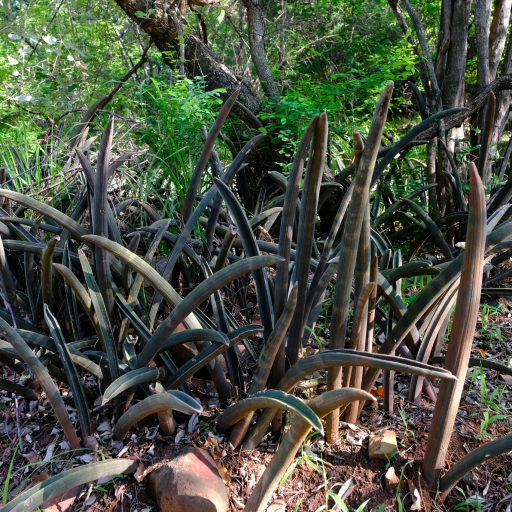
Plant Overview
Often called the "Baseball Bat Plant" due to its incredibly thick, heavy leaves, Dracaena hallii (formerly classified as Sansevieria hallii) is a true architectural marvel. Hailing from the arid regions of Zimbabwe and Mozambique, this succulent is a favorite among "Xerophytic" enthusiasts who love plants that look more like prehistoric sculptures than traditional greenery. It is a slow-growing survivor designed to withstand the harshest droughts.
🔍 How to Identify
- 🏏 The "Bat" Leaf: Unlike flat-leaved Snake Plants, this species produces singular, cylindrical leaves that are exceptionally thick and rigid, resembling a club or baseball bat.
- 🌊 Deep Channels: Each leaf typically features a deep, longitudinal groove (or channel) running down the inner face, which helps the plant funnel sparse rainwater toward its base.
- 🎨 Muted Tones: The skin of the plant is often a glaucous blue-green or "dusty" grey, frequently adorned with subtle horizontal banding or fine vertical striations.
🏡 In Your Garden
- 🏜️ The Desert Specialist: Because it stores a massive amount of water in its dense leaves, this plant is the ultimate "low-maintenance" companion. It thrives on neglect and can go weeks—or even months—without a drink during the winter dormant period.
- 🐢 Patience Required: This is one of the slowest-growing members of the Dracaena family. It may only produce one new leaf per year, meaning it rarely outgrows its pot, making it perfect for small shelves or minimalist office desks.
⚠️ Safety & Toxicity
- 🐾 Mildly Toxic: Like most Dracaena and Sansevieria species, Dracaena hallii contains saponins, which are a natural defense mechanism against fungi and insects.
- 🤢 Pet & Child Safety: If ingested, it can cause nausea, vomiting, or diarrhea in cats and dogs. The leaves are very tough and fibrous, making them difficult to chew, but it should still be kept out of reach of curious nibblers.
✨ Fun Fact
While most people think of Snake Plants as upright "swords," Dracaena hallii actually grows from a thick, underground rhizome that can exert enough pressure to crack a plastic nursery pot if it isn't repotted when the roots become overcrowded!

Detailed Care Instructions
To grow a Dracaena Hallii plant, follow these steps:
- Light: Place the plant in a location with bright, indirect sunlight. Avoid direct sunlight as it can scorch the leaves. A north or east-facing window is usually ideal.
- Temperature: Dracaena Hallii thrives in average room temperatures between 65-80°F (18-27°C). Avoid placing the plant near cold drafts or air conditioning vents.
- Watering: Water the plant when the top inch of soil feels dry to the touch. Ensure the pot has drainage holes to prevent waterlogging, as excessive moisture can lead to root rot. It's better to underwater than overwater the plant.
- Humidity: These plants tolerate average humidity levels, but appreciate a slight increase. Increase humidity by misting the leaves regularly or placing the pot on a tray filled with pebbles and water.
- Fertilization: Feed the plant every 2-4 weeks with a balanced liquid fertilizer during the growing season (spring and summer). Follow the instructions on the fertilizer package for the proper dilution and dosage.
- Pruning: Trim off any yellowing or damaged leaves regularly to keep the plant looking neat. You can also prune away leggy stems to encourage fuller growth.
- Repotting: Dracaena Hallii prefers to be slightly root-bound. Repot the plant only when it has outgrown its current pot, using a well-draining potting mix. Repotting is typically done every 2-3 years.
- Propagation: Dracaena Hallii can be propagated through stem cuttings. Take a 4-6 inch (10-15 cm) cutting, remove the lower leaves, and place it in a container with moist soil or water. Keep it in a warm and bright location, and roots should develop in a few weeks.
With proper care, your Dracaena Hallii plant should thrive and grow into a beautiful specimen.

Place in a bright room that is sun drenched almost all day. Or directly in a south-facing window.

When watering the Dracaena Hallii plant, it is important to consider a few factors to ensure its optimal growth and health.
1. Understand the watering needs: Dracaena Hallii plants prefer slightly moist soil, but they are susceptible to root rot if overwatered. This means that they should not be watered too frequently or allowed to sit in standing water. It is crucial to strike a balance between keeping the soil damp and preventing waterlogged conditions.
2. Judge the moisture level: Before watering, it is best to check the moisture level of the soil. This can be done by inserting a finger or a moisture meter about an inch (2.5 cm) deep into the soil. If it feels dry at this depth, it is an indication that the plant needs watering. On the other hand, if the soil feels moist or wet, it is advisable to wait before watering again.
3. Watering frequency: The frequency of watering depends on various factors such as room temperature, humidity levels, pot size, and the type of potting mix used. As a general guideline, watering every 1-2 weeks is usually sufficient. However, it is crucial to adjust the frequency based on the specific needs of your Dracaena Hallii plant to prevent over or under-watering.
4. Watering technique: When watering, it is important to use room temperature water, as cold water might shock the plant's roots. Gradually pour water onto the soil until it begins to drain out from the bottom of the pot. This ensures that the entire root system receives adequate moisture but prevents the plant from sitting in excess water. Avoid wetting the leaves excessively during watering, as this can promote the growth of fungal diseases.
5. Consider environmental factors: Adjust the watering schedule based on the plant's response to environmental conditions. For example, during warmer months or if the plant is exposed to more sunlight, it may need more frequent watering to compensate for the increased water loss through evaporation.
6. Observe the plant: Developing a habit of observing the plant will help you understand its individual watering needs better. Look for signs of over or under-watering, such as yellowing or browning leaves, wilting, or overly soggy soil. Adjust the watering regimen accordingly to ensure the plant remains healthy and thriving.
Remember, the above guidelines provide general watering advice for the Dracaena Hallii plant, but individual care requirements may vary. Always consider the specific conditions of your plant and adjust watering practices to meet its unique needs.
To fertilize the Dracaena Hallii plant, you can follow these instructions:
- Begin fertilizing in the spring or early summer when the plant starts actively growing.
- Use a balanced, water-soluble fertilizer specifically formulated for houseplants.
- Dilute the fertilizer to half the recommended strength to avoid over-fertilization.
- Water the plant thoroughly before applying the fertilizer to prevent root burn.
- Apply the diluted fertilizer to the soil around the base of the plant, avoiding direct contact with the leaves.
- Follow the package instructions on the fertilizer for the frequency of application, typically once every 2-4 weeks.
- Avoid fertilizing during winter months or when the plant is dormant.
- Monitor the plant's response to the fertilizer. If you notice any burning or yellowing of leaves, reduce or discontinue fertilizing temporarily.
- Regularly flush the soil with plain water to remove any excess fertilizer buildup and prevent salt buildup.
- Keep in mind that the amount and frequency of fertilization may vary depending on the specific needs of your Dracaena Hallii plant, so always observe the plant's health and adjust the fertilization accordingly.
Dracaena Hallii is a popular indoor plant that requires well-draining soil to thrive. It is best to use a high-quality potting mix specifically formulated for houseplants. The soil should be rich in organic matter and capable of retaining moisture without becoming overly saturated. A soil mix with good aeration is essential for the plant's root health.
A suitable soil mixture for Dracaena Hallii may consist of a blend of peat moss, perlite, and coarse sand or pumice. Peat moss helps retain moisture in the soil while providing organic matter. Perlite aids in soil drainage and aeration, preventing waterlogging and root rot. Coarse sand or pumice promotes additional drainage and prevents soil compaction.
When preparing the soil for Dracaena Hallii, ensure it is thoroughly mixed to ensure an even distribution of moisture and nutrients. Avoid using heavy garden soil or compost that may not drain well, as waterlogged conditions can lead to root rot and other fungal diseases.
It is important to note that Dracaena Hallii is sensitive to excessive moisture, so regular watering should be done with caution, allowing the top inch of soil to dry out between waterings. Additionally, using a well-draining soil will help prevent water from pooling at the bottom of the pot, reducing the risk of root rot.
Overall, the best soil for Dracaena Hallii is a well-balanced potting mix that provides good drainage and aeration, while retaining the right amount of moisture for optimal plant growth.
Propagation of Dracaena Hallii can be accomplished through a few different methods, including stem cuttings, division, and air layering.
One way to propagate this plant is through stem cuttings. Start by selecting a healthy stem that has at least two nodes. Using a clean, sharp knife or scissors, make a clean cut just below a node. Remove any lower leaves or branches from the cutting, leaving only a few on the top. Dip the cut end into a rooting hormone powder to promote root development. Plant the cutting in a well-draining potting mix or perlite, making sure the node is covered with soil. Place the cutting in indirect light and keep it consistently moist, but not overly saturated. Within a few weeks, roots should begin to develop.
Another method of propagation is through division, which involves separating an existing plant into smaller sections. Carefully remove the plant from its pot and gently separate the root ball into sections, ensuring each section has a healthy amount of roots and foliage. Plant each divided section in a separate container with fresh potting mix. Water the newly divided sections thoroughly and place them in indirect light. Maintain consistent moisture and monitor their growth over time.
Air layering is another technique that can be used to propagate Dracaena Hallii. Start by selecting a mature and healthy stem. Make a small incision or remove a small piece of the outer bark on the stem, about 4-6 inches from the tip. Apply a rooting hormone to the exposed area. Next, take a handful of moist sphagnum moss or a similar rooting medium and wrap it around the exposed area, securing it with plastic wrap or foil. Keep the moss consistently moist and wait for roots to develop, which can take a few months. Once the roots have formed, carefully cut off the rooted section and plant it in a separate container with fresh potting mix.
Regardless of the propagation method chosen, it is important to provide an ideal environment for the new plants to grow. This includes providing adequate light, temperature, and humidity levels. Regularly monitor the moisture levels of the soil to ensure they do not become waterlogged, as this can lead to root rot. With proper care and attention, new plants can be successfully propagated from a Dracaena Hallii.








