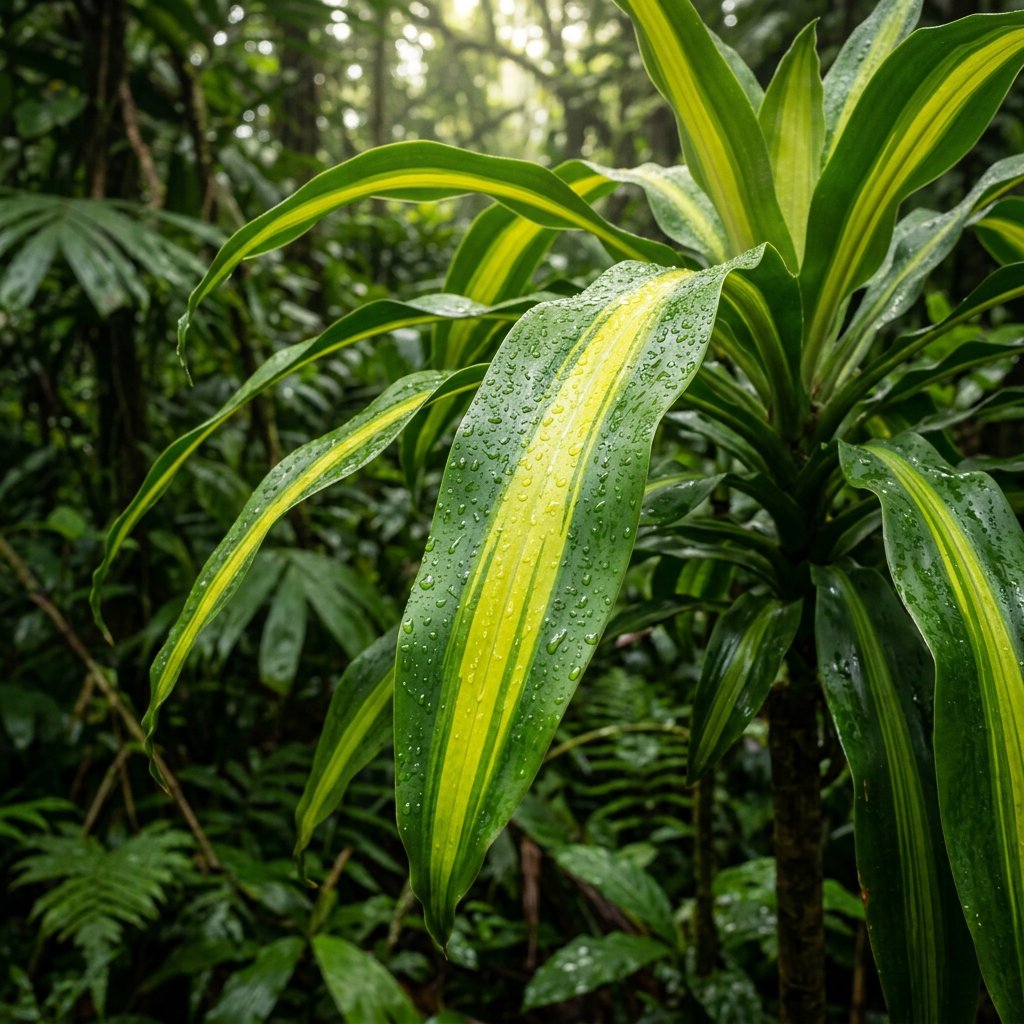
Plant Overview
Often called the "Corn Plant" because of its striking resemblance to stalks of maize, Dracaena massangeana is a timeless staple in interior design. Native to the tropics of Upper and Lower Guinea in Africa, it brings a slow-growing, architectural elegance to any indoor space. Its thick, woody trunks and cascading variegated foliage make it feel more like a piece of living sculpture than a simple houseplant.
🔍 How to Identify
- 🍃 The Foliage: Long, sword-shaped leaves that arch gracefully. They feature a bold, lime-yellow stripe running right down the center of a deep forest-green blade.
- 🪵 The "Cane": Unlike many houseplants, this Dracaena grows from thick, grey-brown woody stems (canes) that look like small tree trunks.
- 📏 Growth Pattern: The leaves emerge in a fountain-like rosette from the top of the canes, often reaching lengths of up to 3 feet in mature specimens.
🏡 In Your Garden
- 💧 The Moisture Balance: Because those thick woody canes store a significant amount of water, this plant is incredibly drought-tolerant. The most common mistake is overwatering; it prefers its soil to dry out significantly before the next drink to avoid "wet feet" and root rot.
- ☀️ Light & Color: While it can survive in lower light, its iconic yellow variegation will fade to solid green if it’s kept in the dark for too long. However, keep it out of direct midday sun, which can scorch the leaves and leave permanent brown "burn" marks.
- 🚿 Water Quality: If you notice the tips of the leaves turning brown and crispy, it might be a "fussy eater." This plant is sensitive to fluoride and salts often found in tap water; using filtered water or letting tap water sit out overnight can prevent this.
⚠️ Safety & Toxicity
- 🐾 Status: Toxic to pets (cats and dogs).
- 🤢 Details: The plant contains saponins. If ingested by your furry friends, it can cause vomiting, drooling, and dilated pupils in cats. It is generally non-toxic to humans, though the leaves are fibrous and should not be consumed.
✨ Fun Fact
The Dracaena massangeana was a superstar in NASA’s famous "Clean Air Study." It was found to be exceptionally good at scrubbing indoor air of harmful toxins like formaldehyde, making it as functional as it is beautiful!

Detailed Care Instructions
| Humidity | Normal |
| Lighting | Part Sun |
| Difficulty | Medium |
| Temperature | 18°C - 30°C |
| Hardiness Zones | 10B - 11 |
To promote the growth of your Dracaena Massangeana plant, also known as the corn plant or cornstalk dracaena, you can follow these steps:
- Placement: Choose a suitable location for your plant. Dracaena Massangeana thrives in bright but indirect light, so place it in a spot near a window where it can receive filtered sunlight. Avoid placing it in direct sunlight as it can scorch the leaves.
- Temperature: Maintain a warm temperature between 60-75°F (15-24°C) during the day and slightly cooler temperatures at night. Avoid exposing the plant to extreme temperature changes, drafts, or cold air from windows or doors.
- Watering: Water the plant when the top inch of soil feels dry. It prefers evenly moist soil but can tolerate some drying out between waterings. Be cautious not to overwater as it can lead to root rot. Ensure that the pot has drainage holes to prevent waterlogging.
- Humidity: Dracaena Massangeana benefits from slightly higher humidity levels. Mist the leaves occasionally with water or place a tray of water near the plant to increase humidity. Avoid misting excessively as it can lead to fungal issues.
- Fertilizing: Feed your plant every 2-4 weeks during the growing season (spring and summer) with a balanced, water-soluble fertilizer diluted to half strength. Reduce or stop fertilizing during the winter months when growth slows down.
- Potting and soil: Repot the plant every 2-3 years or when it becomes root-bound. Choose a pot with drainage holes and use a well-draining potting mix. A mix of peat moss, perlite, and sand or other organic material is suitable.
- Pruning: Trim any yellow or brown leaves regularly to maintain the plant's appearance. If the plant becomes too tall and leggy, you can cut off the stem at your desired height, and new shoots will sprout from the cut area, creating a bushier plant.
- Propagation: You can propagate Dracaena Massangeana through stem cuttings. Take 6-8 inch (15-20 cm) stem cuttings, remove the lower leaves, allow the cut end to dry for a day, then plant the cutting in a well-draining soil mix. Keep the soil lightly moist, and new roots should develop in a few weeks.
By providing the right lighting, temperature, watering, and care, your Dracaena Massangeana plant should grow well and continue to thrive.

Place in a window with dappled sun or a spot in the middle of a room. Or directly in a window facing west or east.

The plant in question belongs to the family Asparagaceae and is a popular houseplant known for its long, green leaves with yellow stripes. To properly water this plant, you should allow the topsoil to dry out completely before watering it again. This can be determined by sticking your finger about an inch into the soil to feel for moisture. When watering, add enough water to saturate the soil and allow excess water to drain out of the bottom of the pot. It is important not to let the plant sit in standing water for too long as it can lead to root rot. Additionally, this plant prefers moderate levels of humidity, so you may want to mist the leaves occasionally or place a tray of water near the plant to increase humidity.
To fertilize this plant, use a well-balanced, water-soluble fertilizer once a month during the growing season (spring and summer). Dilute the fertilizer to half strength and apply to the soil around the base of the plant. Do not fertilize during the dormant season (fall and winter). Avoid over-fertilizing, as this can lead to root burn and other issues.
The ideal soil for this plant should be a well-draining, nutrient-rich loam that is slightly acidic in nature. It should contain a mixture of sand, peat moss, and vermiculite to promote good drainage and moisture retention. The pH level of the soil should be between 6 and 6.5 to promote healthy growth. The soil should be kept consistently moist but not waterlogged, as overwatering can lead to root rot. It is also recommended to repot the plant every 2-3 years to ensure it has enough nutrients and space to grow.
To propagate this plant, you first need to select a healthy stem that is around 4-6 inches long and has at least one leaf node. Cut the stem at a 45-degree angle using a sterilized and sharp knife or pruning shears.
Remove any leaves that are close to the bottom of the stem to expose the nodes and encourage root growth. Dip the base of the stem in rooting hormone to promote root growth.
Then, plant the stem cutting into a good quality potting soil mix that is well-draining. Water the soil until it is moist, but not soggy.
Cover the plant with a clear plastic bag or plastic wrap to create a humid environment for the plant, and place it in a bright but indirect light area.
Check the soil moisture regularly and keep it moist by misting it every few days. Within a few weeks, roots should start to grow from the nodes and the plant will start to grow new leaves. Once the plant has established roots and is growing well, you can remove the plastic covering.
Common pests of the cornstalk dracaena include Scale insect, mealybugs, spider mites, thrips. Make a habit of checking your cornstalk dracaena frequently for pests so that any infestations can be caught and managed early.







