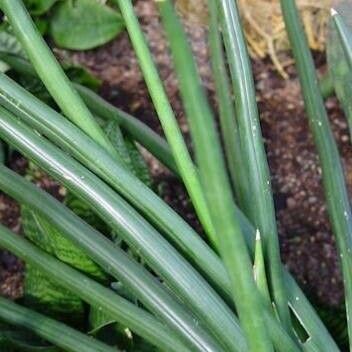
Plant Overview
Often confused with its cousins in the "Corn Plant" family, the Dracaena raffillii is the bold, broad-shouldered member of the Dragon Tree family. Hailing from the tropical regions of East Africa, this plant is prized for its architectural silhouette and glossy, deep-green canopy. It is a slow-growing but steadfast companion that can eventually transform from a tabletop ornament into a towering indoor tree.
🔍 How to Identify
- 🍃 Broad Foliage: Unlike the thin, needle-like leaves of other Dracaenas, these leaves are wide, lance-shaped, and can grow up to two feet long with a distinct waxy sheen.
- 🌳 Sculptural Stems: As the plant matures, it naturally sheds its lower leaves to reveal a thick, tan-colored woody trunk that gives it a rugged, palm-like appearance.
- 🌀 Spiral Growth: The leaves emerge in a tight, swirling rosette pattern from the terminal buds, creating a lush, fountain-like effect at the top of each "cane."
🏡 In Your Garden
- 💧 Thirsty for Air: This plant is highly sensitive to "wet feet." It prefers a chunky, well-draining potting mix. If the soil stays damp for too long, the roots can suffocate, leading to yellowing leaves.
- ☀️ Light Nuance: While it is often marketed as a "low light" plant, it actually thrives in bright, dappled sunlight. In too much shade, the stems become "leggy" and weak as the plant stretches toward the nearest window.
⚠️ Safety & Toxicity
- 🐾 Toxic to Pets: This species contains saponins, which are natural chemical compounds that act as a defense mechanism. If chewed by cats or dogs, it can cause vomiting, drooling, and dilated pupils.
- 🚫 Human Ingestion: While not life-threatening to humans, the fibrous leaves can cause stomach upset if swallowed and may cause mild skin irritation in particularly sensitive individuals.
✨ Fun Fact
The name Dracaena is derived from the Ancient Greek word drakaina, which means "female dragon." This refers to the red, resinous sap found in many species within the genus, which was historically harvested and sold as "Dragon’s Blood" for use in medicine, dyes, and alchemy!

Detailed Care Instructions

Place in a bright room that is sun drenched almost all day. Or directly in a south-facing window.

When the top few inches of soil dry out, water your plants. If the top few inches of soil are still moist, do not water your plant. Wait a few days, then poke your finger into the soil to see if anything has changed. Overwatering poses a disease risk, such as the development of fungal diseases in the roots. These plants have adaptations in there leaves that allow them to survive in low water supply.
These plants can thrive without taking help from any fertilizer. However, if the medium of growth is something other than soil for instance sand then you may need to add little fertilizer. The best way to know if your plants need fertilizer or not is to check for yellowing of leaves. If the leaves start to turn yellow it’s fertilizing time.
You may use All Purpose Plant Food or Green Plant Food or Cactus Fertilizer for your Dracaena Raffillii
Common pests of the dracaena raffillii include Scale insect, mealybugs. Make a habit of checking your dracaena raffillii frequently for pests so that any infestations can be caught and managed early.







