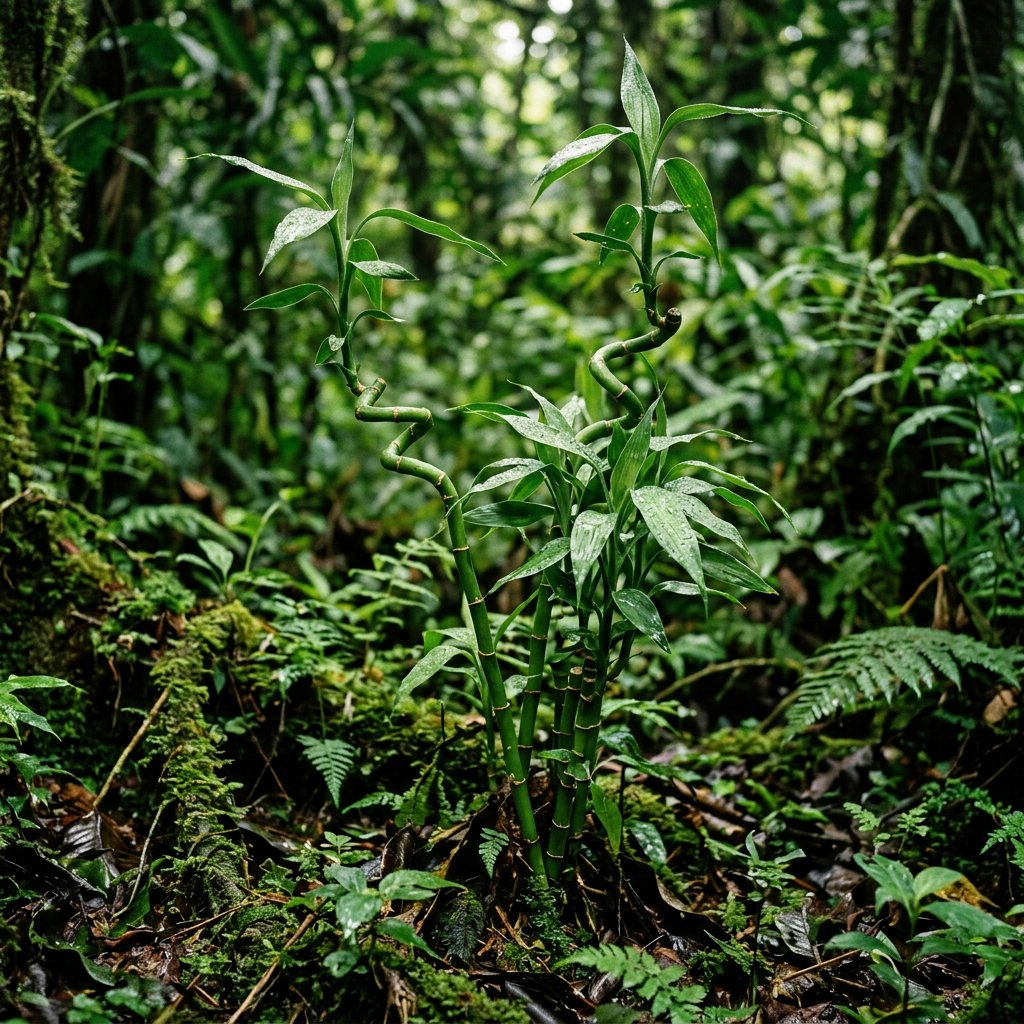
Plant Overview
Often called the "Lucky Bamboo," this charming plant is actually a master of disguise. Despite its name and appearance, it isn’t a bamboo at all; it’s a member of the asparagus family native to Central Africa. A staple in Feng Shui for centuries, it is believed to invite positive energy, health, and prosperity into any space it inhabits.
🔍 How to Identify
- 🎋 The Stems: Segmented, fleshy green stalks that strongly resemble bamboo "culms," though they are much more flexible and soft.
- 🍃 The Foliage: Long, lance-shaped leaves that are glossy and reach about 5–10 inches in length, often sprouting from the tops or sides of the stalks.
- 🌀 Growth Style: While it naturally grows straight up, it is frequently trained into intricate spirals, braids, or heart shapes by growers manipulating light sources.
🏡 In Your Garden & Home
- 💧 Water Sensitivity: This species is notoriously picky about its drink. It is highly sensitive to fluoride and chlorine found in tap water, which can cause the leaf tips to turn yellow or brown. Using distilled or filtered water is the secret to keeping it vibrant.
- 🌤️ Light and Soil: While famous for surviving in dim offices, it "stretches" and loses its color in deep shade. It thrives in bright, indirect light. It is one of the few houseplants that can grow indefinitely in just pebbles and water, though it grows faster when transitioned into well-draining soil.
⚠️ Safety & Toxicity
- 🐾 Toxic to Pets: Dracaena sanderiana contains saponins, which are chemical compounds that protect the plant but are toxic to cats and dogs.
- ⚠️ The Risk: If chewed or swallowed, it can cause vomiting (sometimes with blood), drooling, and dilated pupils in cats. It is best kept on high shelves or desks out of reach of curious paws.
✨ Fun Fact
In the practice of Feng Shui, the number of stalks in your arrangement carries a specific meaning. Three stalks represent happiness, wealth, and long life, while five stalks represent the areas of life that impact wealth. However, you will almost never find an arrangement with four stalks, as the word for "four" in Chinese sounds very similar to the word for "death."

Detailed Care Instructions
Lucky bamboo can grow indoors and outdoors. However, the best conditions for a lucky bamboo plant are indoors where it is warm but away from harsh sunlight.
How long will lucky bamboo live?
Lucky bamboo is a short-lived plant and lives for one to two years. However, expect your plant to live a few years longer if you transfer it to a pot with soil.
Where should I place lucky bamboo in my home?
According to feng shui design, placing lucky bamboo anywhere will inspire prosperity in that area. Specifically, put a lucky bamboo plant on your desk for career growth, in your entryway for new beginnings, in a bedroom for harmonious relationships, and the wealth area of any room (far left corner from the doorway) for financial abundance.
| Lighting | Full Sun |
| Hardiness Zones | Min 10A |
To grow Dracaena Sanderiana (also known as Lucky Bamboo) successfully, you can follow these steps:
- Choose a healthy bamboo stalk: Select a sturdy and healthy bamboo stalk with bright green leaves and no signs of damage or discoloration.
- Container selection: Place the bamboo stalk in a container filled with clean water. Make sure the container is tall enough to support the plant's height and has enough room for water to circulate.
- Water quality: Only use clean, distilled, or filtered water as tap water may contain chemicals that can harm the plant. Change the water every 1-2 weeks to prevent the buildup of bacteria and algae.
- Lighting requirements: Dracaena Sanderiana prefers bright, indirect light. Avoid direct sunlight as it can lead to leaf burn. Place the plant near a window with filtered sunlight or use artificial lights if necessary.
- Temperature and humidity: Dracaena Sanderiana thrives in temperatures between 65-95°F (18-35°C). Maintain a humidity level of 40-60%. Avoid placing the plant near drafts or temperature extremes.
- Fertilization: Although not necessary, you can use a diluted liquid houseplant fertilizer once a month during the growing season (spring and summer) to promote healthier growth.
- Pruning: If the plant becomes too tall or leggy, you can trim the top to promote branching. Use clean, sharp scissors or pruning shears to make a clean cut just above a node.
- Maintenance: Regularly remove any yellow or brown leaves to maintain the plant's health and appearance. Wipe the leaves occasionally to remove any dust that may accumulate.
- Propagation: Dracaena Sanderiana can be propagated by dividing the stalks. Gently separate the stalks with a clean, sharp knife and place them in separate containers with fresh water.
Remember to be patient, as Dracaena Sanderiana is a slow-growing plant. With proper care and attention to its needs, your Lucky Bamboo will thrive and bring good luck to your environment.

Place in a window with dappled sun or a spot in the middle of a room. Or directly in a window facing west or east.

Dracaena Sanderiana is a popular plant in the gardening world. It is native to Africa and is commonly grown as a houseplant in many parts of the world. It is a plant that is easy to take care of and does not require much maintenance. It can grow in a range of lighting conditions, from low to bright light, and can also tolerate a range of temperatures, from warm to cool.
When it comes to watering, it is important to keep in mind that Dracaena Sanderiana is a plant that likes moisture but does not like to be overwatered. The soil should be moist but not saturated. It is best to water it regularly but not let the soil become waterlogged.
To water a Dracaena Sanderiana plant, first, check the soil's moisture level by sticking your finger about an inch deep into the soil. If it feels dry, it is time to water. If it feels moist, wait another day or two before checking again.
Water the plant slowly and thoroughly, using room temperature water. Allow the water to drain out of the bottom of the pot and do not let the plant sit in excess water. Empty the saucer under the pot after 20-30 minutes to make sure the plant is not sitting in water. It is best to water in the morning when the plant is most active and can absorb the water efficiently.
In summary, Dracaena Sanderiana is a plant that likes moisture but does not like to be overwatered. Regular watering with well-draining soil and allowing excess water to drain out is essential for its health and well-being.
To fertilize this plant, use a balanced liquid fertilizer. Dilute the fertilizer to half strength and apply it every 4 weeks during the growing season, which is usually from spring to early autumn. Do not fertilize during winter as the plant is dormant at this time. Make sure the soil is moist before applying the fertilizer and ensure that any excess fertilizer is drained out of the pot after applying.
The Dracaena Sanderiana plant requires well-draining soil with good aeration. The soil should be rich in nutrients but not overly fertile as it may encourage excessive leaf growth at the expense of stem development. A slightly acidic to neutral pH level is ideal for this plant. The soil should also retain moisture well but not be waterlogged as it may lead to root rot. A mix of peat moss, perlite, and sand is suitable for growing this plant. Additionally, adding some organic matter such as compost can provide essential nutrients and improve soil quality.
To propagate this plant, first you must obtain a healthy stem cutting with several leaves attached. The stem cutting should be at least six inches in length.
Next, remove the lower leaves from the stem, leaving only the top few leaves intact.
Dip the bottom of the stem cutting in a rooting hormone powder to encourage root growth.
Prepare a pot with well-draining soil and insert the stem cutting into the soil, making sure the bottom of the stem is covered.
Water the soil lightly and cover the pot with a plastic bag to create a greenhouse effect.
Place the pot in a bright, but indirect, location and keep the soil moist.
After several weeks, new growth should appear, indicating that the cutting has successfully rooted. At this point, remove the plastic bag and continue caring for the plant as usual.
Common pests of the belgian evergreen include Scale insect, mealybugs, spider mites, thrips. Make a habit of checking your belgian evergreen frequently for pests so that any infestations can be caught and managed early.







