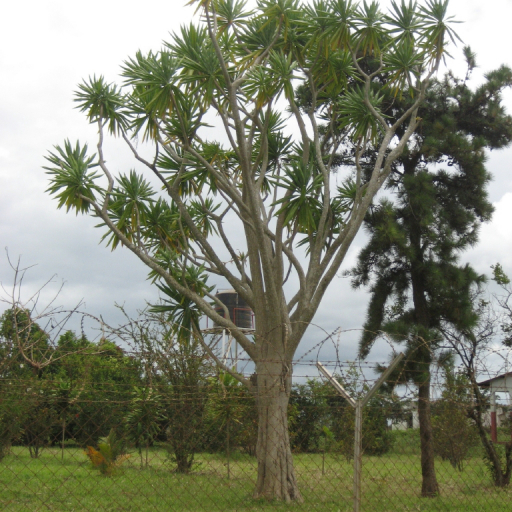
Plant Overview
Known as the Steudner’s Dragon Tree or the Broad-leaved Dragon Tree, this African native is a true architectural masterpiece. Unlike its thinner-leaved cousins, this Dracaena boasts wide, glossy green foliage that gives it a lush, jungle-like presence. In its home across the highlands of East Africa, it is often seen as a guardian of the landscape, growing into a massive, multi-branched tree.
🔍 How to Identify
- 🍃 The Foliage: Large, sword-shaped leaves that are significantly broader than most other Dragon Trees. They are deep green, highly glossy, and can grow up to 3 feet long.
- 🪵 The Trunk: As the plant matures, it develops a thick, woody "cane" or trunk. Lower leaves naturally drop off as it grows, leaving behind a clean, sculptural stem.
- 📐 Growth Habit: It grows in a dramatic rosette pattern. Indoors, it maintains a tidy upright habit, but in the wild, it can reach heights of over 40 feet!
🏡 In Your Garden
- 💧 Watering Nuance: This plant is sensitive to the "extras" in your tap water. If you notice brown, crispy tips, it’s likely reacting to fluoride or chlorine. Using filtered water or letting tap water sit out overnight can prevent this "leaf burn."
- ☀️ Light & Placement: While it loves bright, indirect light, it is remarkably patient with lower-light corners. However, avoid harsh midday sun, which can bleach the beautiful deep green pigment right out of the leaves.
- 🪴 The Taproot: Dracaena steudneri prefers to be slightly root-bound. Don't rush to repot it; moving it to a giant container too early can lead to "wet feet" and root rot because the soil holds more moisture than the plant can drink.
⚠️ Safety & Toxicity
- 🐾 Status: Toxic to pets.
- 🧪 Details: Like most members of the Dracaena family, this plant contains saponins. If ingested by cats or dogs, it can cause vomiting (sometimes with blood), drooling, and dilated pupils. It is best kept on a high stand or in a room restricted from curious nibblers.
✨ Fun Fact
In many East African cultures, particularly in Ethiopia and Uganda, Dracaena steudneri is considered a symbol of peace and boundary-marking. It is frequently planted to denote land borders or used in traditional ceremonies to signify harmony and the "settling" of disputes.

Detailed Care Instructions
To grow a Dracaena Steudneri plant, you can follow the following steps:
- Select a suitable location: Choose a spot with bright, indirect sunlight. Dracaena Steudneri plants like to be near windows but not in direct sunlight, as it can scorch their leaves. They can tolerate lower light conditions, but their growth may slow down.
- Soil: Use well-draining soil mix. A mixture of regular potting soil with perlite or sand works well. Ensure the soil is moist but not waterlogged.
- Watering: Water your Dracaena Steudneri plant when the top inch of soil feels dry. Water thoroughly and allow any excess water to drain out. Empty the saucer to avoid waterlogged roots, as this can cause root rot. Be careful not to overwater, as they can be sensitive to it.
- Temperature and Humidity: Dracaena Steudneri plants prefer temperatures between 60-75°F (15-24°C). They can tolerate average indoor humidity levels, but they appreciate a slightly higher humidity level. You can increase humidity by misting the leaves regularly or placing the plant on a tray with water and pebbles.
- Fertilizer: Feed your Dracaena Steudneri plant every 2-4 weeks during the growing season (spring and summer) with a balanced houseplant fertilizer. Follow the instructions on the fertilizer packaging for the correct dosage.
- Pruning: Prune any dead or yellowing leaves to keep the plant neat and healthy. You can also trim the top of the plant to encourage branching and fullness.
- Propagation: Dracaena Steudneri plants can be propagated by stem cuttings. Cut a healthy stem section with a few leaves and place it in water or moist soil until roots develop. Once rooted, transfer the cutting to a pot with well-draining soil.
- Repotting: As the plant grows, you may need to repot it into a larger container every 2-3 years. Choose a pot that is only slightly larger than the current one, as these plants prefer slightly crowded roots.
Remember to regularly check the plant for pests like spider mites or mealybugs and take appropriate measures to control them if necessary.
By following these guidelines, you should be able to successfully grow a Dracaena Steudneri plant.

Place in a window with dappled sun or a spot in the middle of a room. Or directly in a window facing west or east.

To properly water this plant, you should first check the soil moisture level by inserting your finger about 1 inch deep into the soil. If it feels wet, you should wait a few more days before watering. If it feels dry, you can proceed with watering.
Use room temperature water and pour it slowly onto the soil until it begins to drain out from the bottom of the pot. Be sure to not let the plant sit in standing water, as this can lead to root rot. Allow the soil to dry out slightly before watering again.
It is important to note that this plant prefers to be slightly under-watered rather than over-watered, as it is prone to root rot. Ensure that the pot has good drainage and avoid using heavy, water-retaining soils. Additionally, avoid getting water on the leaves, as this can cause spotting or other damage.
To fertilize this plant, you should mix a balanced liquid fertilizer in water and feed it to the soil around the base of the plant once a month during the growing season. Be sure not to over-fertilize as this can cause damage to the plant. Additionally, make sure to keep the soil moist but not soggy and provide adequate sunlight for optimal growth.
Dracaena Steudneri plants prefer well-draining soils that are rich in organic matter. The ideal soil pH for this plant is neutral to slightly acidic. It is recommended to use a soil mix that contains a blend of peat moss, perlite, and sand to ensure good drainage. The soil should be moist but not waterlogged, as this can lead to root rot. It is important to avoid using heavy soils that retain water as this can stunt plant growth and even kill the plant. Additionally, it is important to fertilize the plant regularly with a balanced fertilizer to promote healthy growth and overall plant health.
There are a few methods of propagating this plant. One way is to take stem cuttings from the mother plant. These stem cuttings should be taken from healthy, mature branches that are at least 6 inches long. The cuttings should be made just below a leaf node, and any lower leaves should be removed to allow for new growth. The cuttings can be rooted in water or soil.
In water, the stem cuttings should be placed in a container filled with water, making sure the cuttings are submerged but the leaves are not. The container should be kept in a well-lit location and the water should be changed every few days. Roots should start to grow within a few weeks.
In soil, the stem cuttings should be placed in a pot filled with well-draining soil. The cuttings should be planted deep enough so that the leaves are just above the soil surface. The pot should be kept in a warm, well-lit location and the soil should be kept moist. Roots should start to grow within a few weeks.
Another method of propagation is through division of the mother plant. This can be done by carefully separating the root system of the plant into multiple sections. Each section should have a healthy root system and several stems/leaves. Each section can then be potted and cared for as a separate plant.
Propagation can be done at any time of year, but it is best to do it during the plant's active growth period (usually spring/summer). It is important to keep the new plants in a warm, humid environment and to protect them from direct sunlight until they have established roots.
Common pests of the northern large-leaved dragon-tree include Scale insect, mealybugs, spider mites, thrips. Make a habit of checking your northern large-leaved dragon-tree frequently for pests so that any infestations can be caught and managed early.








