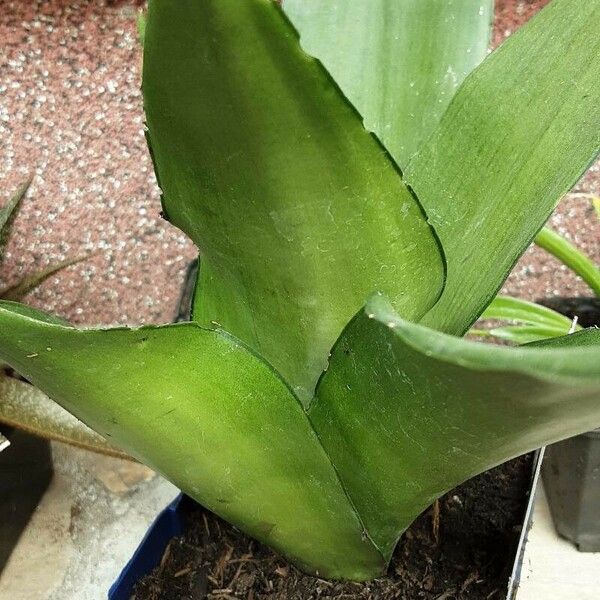
Plant Overview
Often referred to as the Narrow-leaf Dragon Tree, Dracaena subspicata is the elegant, minimalist cousin of the more common corn plant. Hailing from the shaded understories of tropical African forests, it brings a touch of architectural grace to indoor spaces. It is a slow-growing survivor, prized by collectors for its slender silhouette and its ability to thrive where other plants might falter.
🔍 How to Identify
- 🍃 Leaf Shape: Features long, lance-like (subspicate) leaves that taper to a fine point, usually arranged in a lush rosette at the top of the stem.
- 🪵 Stem Structure: Grows on a slender, upright woody cane that becomes more prominent and "tree-like" as the lower leaves naturally drop with age.
- 🟢 Color & Texture: The foliage is typically a deep, glossy emerald green, though some varieties may exhibit subtle, lighter green mottling or "dusting" across the surface.
🏡 In Your Garden (or Living Room)
- 🌤️ Light Nuance: Because it evolved under the dense canopy of African jungles, it is highly sensitive to direct sun, which can bleach or scorch its thin leaves; it performs best in bright, filtered light.
- 💧 Watering Sensitivity: This species is particularly sensitive to fluoride and salts found in municipal tap water. If the tips of the leaves turn brown and "crispy," it’s likely a reaction to the minerals in your pipes—using rainwater or distilled water is a game-changer.
- 🪴 Root Preferences: It possesses a relatively small, delicate root system and prefers to be slightly pot-bound. Avoid frequent repotting, as disturbing the "taproot-style" base can cause the plant to go into a growth slump.
⚠️ Safety & Toxicity
- 🐾 Pet Warning: Toxic to cats and dogs. The plant contains saponins, which can cause vomiting, excessive drooling, and dilated pupils (especially in cats) if any part of the leaf or stem is ingested.
- 👶 Child Safety: While not life-threatening to humans, the leaves can cause mild stomach upset if chewed. It is best placed on a high shelf or pedestal out of reach of curious toddlers.
✨ Fun Fact
- 🐉 The Dragon's Name: The genus name Dracaena is derived from the ancient Greek word drakaina, which means "female dragon." This refers to the red, resinous sap produced by some larger members of the family, which ancient cultures believed was the actual blood of dragons.

Detailed Care Instructions

Place in a window with dappled sun or a spot in the middle of a room. Or directly in a window facing west or east.

When the top few inches of soil dry out, water your plants. If the top few inches of soil are still moist, do not water your plant. Wait a few days, then poke your finger into the soil to see if anything has changed. Overwatering poses a disease risk, such as the development of fungal diseases in the roots. These plants have adaptations in there leaves that allow them to survive in low water supply.
Without the need of fertilizer, these plants can thrive and bloom. If a plant requires fertilization, it will display indicators of nutrient insufficiency, such as yellowing leaves. It is safe to apply slightly diluted fertilizers in these circumstances. Over fertilizing, on the other hand, should be avoided because excess nutrients might cause plant mortality. Slow-release fertilizers are therefore advised for these plants.
You may use Green Plant Food or Cactus Fertilizer for your Dracaena Subspicata








