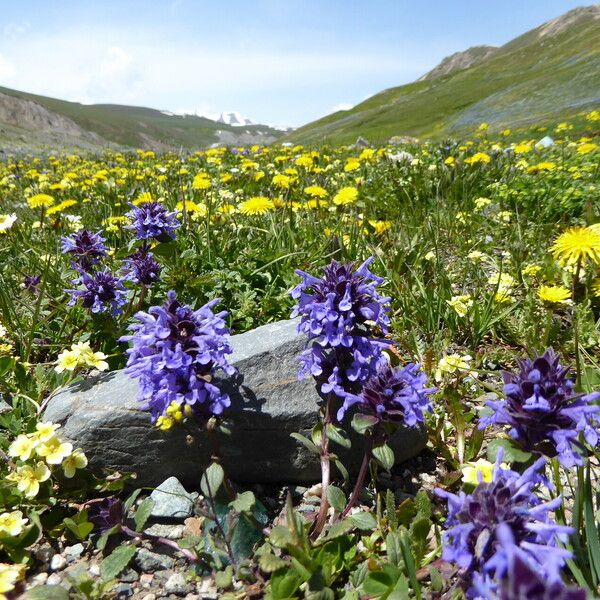
Plant Overview
Known as the Nodding Dragonhead, this hardy perennial hails from the rugged steppes of Siberia and Central Asia. It gets its name from its hooded, deep-violet flowers that seem to "nod" or bow toward the ground. A member of the Mint family, it is a favorite for those looking to add a touch of wild, alpine mystery to their landscape.
🔍 How to Identify
- 🐉 Dragon-Like Blooms: The flowers are tubular and two-lipped, appearing like a tiny dragon’s head. They grow in dense clusters (verticillasters) at the top of the stems.
- 📐 Square Stems: True to its Mint family (Lamiaceae) heritage, the stems are distinctly four-sided and rigid, supporting the plant in a neat, upright clump.
- 🍃 Serrated Foliage: The leaves are bright green, oval-to-lance-shaped, and feature "toothed" or scalloped edges that give the plant a textured look even when not in bloom.
🏡 In Your Garden
- 🏔️ High-Altitude Grit: Because it originates from harsh Siberian climates, this plant is exceptionally cold-hardy. It thrives in rock gardens or gravel beds where other plants might struggle with poor soil.
- 🐝 Pollinator Magnet: It is a vital nectar source for bumblebees and butterflies. The "nodding" habit of the flowers is actually a clever design—the downward tilt helps protect the nectar and pollen from being washed away by rain.
⚠️ Safety & Toxicity
- 🌿 Safe Status: Dracocephalum nutans is generally considered non-toxic to humans, cats, and dogs. It is not known to have the aggressive "weed-like" spreading habit of its cousin, the common mint.
- 👃 Aromatic Oils: Like many in its family, the leaves contain aromatic oils. While safe, they can have a strong scent that might deter deer and rabbits from munching on your garden.
✨ Fun Fact
The name Dracocephalum is a direct translation from Greek, where draco means "dragon" and kephale means "head." Botanists in the 1700s felt the flower’s shape was so distinct it looked like a mythical beast frozen in mid-roar!

Detailed Care Instructions

Place in a bright room that is sun drenched almost all day. Or directly in a south-facing window.

Some plants require more regular watering than others, which should be done every few days. It's critical to maintain the soil moist all of the time. The water requirements of the same plant placed in pots with varying sizes will differ. Because the water in the smaller pot evaporates faster than the water in the larger pot, it will require more watering. Regardless of pot size, the surface should constantly be maintained moist.







