Plant Overview
Known famously as Winter’s Bark or the Canelo, Drimys winteri is a majestic evergreen that bridges the gap between a stately tree and a fragrant ornamental shrub. Hailing from the cool, temperate rainforests of Chile and Argentina, it was once a literal lifesaver for 16th-century sailors who used its spicy bark to ward off scurvy. Today, it is cherished by gardeners for its aromatic presence and its "shimmering" foliage that dances in the wind.
🔍 How to Identify
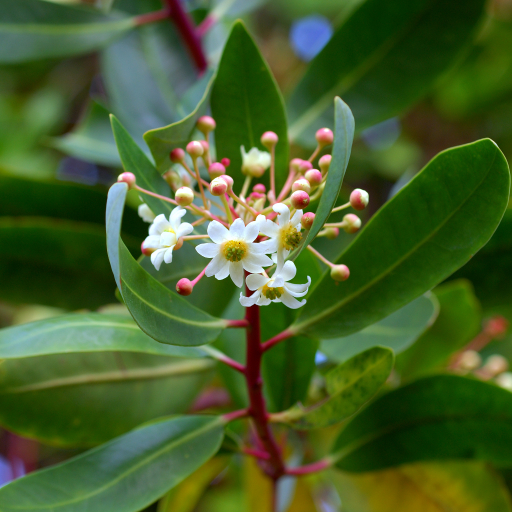
- 🍃 Luminous Leaves: The lance-shaped leaves are a deep, glossy green on top but feature a striking, chalky blue-white underside that creates a "flashing" effect when the breeze catches them.
- 🌸 Starry Blooms: In late spring, the plant produces clusters of creamy-white, star-shaped flowers that emit a delicate, jasmine-like fragrance with a hint of spice.
- 🍷 Wine-Red Stems: New growth and young branches often sport a rich, mahogany or reddish-purple tint, providing a beautiful contrast against the green foliage.
🏡 In Your Garden
- 🌬️ Shelter is Key: While hardy, this plant deeply dislikes cold, drying winds which can scorch its beautiful leaves. It thrives best in a "woodland" setting—dappled shade with protection from the afternoon sun.
- 💧 Thirsty Roots: Because it originates from rainforests, it has no patience for drought. It prefers consistently moist, acidic soil rich in organic matter; if the soil dries out completely, the plant may drop its leaves in protest.
- 🌳 Vertical Interest: It naturally grows in a narrow, upright column, making it an excellent choice for smaller gardens that need height without taking up too much horizontal "floor" space.
⚠️ Safety & Toxicity
- ✅ General Safety: Drimys winteri is not considered toxic to humans or common household pets like cats and dogs.
- 🌶️ Peppery Defense: The bark and leaves contain pungent compounds that give them a spicy, peppery taste. While not poisonous, eating large amounts of the foliage could cause mild stomach upset or a burning sensation in the mouth due to these natural oils.
✨ Fun Fact
The tree is named after Captain John Winter, who sailed with Sir Francis Drake in 1578. After becoming separated from Drake’s fleet in a storm, Winter discovered that the bark of this tree cured his crew's scurvy, leading to it becoming a prized medicine in maritime history for centuries!

Detailed Care Instructions
To grow Drimys winteri, also known as winter's bark, follow these steps:
- Climate: Winter's bark is native to cool temperate regions, so it prefers a climate with mild temperatures. It can tolerate both full sun and partial shade.
- Soil: The plant prefers well-draining soil that is rich in organic matter. It can tolerate a wide range of soil types but prefers slightly acidic to neutral pH levels.
- Propagation: Winter's bark can be propagated from seeds or cuttings. If using seeds, sow them in well-draining soil in a greenhouse or indoors during spring. Keep the soil moist but not waterlogged until seeds germinate. Cuttings can be taken from mature, healthy plants during the summer months.
- Planting: Once the seedlings or cuttings have developed roots, transplant them into individual pots or directly into the garden. Space the plants approximately 3-6 feet apart to allow for their mature size. The best time for transplanting is during early spring when the soil starts to warm up.
- Watering: Winter's bark requires regular watering, especially during dry spells. Keep the soil evenly moist but avoid overwatering, as this can cause root rot. Mulching around the plants can help retain soil moisture.
- Pruning: Prune winter's bark during late winter or early spring to remove any dead, damaged, or diseased branches. This will help maintain the plant's shape and improve air circulation.
- Fertilizer: Apply a balanced, slow-release fertilizer in spring to promote healthy growth. Follow the instructions on the fertilizer package for the appropriate dosage.
- Pests and diseases: Winter's bark is generally resistant to pests and diseases. However, it can occasionally be affected by aphids, scale insects, or leaf spot diseases. Monitor the plant regularly and take appropriate measures if any issues arise.
- Winter care: Winter's bark is hardy, but young plants may require protection during severe frost or cold spells. Mulch around the base of the plant to insulate the roots and consider covering with a frost cloth if necessary.
By following these steps, you can successfully grow and care for Drimys winteri. Remember to provide regular maintenance and monitor the plant's health to ensure its proper growth and development.

Place in a window with dappled sun or a spot in the middle of a room. Or directly in a window facing west or east.

Drimys Winteri is a plant that requires regular watering but it is important to avoid overwatering which can lead to root rot and other problems. To water this plant, allow the top inch of soil to dry out before watering again. This can be checked by sticking your finger into the soil.
When watering, use distilled or rainwater as tap water often contains minerals that can build up in the soil and harm the plant. Water at the base of the plant rather than on the leaves to prevent fungal growth.
During the winter months, reduce watering and allow the soil to dry out slightly more between waterings. Similarly, during the summer months, increase watering frequency to account for increased evaporation and higher temperatures.
It is also important to ensure that the plant is not sitting in standing water as this can lead to root rot. Ensure that the soil has good drainage and that excess water is able to escape the pot or planting area.
To fertilize this plant, use a balanced, slow-release fertilizer with equal parts of nitrogen, phosphorus, and potassium. Apply the fertilizer once in the spring, just before new growth appears. Scatter the fertilizer around the base of the plant, avoiding contact with the stems. Water thoroughly after applying the fertilizer. Avoid fertilizing during the winter months.
The ideal soil for this particular plant should be well-drained and acidic, with a pH range between 4.5 to 6.0. It should have a good amount of organic matter, as this will help retain moisture and nutrients. The soil should also be rich in nutrients such as nitrogen, phosphorus, and potassium. It is important to avoid using heavy clay soil or soil that is too compacted, as this can prevent the plant from establishing a strong root system. A soil mix that contains a combination of peat moss, perlite, and pine bark is often recommended for this plant.
One way to propagate this plant is by taking semi-ripe cuttings from the current year's growth during mid-summer. First, choose a healthy plant to take cuttings from and sterilize your cutting tools. Cut a section of new growth that is about 6 inches long with at least two nodes. Remove the lower leaves and dip the bottom of the cutting in rooting hormone powder. Place the cutting in a pot filled with well-draining soil and cover the pot with a clear plastic bag or plastic wrap to create a mini greenhouse. Keep the cutting in a bright, warm but shaded area and do not let the soil dry out. Check the cutting regularly to ensure it is not wilting or developing mold. Once the cutting has rooted, it can be transplanted into a larger pot or in the garden.








