Plant Overview
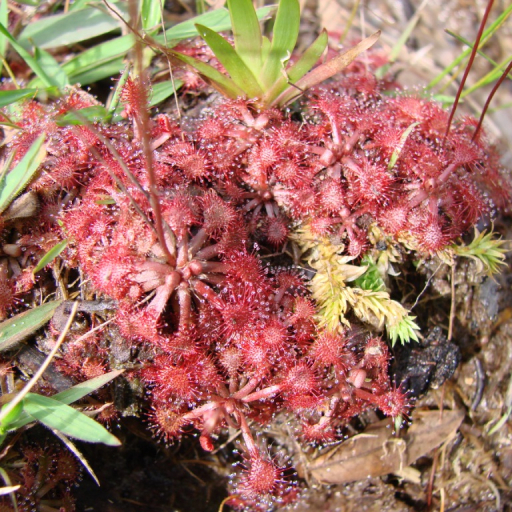
Meet the Pink Sundew, a tiny but fierce "glittering assassin" of the bog. Native to the damp wetlands of the Southeastern United States and parts of South America, this miniature marvel sparkles in the sunlight with what looks like fresh morning dew. In reality, those shimmering droplets are a deadly trap for small insects, making this plant a favorite for hobbyists looking for a natural—and beautiful—way to control gnats and fruit flies.
🔍 How to Identify
- 🌸 Leaf Shape: It features small, spoon-shaped (spatulate) leaves that grow in a low-lying, compact rosette, rarely exceeding the size of a silver dollar.
- ✨ The "Dew": The leaf surfaces are covered in vibrant red, hair-like tentacles (trichomes) topped with glistening droplets of sticky mucilage that look like liquid diamonds.
- 🌷 Floral Display: In late spring, it sends up a thin, leafless stalk bearing tiny, delicate pink (or occasionally white) five-petaled flowers that bloom high above the leaves to avoid accidentally trapping its own pollinators.
🏡 In Your Garden
- 💧 Water Quality is Vital: Unlike standard houseplants, the Pink Sundew is a "purist." It requires distilled water, reverse osmosis water, or rainwater. Tap water contains minerals that will build up in the soil and eventually kill the plant's sensitive roots.
- ☀️ Light and Humidity: To maintain its deep red coloration and produce plenty of sticky "dew," it needs very bright light—ideally full sun. It thrives in a "bog setup," meaning the pot should sit in a shallow tray of water at all times to mimic its swampy home.
- 🧪 The "No Fertilizer" Rule: Never add fertilizer to the soil. These plants evolved to live in nutrient-starved environments and get their nitrogen from the insects they catch. Adding fertilizer to the roots is usually fatal.
⚠️ Safety & Toxicity
- ✅ Non-Toxic: Drosera capillaris is considered safe and non-toxic to humans, cats, and dogs.
- 🖐️ Physical Contact: While the "glue" is harmless to human skin, touching the leaves can stress the plant. Each leaf has a limited amount of energy to spend on curling around prey; if triggered by a finger, it wastes that energy and may die back prematurely.
✨ Fun Fact
The movement of a Sundew is a slow-motion biological marvel. Once an insect is stuck, the tentacles exhibit "thigmonasty"—they actually sense the struggle and curl inward to wrap around the prey, maximizing the surface area for digestion and ensuring the meal doesn't wiggle free!

Detailed Care Instructions
To grow Drosera Capillaris, also known as the thread-leaved sundew, follow these steps:
- Choose the right location: Drosera Capillaris requires bright, indirect sunlight. Place the plant near a south or east-facing window where it can receive at least 6 hours of sunlight daily.
- Select the right soil: Use a mixture of sphagnum moss and perlite to create a well-draining soil. Avoid using regular potting soil, as it can be too dense and retain too much moisture.
- Plant the seeds or seedlings: If you have seeds, sow them on the soil surface, gently pressing them in without covering completely. Keep the soil moist but not waterlogged. If you have seedlings, gently transplant them into the soil, ensuring the roots are covered but the crown remains above the soil.
- Maintain high humidity: Sundews thrive in high humidity environments. You can achieve this by placing the pot on top of a tray filled with water and pebbles. The water will create humidity around the plant as it evaporates. Alternatively, use a humidifier near the plant.
- Watering: Drosera Capillaris likes to be kept consistently moist. Use distilled water, rainwater, or reverse osmosis water to avoid water additives that can harm the plant. Water the plant from the bottom by pouring water into the drainage tray or immerse the pot in a shallow water bath, allowing the plant to soak up the water.
- Feeding: Sundews are carnivorous plants that supplement their nutrient needs by catching insects. Allow your Drosera Capillaris to catch its own food by placing it where it can attract and capture small insects like gnats or fruit flies. Avoid feeding the plant human food or fertilizer, as it may harm the plant.
- Temperature and humidity: Sundews prefer temperatures between 65-80°F (18-27°C) during the day and 55-60°F (13-15°C) at night. Maintain humidity levels between 50-70%.
- Pruning: Trim any dead or dried leaves regularly to encourage new growth.
- Pests: Keep an eye out for pests like aphids or spider mites. If you notice any, gently remove them by hand or use an organic insecticidal soap.
By following these tips, you can successfully grow and care for a Drosera Capillaris plant. Remember to be patient, as these plants can take time to establish and grow.

Place in a bright room that is sun drenched almost all day. Or directly in a south-facing window.

To properly water this plant, it is important to understand its growing environment. This plant is typically found in wetland areas and therefore requires consistent moisture to thrive. It is important to avoid allowing the soil to completely dry out.
To water this plant, fill a container with room temperature water and place the plant in the container. Allow the plant to soak up the water through its roots for approximately 10-15 minutes, or until the soil feels moist to the touch. It is important to avoid overwatering the plant as this can lead to root rot and other issues.
Watering frequency will vary based on environmental factors such as humidity and temperature. During warmer months, this plant may require more frequent watering due to increased evaporation. As the plant enters its dormant phase, watering frequency can be reduced.
Overall, it is important to closely monitor the moisture level of the soil and adjust watering accordingly to ensure healthy growth.
To fertilize Drosera Capillaris plant, you need to use a fertilizer that is low in nitrogen and high in phosphorus and potassium. It is also important to use a fertilizer that does not contain any micronutrients or minerals that may harm the plant. You can apply the fertilizer once a month during the growing season, making sure to dilute it according to the product instructions. Avoid over-fertilizing, as this can damage the plant roots. Be sure to water the plant regularly and avoid letting it dry out completely.
Drosera Capillaris is a type of carnivorous plant that requires a specific type of soil to thrive. It is recommended to use a soil mixture that is low in nutrients and has good drainage. A mixture of sphagnum peat moss, sand, and perlite is commonly used for this type of plant. The pH of the soil should be slightly acidic, around 5.0 to 6.0. It is important to use clean soil, free of any contaminants such as fertilizers or pesticides, as this can harm the plant. It is also recommended to use a pot or container that has drainage holes to prevent the soil from becoming waterlogged.
To propagate this plant, take a leaf from the parent plant and cut it into small pieces with a sterile scalpel. Place the pieces onto a moist substrate such as peat moss. Keep the substrate moist and place it in bright, indirect sunlight. In a few weeks, new plantlets should grow from the leaf pieces. Once the plantlets are a few centimeters tall, they can be transplanted into their own pots with a well-draining soil mixture. Water the new plants lightly and place them in a bright location with high humidity until they are established. Over time, the new plants will grow into mature plants with their own leaves and roots.








