Plant Overview
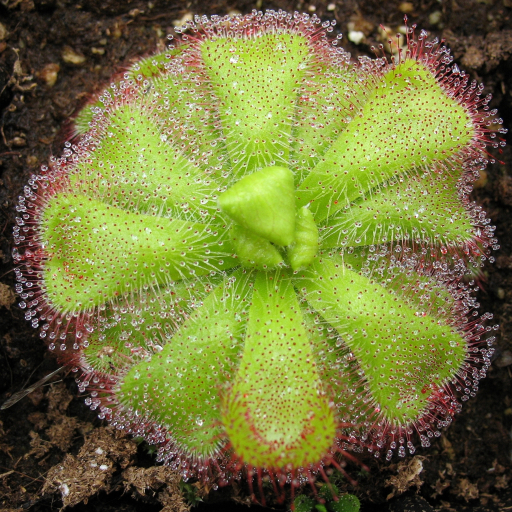
Known as the Wedge-leaved Sundew, this South African native is a master of the "sticky trap" strategy. Found primarily in the fynbos of the Cape Peninsula, it forms a lethal but beautiful crimson rosette that hugs the ground. It is a specialized survivor, evolved to thrive in nutrient-poor soils where other plants would wither, by turning the tables on the local insect population.
🔍 How to Identify
- 📐 Wedge-Shaped Foliage: True to its name, the leaves are broad and rounded at the tips while narrowing sharply toward the base, resembling a miniature spatula or wedge.
- 💎 Glistening "Dew": Each leaf is covered in hundreds of reddish tentacles tipped with a clear, sticky mucilage that sparkles in the sunlight to lure unsuspecting prey.
- 🏵️ Compact Rosette: It grows in a tight, flat circle (rosette) that can reach up to 3 inches in diameter, staying low to the substrate to catch crawling and low-flying insects.
🏡 In Your Garden
- 🧪 The "No-Food" Rule: Because it has evolved to hunt for its own nitrogen, this plant is incredibly sensitive to minerals. It should only be grown in a nutrient-free medium like peat moss and perlite; standard potting soil or fertilizer will quickly "overdose" and kill it.
- ⚓ Deep-Rooted Sensitivity: Unlike many small succulents, this sundew develops a long, fleshy taproot. It hates being moved or having its roots disturbed, so it is best to plant it in a deep pot and avoid frequent repotting.
⚠️ Safety & Toxicity
- 🟢 Safe for Mammals: The Drosera cuneifolia is non-toxic to humans, cats, and dogs. There are no known poisons that affect mammals if the plant is accidentally touched or ingested.
- 🦟 Bug-Sized Predator: While safe for your family, it is a formidable predator for small pests. It acts as a natural "sticky trap" for fungus gnats and fruit flies that might be pestering your other houseplants.
✨ Fun Fact
The botanical name cuneifolia comes from the Latin words cuneus (wedge) and folium (leaf). Despite its delicate appearance, the "glue" it produces is one of the strongest natural adhesives in the plant kingdom, allowing it to hold onto insects much larger than its own individual tentacles!

Detailed Care Instructions
To grow Drosera cuneifolia, also known as the Wedge-leaved sundew, follow these steps:
- Light: Drosera cuneifolia requires ample sunlight to thrive. Place the plant in a location where it will receive at least 6-8 hours of bright, indirect sunlight each day.
- Temperature: Keep the plant in a warm environment, ideally between 60-80°F (15-27°C). This plant cannot tolerate freezing temperatures.
- Humidity: Drosera cuneifolia prefers high humidity levels. You can increase humidity by placing a tray of water near the plant or using a humidifier.
- Soil: Use a well-draining soil mix for carnivorous plants, such as a mix of peat moss and perlite. Do not use regular potting soil as it may contain nutrients that are harmful to the plant.
- Water: Keep the soil consistently moist but not waterlogged. Use distilled water, rainwater, or purified water to avoid minerals that could harm the plant.
- Feeding: Since Drosera cuneifolia is a carnivorous plant, it obtains nutrients by trapping and digesting insects. Allow the plant to catch its own prey naturally, or you can feed it small insects like fruit flies or gnats if necessary.
- Propagation: Drosera cuneifolia can be propagated through division or leaf cuttings. To propagate through leaf cuttings, carefully remove a healthy leaf and place it on a new pot of moist soil. New plants will grow from the leaf cuttings.
- Maintenance: Remove any dead or decaying leaves regularly to promote new growth. Repot the plant every 1-2 years to refresh the soil and provide more growing space.
By following these care tips, you can successfully grow Drosera cuneifolia and enjoy its unique beauty in your home or garden.

Place in a dark room with little light, like a dark bedroom or a spot far away from a window or directly in a north-facing window.

Drosera cuneifolia plants require frequent watering to thrive, as they prefer consistently moist soil. To water this plant, you should aim to keep the soil consistently damp but not waterlogged. Water the soil around the base of the plant rather than overhead watering to prevent the delicate leaves from becoming waterlogged.
When watering, it is important to use clean, distilled or rainwater, as tap water may contain minerals that can harm the plant. Additionally, ensure that the pot has adequate drainage to prevent water from pooling at the bottom and causing root rot.
During the growing season, which is typically spring and summer, you may need to water more frequently, especially if the plant is in a warm, sunny location. In the winter months when the plant is dormant, you can reduce the frequency of watering, allowing the soil to dry out slightly between waterings.
Keep an eye on the plant for any signs of stress, such as wilting or browning leaves, as this may indicate that the plant needs more or less water. Overall, maintaining a consistent watering schedule and providing proper drainage are key to keeping your Drosera cuneifolia plant healthy and happy.
To fertilize Drosera cuneifolia, dilute a liquid fertilizer with water to half strength and apply to the soil surrounding the plant. Be sure to water the plant thoroughly before and after fertilizing to avoid root burn. Fertilize once a month during the growing season, typically spring and summer, and refrain from fertilizing during the dormant winter months.
Drosera cuneifolia, a carnivorous plant native to Australia, requires a well-draining and nutrient-poor soil mix for optimal growth. A suitable soil mixture for this plant typically includes a combination of peat moss, silica sand, and perlite to promote good aeration and moisture retention. Additionally, adding some sphagnum moss to the soil mix can help maintain the proper humidity levels for the plant. It is important to avoid using regular potting soil, as it may contain high levels of nutrients that can harm the sensitive roots of Drosera cuneifolia. Overall, a soil mix that mimics the plant's natural habitat in nutrient-poor and acidic soil conditions is ideal for cultivating healthy and thriving Drosera cuneifolia plants.
To propagate Drosera cuneifolia, you can follow these steps:
- Start by collecting the seeds from a mature plant. The seeds are tiny and should be collected carefully to avoid losing any.
- Fill a small pot with a mixture of peat moss and sand to create a well-draining soil mixture. Make sure the pot has drainage holes at the bottom.
- Scatter the seeds evenly over the soil surface, gently pressing them into the soil with your finger.
- Place the pot in a tray filled with water to allow the soil to soak up moisture. Make sure the pot is not sitting directly in the water to avoid waterlogging the soil.
- Cover the pot with a plastic bag or a clear plastic lid to create a humid environment for the seeds to germinate.
- Place the pot in a bright, indirect light location with temperatures between 70-80°F (21-27°C) for optimal germination.
- Check the pot regularly to ensure the soil stays moist but not waterlogged. Mist the soil lightly with water if it starts to dry out.
- Within a few weeks, you should start to see tiny seedlings emerging from the soil. Once the seedlings have grown a few inches tall, you can transplant them into their own individual pots.
- Continue to care for the seedlings by providing them with bright, indirect light, high humidity, and keeping the soil consistently moist but not waterlogged.
- As the seedlings grow and mature, they will eventually develop into full-grown plants that can be propagated further through seed or division.








