Plant Overview
Known as the Pale Rainbow Sundew, this ethereal Australian native is a master of the vertical hunt. Unlike its ground-hugging cousins, this sundew is a scrambler, using its shimmering, glue-covered leaves to "climb" toward the light. In the wild heaths of Western Australia, it transforms into a glistening vine that looks more like a jewelry piece than a predatory plant.
🔍 How to Identify
- 🌿 Climbing Form: It possesses a thin, wiry stem that can scramble up to 60cm (24 inches) high, often weaving itself through nearby shrubs for support.
- ✨ Shield-Shaped Leaves: The leaves are "peltate" (shield-shaped) and grow in small circular clusters along the stem, each fringed with vibrant, sticky tentacles.
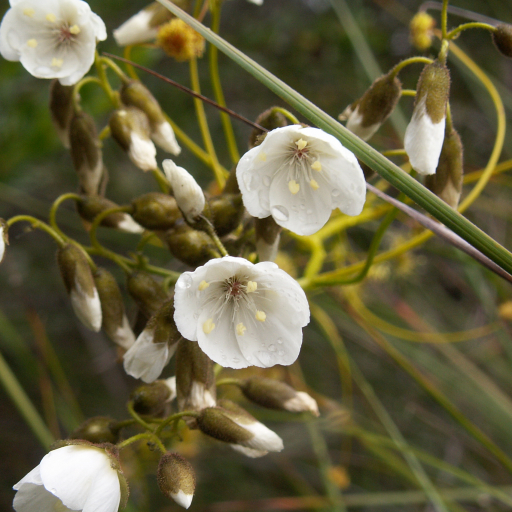
- 🌸 Pale Blooms: True to its name, it produces clusters of delicate, snowy-white flowers that appear at the tips of the climbing stems during its peak growing season.
🏡 In Your Garden
- 💤 Seasonal Sleep: This is a tuberous sundew, meaning it has a strict "on/off" switch. It grows during the cool, wet winter and completely vanishes underground into a protective tuber during the hot summer. Never throw the pot away when the plant dies back—it’s just napping!
- 🧱 The Support System: Because of its scrambling nature, this plant dislikes being "floppy." Providing a fine trellis or a few dried brush-wood twigs allows it to express its natural climbing habit and prevents the sticky leaves from matting together.
⚠️ Safety & Toxicity
- ✅ Non-Toxic: Drosera pallida is not known to be poisonous to humans or common household pets.
- 🐜 Insect Danger Only: While it is a "deadly" predator to gnats, fruit flies, and small winged insects, the sticky mucilage is harmless to skin, though it may leave a tacky residue if touched.
✨ Fun Fact
The "dew" on the leaves is actually a complex natural glue mixed with digestive enzymes. Insects are attracted to the shimmer, thinking it's nectar, only to find that the more they struggle, the more the plant’s tentacles are stimulated to curl inward and begin the digestion process!

Detailed Care Instructions
Growing a Drosera pallida plant requires a specific set of conditions. Here are some steps to help you grow them successfully:
- Obtain the plant: You can either start with seeds or purchase an established plant online or from a carnivorous plant nursery.
- Choose the right container: Drosera pallida plants are typically grown in pots or containers with good drainage. Plastic or clay pots with drainage holes are ideal.
- Soil mixture: Drosera pallida plants prefer a moist and nutrient-poor soil. A suitable soil mix can be made by combining peat moss, perlite, and washed sand in a ratio of 1:1:1.
- Planting: Fill the container about three-quarters full with the soil mixture. Gently place the Drosera pallida plant in the center, ensuring that its roots are spread out.
- Watering: Keep the soil consistently moist but not waterlogged. One way to achieve this is by using a tray beneath the pot and filling it with water, allowing the plant to soak up the moisture from the bottom.
- Lighting: Drosera pallida plants require ample sunlight to grow properly. Place the pot in a bright area where it can receive at least six hours of direct or indirect sunlight each day.
- Humidity: Drosera pallida plants thrive in high humidity levels. To increase humidity, you can place the pot on a tray filled with pebbles and water. Just make sure that the bottom of the pot is not submerged in water.
- Feeding: Drosera pallida plants are carnivorous and catch insects to obtain nutrients. However, they can also be fed with small insects or freeze-dried bloodworms. Avoid overfeeding, as excessive feeding can harm the plant.
- Pests and diseases: Pay close attention to unwanted pests like aphids or fungus gnats. Remove any affected leaves or treat them with an organic insecticidal soap or neem oil if necessary.
- Dormancy: Drosera pallida plants go through a natural dormancy period during which they may appear as if they are dying or shrinking. This is normal, and they will typically recover when the growing season starts again. During this period, reduce watering and offer less sunlight.
Remember that the Drosera pallida is a delicate plant that requires attention to detail. With the right care and conditions, you can enjoy the beauty of this unique carnivorous plant.

Place in a dark room with little light, like a dark bedroom or a spot far away from a window or directly in a north-facing window.

To properly water this type of plant, it is important to avoid getting water on the leaves as much as possible. The best way to do this is to water directly into the soil or potting mixture, using a watering can or spray bottle to gently moisten the surface. It is important not to let the soil dry out completely, but also to avoid overwatering, which can lead to fungus or root rot. To determine when the plant needs water, check the moisture level of the soil by sticking your finger about an inch into the soil. If it feels dry, it is time to water. Additionally, it is recommended to use distilled water, rainwater or reverse osmosis water instead of tap water, as the minerals and chemicals in tap water can harm these sensitive plants.
- Use a low-nitrogen fertilizer to avoid burning the leaves.
- Dilute the fertilizer solution to half-strength or less.
- Apply the fertilizer sparingly, using a spray bottle or eyedropper.
- Feed the plant once every two weeks during the growing season.
- Water the plant before and after applying fertilizer to prevent soil dryness.
- Avoid getting fertilizer on the leaves as it may damage them.
The ideal type of soil to use for a Drosera Pallida plant is one that is low in nutrients and has good drainage. The soil should be slightly acidic, with a pH range of around 4.5 to 6.5. It is important to avoid using any soil that contains fertilizers or other additives, as these may harm the plant. A mix of peat moss and perlite or sand is often recommended, as this combination provides good drainage while also retaining moisture. It is also important to make sure that the soil is moist but not waterlogged, as too much water can cause root rot and other problems. Overall, the most important factor in choosing soil for a Drosera Pallida plant is to ensure that it is nutrient-poor and well-draining, with a slightly acidic pH.
To propagate this plant, you can start by taking stem cuttings from mature plants. Ensure that your tools are clean and sterile before you begin. Cut the stem just below a node and remove any leaves below the cutting. Dip the cut end into rooting hormone powder and plant it in a sterile, moist growing medium. Cover the cutting with a plastic bag to maintain high humidity and place it in a warm, bright location. Within a few weeks, the cutting should develop roots and begin to grow new leaves. You can then transplant it to a permanent location in a soil mixture that is low in nutrients and high in organic matter. Water the plant regularly with distilled or rainwater to avoid mineral buildup in the soil.








