Plant Overview
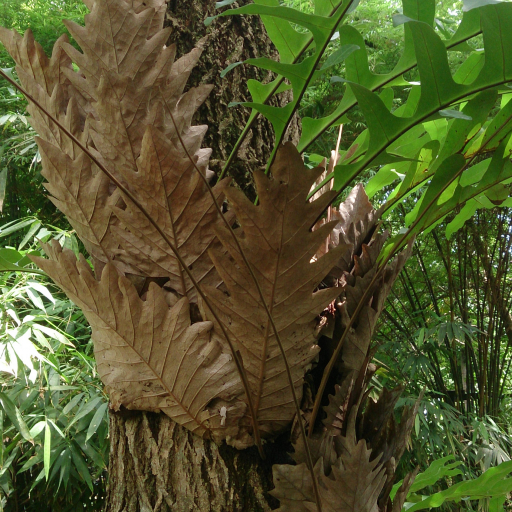
Often called the Oak-leaf Fern due to its distinctive brown base leaves, Drynaria quercifolia looks like a relic from a prehistoric jungle. In many tropical cultures, it is nicknamed the "Basket Fern" for its clever way of gathering nutrients right out of the air. It is a hardy epiphyte that adds architectural drama and a touch of the wild to any plant collection.
🔍 How to Identify
- 🍂 The "Oak" Leaves: The plant features small, stiff, brown "nest" fronds at the base that resemble dried oak leaves. Unlike other plants, these don't fall off when they turn brown; they remain to catch falling debris.
- 🌿 The Fertile Fronds: These are the large, arching green leaves that can grow over three feet long. They are deeply lobed and "pinnatifid," giving them a jagged, toothy silhouette.
- 🐾 Fuzzy Rhizomes: The plant creeps across surfaces using thick, fleshy stems (rhizomes) covered in soft, ginger-colored scales that look strikingly like a squirrel’s tail.
🏡 In Your Garden
- 🌳 The Air-Dwelling Life: Because this fern grows on tree trunks in the wild, it despises heavy, waterlogged soil. It is happiest when grown in a very chunky orchid mix or mounted directly onto a wooden slab or hanging basket.
- 🥣 Self-Composting Strategy: Those brown base leaves serve a brilliant purpose—they act as a "basket" to trap falling leaves and dust. Over time, this debris breaks down into rich compost, feeding the fern from the top down.
- 🌤️ Light Nuance: While many ferns love deep shade, the Oak-leaf Fern prefers bright, dappled light. If it’s too dark, those iconic "oak" nest leaves may fail to develop properly.
⚠️ Safety & Toxicity
- ✅ Non-Toxic Status: Drynaria quercifolia is generally considered non-toxic to humans and has a long history of use in traditional herbal medicine.
- 🐾 Pet Safety: While it is not known to be poisonous to cats or dogs, the tough, fibrous texture of the fronds can cause mild digestive upset or choking if a curious pet decides to have a snack.
✨ Fun Fact
In traditional medicine across Southeast Asia, the thick rhizomes of this fern are nicknamed the "Bone-Knitter." They have been used for centuries in poultices believed to speed up the healing of broken bones and fractures!

Detailed Care Instructions
To grow Drynaria Quercifolia, also known as the Oakleaf fern or Turtleback fern, you need to follow these steps:
- Choose a suitable location: Drynaria Quercifolia prefers a shady spot with indirect sunlight. It does well in areas with high humidity, such as bathrooms, shaded patios, or gardens with plenty of tree cover.
- Soil preparation: The plant thrives in well-draining, fertile soil. Prepare the soil by mixing organic matter like compost or leaf mold to improve drainage and provide essential nutrients.
- Planting: Dig a hole slightly larger than the plant's root ball and place the fern in it. Ensure that the crown, or the point where the plant meets the soil, is at the same level as or slightly higher than the ground. Gently backfill the hole with soil and tamp it down to remove any air pockets.
- Watering: Keep the soil consistently moist but avoid overwatering, as this can cause root rot. Water the plant deeply when the top inch of soil feels dry, and mist the fronds with water occasionally to increase humidity.
- Fertilization: Feed the fern with a slow-release balanced fertilizer during the growing season, usually spring and summer. Follow the package instructions for proper application.
- Pruning: Remove any dead or damaged fronds as needed to maintain the plant's appearance and prevent disease. Trim the fronds back to the base.
- Propagation: Drynaria Quercifolia can be propagated through spores or division. Spores can be collected from mature fronds and sown in a mix of peat and perlite. Division involves separating the plant's rootball into smaller sections and replanting them individually.
- Protection: Protect the fern from extreme temperatures. In colder regions, consider bringing it indoors or providing a protective layer of mulch to insulate the roots during winter.
Remember to research specific care requirements for Drynaria Quercifolia, as different ferns might have slightly different needs. Regular observation and adjustments to watering, fertilization, and lighting will help ensure successful growth.
To water the plant in question, it is important to ensure that the soil is moist, but not waterlogged. This can be achieved by using a watering can or hose with a gentle flow to avoid disrupting the roots or creating too much runoff. It is best to water the plant deeply and infrequently rather than giving it frequent shallow waterings. The frequency of watering will depend on the humidity and temperature of the environment, as well as the type of soil the plant is growing in. It is also important to allow the soil to dry out slightly between waterings to prevent overwatering and root rot.
To fertilize the plant, use a balanced fertilizer with equal parts nitrogen, phosphorus, and potassium. Apply the fertilizer every two weeks during the growing season, which is typically from spring to fall. Dilute the fertilizer to half strength before applying it to the soil around the plant. Make sure to water the plant thoroughly after each fertilization. Alternatively, you can use organic fertilizers, such as compost or aged manure, to provide nutrients to the plant. Apply these organic fertilizers every four to six weeks during the growing season.
Drynaria quercifolia is a species of fern that grows best in well-draining soil that is rich in nutrients. The soil should be slightly acidic and have a pH level between 5.5 and 6.5. It is important that the soil is not overly moist or waterlogged, as this can cause root rot and other fungal diseases. To improve soil quality, mix compost or manure into the soil before planting. Additionally, it is recommended to fertilize the plant with a balanced fertilizer every 4-6 weeks during the growing season to help it thrive.
Drynaria Quercifolia plant can be propagated through spores or rhizome division. To propagate through spores, gather mature fronds and let them dry out on a paper towel for a few days. Once dry, shake the spores onto a clean surface and cover lightly with plastic wrap to prevent them from drying out. Keep the spores in a warm and humid area until they grow into small ferns. To propagate through rhizome division, carefully dig up the plant and separate the rhizomes with a clean, sharp knife. Replant the divided rhizomes in a new pot with fresh soil, water well, and place in a warm and bright location.








