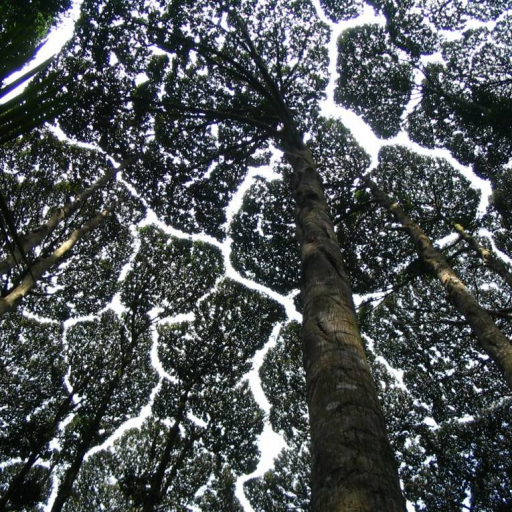
Plant Overview
Known as the Borneo Camphor, this majestic giant is a true architect of the Southeast Asian rainforests. Famous for its fragrant resin and its polite "social distancing" in the canopy, it has been a source of precious camphor for centuries, once valued more highly than gold. Encountering one in the wild feels like stepping into a prehistoric cathedral where the air is scented with a sharp, cooling perfume.
🔍 How to Identify
- 🌳 Towering Stature: As an "emergent" tree, it can reach dizzying heights of up to 65–75 meters, often standing head and shoulders above the rest of the forest.
- 🍃 Glossy Foliage: The leaves are leathery, elliptical, and taper into a sharp point; when crushed, they release a distinct, medicinal camphor aroma.
- 🌌 Crown Shyness: This is its most famous trait—look up at the sky, and you’ll see the edges of the branches never touch their neighbors, creating beautiful, jigsaw-like "cracks" of light in the canopy.
🏡 Habitat & Ecology
- 💧 Tropical Specialist: This tree is not your average backyard inhabitant; it thrives in the hot, humid lowlands of Borneo and Sumatra, requiring deep, well-draining soil and high annual rainfall.
- 🧴 The Resin Hunter's Prize: Historically, "Kapur" (camphor) crystals were found in the hollows of the trunk. Because only a small percentage of trees contain these crystals, it led to the tree becoming a legendary and highly protected resource in local folklore.
⚠️ Safety & Toxicity
- ✅ Generally Safe: The tree itself is non-toxic to humans and pets through touch or proximity.
- 🧴 Camphor Caution: While the natural resin has been used in traditional medicine for centuries, concentrated camphor oil should never be ingested. It can cause skin irritation for some individuals or pets if applied directly in its raw, undiluted form.
✨ Fun Fact
Scientists believe the "crown shyness" of the Borneo Camphor isn't just for aesthetics—it likely serves as a survival tactic to prevent the spread of leaf-eating insects and to protect the tree's delicate tips from breaking during tropical storms.

Detailed Care Instructions

Place in a bright room that is sun drenched almost all day. Or directly in a south-facing window.

When the top few inches of soil dry out, water your plants. If the top few inches of soil are still moist, do not water your plant. Wait a few days, then poke your finger into the soil to see if anything has changed. Overwatering poses a disease risk, such as the development of fungal diseases in the roots. These plants have adaptations in there leaves that allow them to survive in low water supply.








