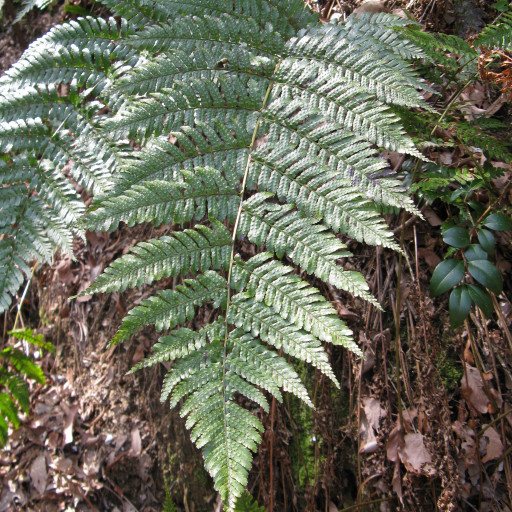
Plant Overview
Known as the "Autumn Fern" or "Japanese Shield Fern," this hardy perennial flips the script on seasonal colors. While most plants turn copper in the fall, this East Asian native puts on its most vibrant display of bronze and russet orange in the spring when new fronds emerge. It is a legendary "garden chameleon," providing a warm glow to the darkest, shadiest corners of the landscape.
🔍 How to Identify
- 🌿 Color Cycling: Look for young fronds that emerge in shades of coppery-pink or burnt orange. These gradually mature into a deep, leathery, lustrous forest green.
- 🍃 Frond Structure: The leaves are triangular and twice-divided (bipinnate), growing in a graceful, arching fountain shape that can reach up to two feet tall.
- 🔴 Red Sori: Flip a mature leaf over; you will see neat rows of bright red spore cases (sori) on the underside, which give the plant its botanical name.
🏡 In Your Garden
- ⛅ Dappled Light: While it thrives in shade, a little bit of morning sun actually helps the "autumn" colors of the new growth pop more intensely. It is much more light-tolerant than the common Boston Fern.
- 💧 Resilient Roots: Unlike many delicate ferns that wilt the moment they dry out, the Autumn Fern is surprisingly drought-tolerant once established. Its leathery leaves are designed to hold onto moisture better than its papery-leaved cousins.
- 🌱 Low Maintenance: It is a clumping fern, meaning it won't aggressively take over your garden. It stays in a tidy mound, making it perfect for bordering woodland paths.
⚠️ Safety & Toxicity
- 🛡️ Safe Status: The Autumn Fern is widely considered non-toxic and "pet-safe." It is a fantastic choice for households with curious cats or dogs.
- ✋ Contact: There are no known skin irritants associated with this plant, though its spores can occasionally trigger mild hay-fever-like symptoms in highly sensitive individuals during peak release.
✨ Fun Fact
The species name erythrosora is derived from the Greek words "erythros" (red) and "sora" (spore cases). This refers to the striking red dots on the back of the leaves, which look almost like tiny, intentional embroidery.

Detailed Care Instructions
Autumn fern needs shade. It can grow in varying degrees of shade, from full shade or deep shade and partial shade to dappled sunlight but it does not tolerate full sun.
Is autumn fern a true fern?
Autumn fern reproduces via spores and has neither seeds nor flowers so it is a true fern.
Are autumn ferns evergreen?
In warm climates, autumn fern is an evergreen whereas in cooler climates, it is a semi-evergreen.
| Soil Ph | Acidic |
| Humidity | High |
| Lighting | Part Sun |
| Toxicity | Toxic |
| Soil Type | Clay, Loamy |
| Difficulty | Hard |
| Plant Type | Perennial |
| Mature Size | 2' Tall And 2' Wide |
| Native Area | North America |
| Temperature | 10°C - 24°C |
| Sun Exposure | Full Sun, Partial Sun, Shade |
| Hardiness Zones | 5-8 |
To grow Dryopteris Erythrosora plants, also known as autumn ferns, follow these steps:
- Choose a suitable location: Autumn ferns prefer partial shade to full shade, although they can tolerate some morning sun. Ensure the area has well-draining soil.
- Prepare the soil: Dig in organic matter such as compost or well-rotted manure to improve soil fertility and drainage.
- Planting: Dig a hole slightly larger than the root ball of the fern. Place the plant in the hole and backfill with soil. Lightly tamp down the soil around the plant to remove air pockets. Leave around 3 feet of space between each plant.
- Watering: Water thoroughly after planting and keep the soil consistently moist during the growing season. Avoid overwatering, as these ferns do not like constantly soggy soil.
- Mulching: Apply a layer of organic mulch, such as wood chips or leaf litter, around the base of the fern. This will help retain moisture and suppress weeds.
- Fertilizing: Spring is the best time to fertilize the fern using a slow-release balanced fertilizer. Follow the instructions on the fertilizer packaging for the appropriate dosage.
- Pruning: Remove any dead or damaged fronds as necessary to maintain the plant's appearance. In late winter or early spring, cut back all the old fronds to make way for new growth.
- Winter care: Autumn ferns are generally hardy in USDA zones 5-8. In colder regions, consider applying a layer of mulch around the base of the plant to insulate the roots during winter.
- Propagation: You can propagate autumn ferns by dividing the plants in early spring. Dig up a clump of the fern and separate it into two or more sections, ensuring each section has roots attached. Replant the divisions in suitable locations.
By following these steps, you can successfully grow and maintain Dryopteris Erythrosora plants in your garden or landscape.

Place in a window with dappled sun or a spot in the middle of a room. Or directly in a window facing west or east.

To properly water this plant, you should first inspect the soil to determine its moisture level. If the soil feels dry to the touch, it is time to water the plant. Slowly pour water around the base of the plant, being careful not to get any water on the leaves. Allow the soil to soak up the water and drain any excess water from the container. Ensure that the plant is not sitting in standing water, as this can lead to root rot. Watering frequency may vary depending on the climate and environment, so be sure to monitor the soil moisture and adjust the watering schedule accordingly.
To fertilize this plant, use a balanced fertilizer with equal amounts of nitrogen, phosphorus, and potassium. Apply the fertilizer in the spring and summer, every two to three weeks. Be sure to follow the instructions on the fertilizer packaging for the recommended amount to use per square foot of soil. Remember to water the plant well before and after fertilizing to prevent root burn.
Dryopteris Erythrosora plant prefers a well-draining soil that is rich in organic matter. It thrives in slightly acidic to neutral soils with a pH range of 5.5 to 7.5. The soil should be moist but not waterlogged, and it should not dry out completely. A soil that is too compact or heavy will not allow for proper drainage and may lead to root rot. To promote healthy growth, it is recommended to incorporate compost or other organic matter into the soil before planting. This will help to improve overall soil structure and fertility. When potting this plant, it is important to choose a container with adequate drainage holes to prevent water from accumulating in the soil.
Propagation of this plant can be done through spores or division of its root crown. To propagate through spores, collect the spores from mature fronds and sow them in a mixture of peat moss and perlite. Keep the soil moist and place the container in a warm and bright area until the spores germinate. Once the spores have germinated and grown a few leaves, they can be transplanted to individual pots and grown until they are large enough to be planted outside. To propagate through division, carefully remove the plant from its container or garden bed and separate the root crown into smaller sections. Replant each section in its own container or garden bed and water well. The new plants will grow and develop into mature individuals over time.
Common pests of the autumn fern include Mealybugs, spider mites, aphids. Make a habit of checking your autumn fern frequently for pests so that any infestations can be caught and managed early.








