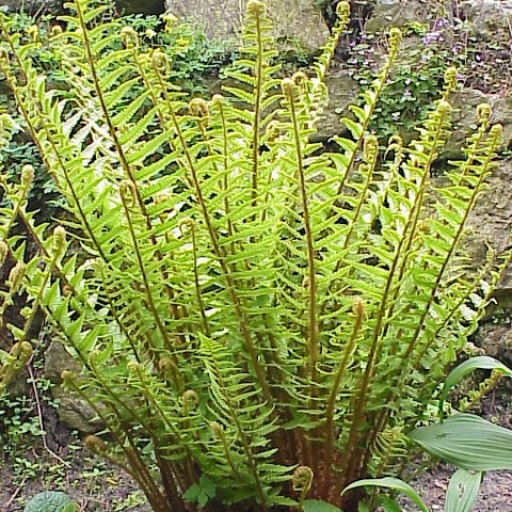
Plant Overview
Known as the Male Fern or the King of Ferns, this robust beauty is a staple of temperate woodlands across the Northern Hemisphere. Its grand, arching fronds have been a garden favorite since the Victorian era's "Pteridomania" (fern fever). It is celebrated for its architectural shape and its ability to bring a lush, prehistoric feel to the darkest corners of a yard.
🔍 How to Identify
- 🌿 Frond Structure: The leaves are lance-shaped and "bipinnate," meaning they branch out in an intricate, feathery pattern that tapers toward the tip.
- 🏸 The Shuttlecock Shape: It grows in a very symmetrical, upright clump. The fronds erupt from a central crown, creating a shape reminiscent of a badminton shuttlecock or a large vase.
- 🪵 Scaly Stems: Look closely at the base of the stalks (the stipes). They are densely covered in distinctive golden-brown, papery scales that look almost like fur.
🏡 In Your Garden
- 🌑 Shade Specialist: Unlike many finicky ferns, the Male Fern is remarkably "tough as nails." It is one of the few plants that can tolerate "dry shade"—those difficult spots under large trees where the soil is often thirsty and dark.
- 🌬️ Structural Resilience: It holds its shape well throughout the season. While it is technically deciduous, in milder climates, the fronds can remain green well into the winter, providing much-needed texture when the rest of the garden is bare.
⚠️ Safety & Toxicity
- 🐾 Pet Friendly: The Male Fern is generally considered non-toxic to cats, dogs, and horses. It is a much safer alternative for pet owners than the toxic Sago Palm or certain lilies.
- 🚫 Human Caution: While not "poisonous" to touch, the rhizomes contain filicin. Historically used to treat parasites, this compound is toxic in large doses. It should never be ingested, and its bitter taste usually prevents children from trying.
✨ Fun Fact
In medieval folklore, ferns were thought to bloom with a "secret flower" exactly at midnight on St. John's Eve. It was believed that anyone who caught the "invisible seeds" from this mythical flower would be granted the power of invisibility and the ability to find buried gold!

Detailed Care Instructions
| Soil Ph | Acidic |
| Humidity | High |
| Lighting | Shade |
| Toxicity | Toxic |
| Soil Type | Clay, Loamy |
| Difficulty | Medium |
| Plant Type | Perennial, Fern |
| Mature Size | 2-4 Ft. Tall |
| Native Area | North America |
| Temperature | 15°C - 24°C |
| Sun Exposure | Full Sun, Partial Sun, Shade |
| Hardiness Zones | 4-8 |
To grow a Dryopteris filix-mas plant, also known as the male fern, follow these steps:
- Choose a suitable location: The male fern prefers partially shaded areas with moist, well-drained soil. Choose a location with dappled sunlight or a spot that receives morning sun and afternoon shade.
- Prepare the soil: The soil should be rich in organic matter and have good drainage. Amend the soil with compost or well-rotted manure to improve its fertility and moisture-retaining capacity.
- Planting: Dig a hole slightly larger than the root ball of the fern. Place the root ball in the hole, ensuring that the crown of the plant remains at ground level or slightly above. Backfill the hole with soil and gently firm it around the roots.
- Watering: Water the fern thoroughly after planting and keep the soil consistently moist. Male ferns require regular watering, especially during dry periods. However, avoid overwatering, which can lead to root rot.
- Mulching: Apply a layer of organic mulch, such as bark chips or straw, around the base of the plant. Mulching will help retain moisture in the soil, moderate the temperature, and suppress weed growth.
- Fertilization: Apply a balanced, slow-release fertilizer in early spring to provide the fern with necessary nutrients. Follow the manufacturer's instructions for proper application and dosage.
- Pruning: Remove any dead or damaged fronds by cutting them off at the base. This will enhance the plant's appearance and overall health.
- Protection: Male ferns are generally hardy, but they may require protection from severe winters or frosts. If you live in a colder climate, cover the fern with a layer of mulch or horticultural fleece to insulate it from extreme temperatures.
- Division: Over time, male ferns can become crowded, leading to smaller and less vigorous plants. To maintain their vitality, divide mature clumps every few years. Dig up the entire clump and separate it into smaller sections, ensuring each section has a healthy root system. Replant the divisions and water them thoroughly.
- Pests and diseases: Male ferns are relatively pest and disease-free. However, they can occasionally suffer from aphid infestations or fungal diseases. Monitor the plant regularly and take appropriate action if you notice any signs of pest or disease problems. Use organic insecticides or fungicides as a last resort.
By following these guidelines, you can successfully grow a healthy Dryopteris filix-mas plant and enjoy its beautiful foliage in your garden.

Place in a window with dappled sun or a spot in the middle of a room. Or directly in a window facing west or east.

The Dryopteris Filix-mas plant requires regular watering to thrive, especially during its growing season. It is important to ensure that the soil is kept consistently moist, but not waterlogged.
One way to water this plant is to use a watering can or a hose with a gentle spray nozzle to water the soil around the base of the plant. The soil should be watered until it is thoroughly moist, but not saturated.
Another method is to place the plant in a tray filled with water and allow it to soak up the water through the drainage holes in the bottom of the pot. However, it is important not to leave the plant sitting in water for an extended period of time as this can lead to root rot.
It is also important to avoid getting water directly on the leaves of the plant as this can promote the growth of fungal diseases. If the leaves do get wet, it is recommended to gently shake off any excess water.
Overall, regular and consistent watering is essential for the healthy growth of the Dryopteris Filix-mas plant. It is essential to ensure that the soil is kept moist but not waterlogged and that no water gets directly on the leaves of the plant.
To fertilize this plant, use a slow-release fertilizer with equal N-P-K ratios. Avoid using high nitrogen fertilizers as they can lead to foliage burn. Apply the fertilizer once a month during the growing season from spring to summer. Water the plant well before and after applying the fertilizer to prevent root burn. Additionally, always follow the instructions on the fertilizer package for the correct amount and frequency of application.
Dryopteris filix-mas plant grows well in a well-draining soil that is rich in organic matter. The best soil for this plant is a mixture of equal parts loam, peat moss, and sand. This type of soil provides adequate drainage while retaining enough moisture to keep the plant healthy. While it is tolerant of a wide range of soil types, this plant prefers soil that is slightly acidic, with a pH between 5.5 and 7.0. When planting, make sure the soil is firm around the roots, but not compacted, as this can impede water and nutrient absorption.
Dryopteris Filix-mas is a perennial plant well-suited to cool, shady areas that produces clusters of spores on the underside of its fronds. To propagate this plant, collect mature fronds and remove the spore-filled sori. Place the spores on a sterile surface, such as moistened peat moss or sterilized soil, and cover with a clear plastic wrap to maintain humidity. Keep the spores in a bright but out-of-direct-sunlight location and maintain a consistent temperature and humidity level. Once the spores have germinated and produced young ferns, transplant them to a medium comprised of equal parts loamy soil and peat moss. Move the young plants to a shaded location and keep the soil moist but not waterlogged. With proper care, your newly propagated Dryopteris Filix-mas plants will grow to maturity, producing fronds and spores of their own.
Common pests of the common male fern include Mealybugs, spider mites, aphids. Make a habit of checking your common male fern frequently for pests so that any infestations can be caught and managed early.








