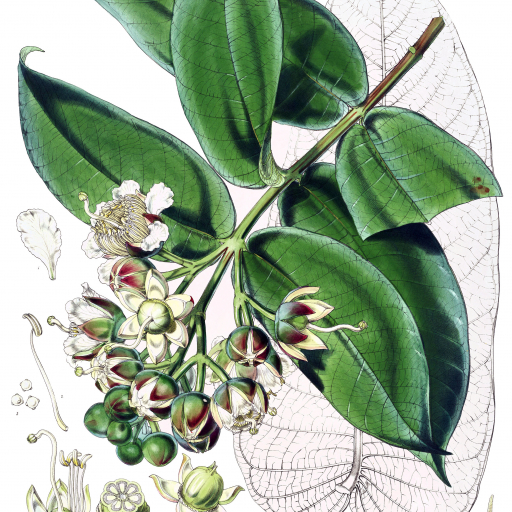
Plant Overview
Often called the Lampati or simply the Duabanga, this majestic evergreen is a true "pioneer" of the Southeast Asian rainforests. It is famous for its rapid growth and its striking, weeping silhouette, with long branches that drape downward like a green waterfall. In its native Himalayan foothills and river valleys, it is a vital species for stabilizing soil and providing a home for nocturnal pollinators.
🔍 How to Identify
- 🍃 The Foliage: Large, leathery, oblong leaves that grow in strictly opposite pairs along the branches. The leaves often have a slightly heart-shaped base and a distinct point at the tip.
- 🎋 Branching Pattern: Unlike many upright trees, the Duabanga has long, horizontal branches that eventually droop under their own weight, creating a pendulous, "weeping" appearance.
- 🌸 The Bloom: Large, bell-shaped flowers with creamy white petals and a massive cluster of prominent stamens that look like a dense shaving brush.
- 🌰 The Fruit: Green, rounded capsules that turn woody and brown as they mature, eventually splitting open to release tiny, winged seeds.
🏡 In Your Garden & Landscape
- 💧 Water Enthusiast: In the wild, this tree is almost always found near stream banks or in moist valleys. It has a high thirst and thrives in environments where the soil stays consistently damp but never stagnant.
- 🚀 Fast-Track Growth: This is a "pioneer species," meaning it is one of the first trees to grow in cleared areas or landslides. Because of this, it grows incredibly fast, making it a favorite for rapid reforestation or large-scale shade.
- 🌳 Space Requirements: Due to its massive size (reaching up to 30 meters or more) and spreading branches, it is rarely kept as a houseplant and is best suited for large estates or botanical parks.
⚠️ Safety & Toxicity
- 🟢 Status: Generally considered non-toxic.
- 🐾 Details: There are no documented cases of severe toxicity to humans or common pets. However, because it is not a culinary plant, it is best to discourage pets or children from chewing on the tough, fibrous leaves which could cause mild stomach upset.
✨ Fun Fact
The Duabanga is a "night owl" of the plant world! Its large, heavy-scented flowers bloom in the evening and emit an odor similar to sour milk or fermentation. This isn't to drive humans away, but to attract fruit bats, which are its primary pollinators!

Detailed Care Instructions
Duabanga Grandiflora, commonly known as the Bengal trumpet or Indian almond, can be grown from seed or propagated through cuttings. Here are the steps to grow this plant:
- Seed Propagation:
- Collect fresh seeds from a mature Duabanga Grandiflora plant.
- Soak the seeds in lukewarm water for 24 hours to soften the hard seed coat.
- Fill a seed tray or pots with well-draining potting soil.
- Sow the seeds on the soil surface, lightly pressing them down.
- Cover the seeds with a thin layer of soil and lightly water.
- Place the tray or pots in a warm, bright location, away from direct sunlight.
- Keep the soil moist but not soggy.
- Germination may take several weeks, so be patient.
- Once the seedlings have developed several sets of true leaves, transplant them into individual pots or a larger container.
- Collect fresh seeds from a mature Duabanga Grandiflora plant.
- Propagation by Cuttings:
- Take 4-6 inch long cuttings from a healthy Duabanga Grandiflora plant.
- Remove the bottom leaves, leaving only a few at the top.
- Dip the cut end of the stem in rooting hormone powder or gel.
- Insert the cutting into a pot filled with well-draining potting soil.
- Water the soil lightly and cover the pot with a plastic bag or a propagator dome to create a humid environment.
- Place the pot in a warm, bright location, but avoid direct sunlight.
- Mist the cutting regularly to maintain moisture levels.
- After a few weeks, when the cutting starts producing new growth, remove the plastic covering.
- Once the roots are established, transplant the cutting into a larger container.
General Care for Duabanga Grandiflora plant:
- Take 4-6 inch long cuttings from a healthy Duabanga Grandiflora plant.
- Provide the plant with bright, indirect sunlight for at least 4-6 hours a day.
- Maintain a warm and humid environment, as this plant prefers tropical conditions.
- Water the plant regularly to keep the soil moist but avoid over-watering, as it can cause root rot.
- Fertilize the plant with a balanced liquid fertilizer during the growing season.
- Prune any dead or overgrown branches to maintain the desired shape and promote healthy growth.
- Protect the plant from extreme temperatures and cold drafts.
With proper care and suitable growing conditions, your Duabanga Grandiflora plant should thrive and grow into a beautiful specimen.

Place in a bright room that is sun drenched almost all day. Or directly in a south-facing window.

Duabanga Grandiflora plant requires regular watering to maintain its growth and health. When watering the plant, it is essential to ensure that the soil is moist but not too wet, as over-watering can lead to root rot.
To water Duabanga Grandiflora plant, first, check the moisture level of the soil. The best way to check the soil moisture is by inserting your finger into the soil up to an inch deep. If the soil feels dry, then it's time to water the plant.
When watering the plant, use a watering can or a hose with a gentle spray nozzle. Slowly pour the water onto the soil, avoiding getting water on the leaves.
Water the plant thoroughly until the excess water begins to drain out from the bottom of the pot. Allow the excess water to drain, and then discard it.
In hot and dry weather conditions, Duabanga Grandiflora plant may require more frequent watering. It's recommended to water the plant once in the morning and once in the evening during such conditions.
In summary, to water Duabanga Grandiflora plant, check the soil moisture, water thoroughly until excess water drains out, and avoid getting water on the leaves.
To fertilize this plant, obtain a balanced fertilizer containing nitrogen, phosphorus and potassium. Mix it according to the instructions on the package. Apply the fertilizer evenly around the plant, avoiding any direct contact with the stem or leaves. Water the plant after fertilizing to help the nutrients penetrate into the soil. Fertilize the plant every two to four weeks during the growing season, reducing to once a month during winter. Do not over-fertilize as this can lead to burnt or damaged roots.
The ideal soil for Duabanga Grandiflora should be well-draining and rich in organic matter. It should be slightly acidic with a pH level of 6.0 to 7.0. Additionally, the soil should have good water retention capabilities, as the plant requires regular watering. The addition of sand and perlite can help improve drainage and prevent soil compaction. Avoid using heavy clay soils, as they can hinder root growth and prevent proper nutrient absorption. It is recommended to supplement the soil with a balanced fertilizer during the growing season to promote healthy growth and development.
To propagate this plant, you will need to collect stem cuttings from a mature and healthy specimen. Look for stems that are at least 6 inches long and have several leaves on them.
Use a sharp and clean pair of pruning shears to make a clean cut just below a leaf node. Remove any leaves from the bottom half of the stem, leaving only a few at the top.
Fill a small pot with well-draining soil, such as a mixture of peat moss and perlite. Make a hole in the soil with your finger and insert the stem cutting into it. Firmly press the soil around the stem to hold it in place.
Water the cutting thoroughly and place it in a warm and bright spot, but out of direct sunlight. You may also cover the pot with a plastic bag or create a mini greenhouse to help retain moisture.
Check the cutting regularly and water it when the soil feels dry to the touch. After a few weeks, you should start to see new growth emerging from the top of the stem. This indicates that the cutting has taken root and is ready to be transplanted into a larger pot or outdoors in the garden.








