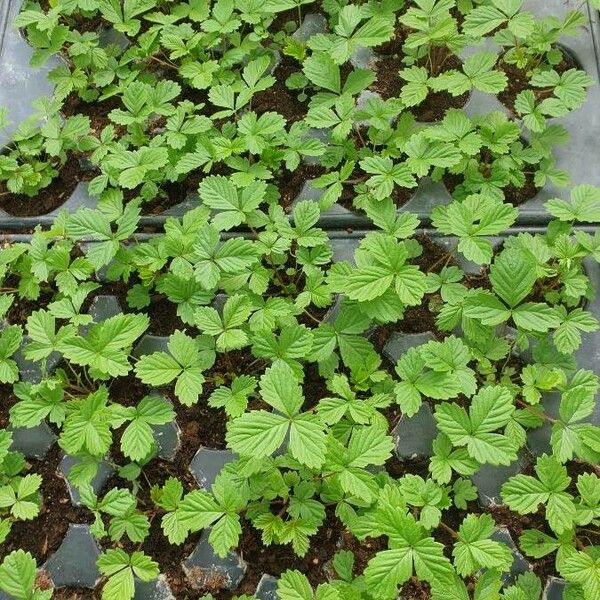
Plant Overview
Known as the "False Strawberry" or "Mock Strawberry," Duchesnea chrysantha is a charming trickster of the forest floor. While it looks remarkably like the delicious wild strawberry, it reveals its true identity with a bright yellow flower and a surprising lack of flavor. In many cultures, it is appreciated as a resilient groundcover that decorates garden borders with bright red "jewels" from late spring through autumn.
🔍 How to Identify
- 🌼 Golden Blooms: The most distinctive feature is its flower; unlike true wild strawberries which have white petals, this plant produces cheery, five-petaled yellow blossoms.
- 🍓 Upward Fruit: The red, bumpy "berries" sit upright on the stem, facing the sky, whereas true strawberries typically heavy-hang toward the ground.
- 🍃 Trifoliate Leaves: Its leaves are arranged in groups of three with serrated (toothed) edges, creating a lush, green carpet that stays low to the earth.
🏡 In Your Garden
- 🏃 The Creeping Habit: This plant spreads via "runners" (stolons) that root as they touch the ground. It is an aggressive grower, making it perfect for filling in empty gaps under trees where grass refuses to grow.
- 🌦️ Adaptable Nature: While it prefers moist, dappled shade, it is incredibly hardy. It can withstand moderate foot traffic and will pop back up even after being stepped on, acting almost like a "living rug."
⚠️ Safety & Toxicity
- 👅 Edible but Bland: The fruit is technically edible and non-toxic, but don't expect a treat! They are famously flavorless, often described as having the texture of dry pith or watery cardboard.
- 🐾 Pet Assessment: It is considered non-toxic to dogs, cats, and horses. However, eating large amounts of any non-dietary plant matter can cause mild stomach upset in pets.
✨ Fun Fact
In some regions of Asia, the crushed leaves of the False Strawberry have been used for centuries in traditional poultices to soothe minor skin irritations and insect bites!

Detailed Care Instructions
To successfully grow Duchesnea chrysantha, also known as Indian strawberry or mock strawberry, follow these steps:
- Select a suitable location: Choose a spot that receives partial shade to full sun. The plant can tolerate a variety of soil conditions but prefers well-draining soil.
- Prepare the soil: Ensure the soil is fertile, loamy, and enriched with organic matter. If the soil is heavy clay or sandy, amend it with compost or well-rotted manure to improve its texture and fertility.
- Planting: Dig a small hole slightly larger than the plant's root ball. Place the plant in the hole, making sure the crown is level with the soil surface. Backfill the hole with soil, gently firming it around the roots. Water thoroughly after planting.
- Watering: Maintain consistent soil moisture but avoid overwatering, as it can cause root rot. Water the plant deeply whenever the top inch of soil feels dry. During hot summer months, more frequent watering may be required.
- Mulching: Apply a layer of organic mulch around the plant to retain moisture, suppress weed growth, and regulate soil temperature. However, avoid mulching directly against the stem to prevent rotting.
- Fertilization: Fertilize the plant once in early spring with a balanced, slow-release fertilizer. Follow the package instructions for application rates. Avoid overfertilization, as it may lead to excessive foliage growth with fewer blooms.
- Pruning: Regularly remove any dead, damaged, or diseased foliage to promote healthy growth. If the plant becomes leggy or starts to spread aggressively, you can cut it back by a third to encourage bushier growth.
- Propagation: Duchesnea chrysantha can be propagated through runners or division. Soft runners can be pegged down into the soil to encourage root formation, and then severed from the parent plant once new roots have formed. Alternatively, the plant can be divided in early spring or fall, making sure each division has roots and shoots.
- Pest and disease management: Indian strawberries are generally resistant to pests and diseases. However, keep an eye out for common garden pests like slugs and snails. If necessary, use organic pest control methods to manage them.
- Harvesting: Enjoy the bright yellow or red fruits of Duchesnea chrysantha when they ripen. Harvest them when fully colored and ripe, as the unripe fruit can be slightly astringent.
By following these steps, you should be able to successfully grow Duchesnea chrysantha in your garden.

Place in a window with dappled sun or a spot in the middle of a room. Or directly in a window facing west or east.

To water this particular plant, you will need to ensure that it is located in a well-draining soil that allows water to freely move through it. It is important to not overwater the plant, as this can lead to root rot. Therefore, it is recommended to water only when the soil feels dry to the touch, typically once or twice a week. When watering, pour water slowly over the soil until it begins to drain out of the bottom of the pot or onto the ground if it is planted outdoors. Avoid getting water on the leaves or flowers, as this can promote disease and damage to the plant.
To fertilize this plant, use a balanced fertilizer with a ratio of 10-10-10. Apply the fertilizer at a rate of 1 pound per 100 square feet of growing area. It is best to fertilize in the spring before new growth appears and again in the mid-summer. Water the plant well before and after fertilization. Avoid over-fertilizing as it can lead to burning of the roots or foliage.
When planting Duchesnea Chrysantha, it is recommended to use a well-draining soil that is rich in organic matter. This can include a mixture of compost, peat moss, and sand. The soil should have a pH between 6.0 and 7.5, and be kept consistently moist but not waterlogged. It is important to avoid using soils that are heavy in clay or compacted, as this can prevent proper drainage and lead to root rot. Regular fertilization with a balanced fertilizer can also help ensure healthy growth and blooming.
To propagate this species of plant, take stem cuttings that are approximately 3 inches in length. Dip the cut end of the stem in rooting hormone, then plant the cutting in a well-draining soil mix. Water the cutting thoroughly, then place it in a warm location with indirect sunlight. Keep the soil moist but not waterlogged, and cover the cutting with a plastic bag to increase humidity. In approximately 4-6 weeks, the cutting should develop roots and be ready to transplant to its permanent location.
Common pests of the lesser mock-strawberry include Spider mites, whiteflies, larvae, snails. Make a habit of checking your lesser mock-strawberry frequently for pests so that any infestations can be caught and managed early.








