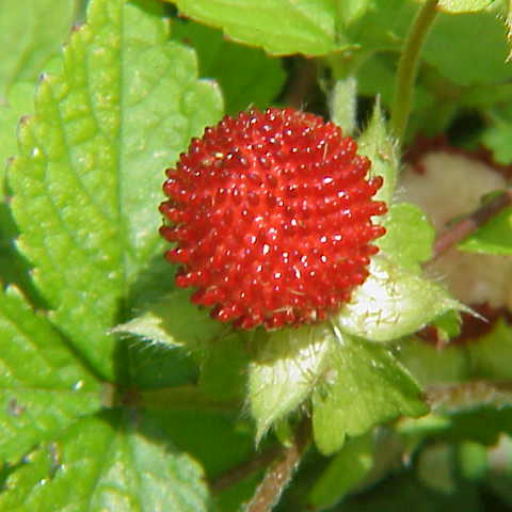
Plant Overview
Often mistaken for its delicious garden cousin, the Mock Strawberry is a master of biological mimicry. Native to eastern and southern Asia, this creeping perennial has traveled the globe, frequently appearing as a "volunteer" in shaded lawns and woodland edges. While it looks like a juicy woodland treat, it is famous for a disappointing secret: it has almost no flavor at all.
🔍 How to Identify
- 🌼 Yellow Flowers: The easiest way to tell it apart from a true wild strawberry is the flower color. Mock Strawberries have bright yellow petals, whereas true strawberries (Fragaria) have white or pinkish blooms.
- 🍓 Upright Fruit: The red, bumpy "berries" (which are actually accessory fruits) sit pointing upward toward the sky. Real strawberries typically hang downward under the weight of their own juice.
- 🍃 Trifoliate Leaves: It features the classic "strawberry" leaf shape—three leaflets with toothed edges—but they are often smaller, darker green, and slightly hairier than cultivated varieties.
🏡 In Your Garden
- 🏃 The Great Colonizer: This plant spreads aggressively via "runners" (stolons) that root at every node. If you find one in your flower bed, it will likely be a carpet by next season.
- 🌱 Shade Lover: While it can handle sun, it thrives in the damp, "forgotten" corners of the yard. Many homeowners use it as a no-mow groundcover in areas where grass refuses to grow, as it stays green and lush throughout the warmer months.
⚠️ Safety & Toxicity
- 👅 Low Toxicity: The fruit is technically edible but widely considered "palatably toxic"—meaning it tastes so bland and dry (like watery cardboard) that no one wants to eat enough to get sick.
- 🐾 Pet Safety: It is generally considered non-toxic to dogs and cats. However, because it grows low to the ground in lawns, the primary danger is not the plant itself, but any pesticides or fertilizers that may have been sprayed on it.
✨ Fun Fact
🧪 A New Identity: For centuries, this plant was categorized in its own genus, Duchesnea. However, recent DNA sequencing has revealed it is actually a member of the Cinquefoil family, leading botanists to officially rename it Potentilla indica. Regardless of the name, it remains the ultimate "fool’s fruit."

Detailed Care Instructions
To grow Duchesnea Indica, also known as Indian strawberry or Mock strawberry, you can follow these steps:
- Choosing a Planting Location: Select a location with partial shade or full sun. The plant prefers well-draining soil.
- Soil Preparation: Prepare the soil by removing any weeds or grass and loosening it with a garden fork or tiller. Add organic matter like compost to improve soil fertility and drainage.
- Planting: Start by planting the seeds or young plants during the spring or early summer. Sow the seeds about ¼ inch deep in the soil or transplant the young plants with a spacing of 12-18 inches apart.
- Watering: Keep the soil moist, but avoid overwatering. Infrequent deep watering is better than shallow frequent watering. The plant prefers evenly moist soil.
- Mulching: Apply a layer of organic mulch around the plants, like straw or wood chips, to help retain moisture and prevent weed growth.
- Fertilization: Duchesnea Indica generally doesn't require much fertilizer. However, you can apply a balanced organic fertilizer once or twice during the growing season to promote healthy growth.
- Pruning: Regularly remove any yellowing or dead leaves to maintain plant health. This will also help prevent the spread of diseases.
- Harvesting: The fruits of Duchesnea Indica resemble strawberries in appearance but are generally less flavorful. Harvest the ripe berries as they turn red. They can be eaten fresh or used in jams, jellies, or desserts.
- Pest and Disease Management: Keep an eye out for common pests like slugs, snails, or aphids. Use organic pest control methods or companion planting to manage pest issues. Watch for fungal diseases like powdery mildew and treat them early with appropriate fungicides if necessary.
- Winter Care: Duchesnea Indica is generally hardy and can tolerate mild winter conditions. However, if you live in an area with severe winter temperatures, you may want to provide extra protection by covering the plants with mulch or moving container-grown plants indoors.
By following these steps, you should be able to grow a healthy Duchesnea Indica plant and enjoy its fruits during the growing season.
To water this particular species of plant, you should first take note of the type of soil it is planted in. The soil should be well-draining, but not overly dry or saturated. When watering, take care to avoid getting water on the leaves, focusing instead on the soil around the base of the plant. Water only when the top inch of soil feels dry to the touch. Avoid overwatering, as this can cause root rot and other issues. If growing indoors, consider placing a saucer under the plant to catch excess water and prevent damage to surfaces.
To fertilize this plant, use a balanced fertilizer with equal amounts of nitrogen, phosphorus, and potassium. Apply the fertilizer once every two weeks during the active growing season. Follow the instructions on the label for the recommended amount of fertilizer per gallon of water. Water the plant with the fertilizer solution until the soil is thoroughly moistened. Avoid over-fertilization, which can cause damage to the plant.
The best soil for the plant with scientific name Duchesnea Indica is a well-draining soil mixture that contains equal parts of peat moss, perlite, and vermiculite. The soil should also be slightly acidic with a pH range of 5.5 to 6.5. Adding some organic matter such as compost or aged manure can also improve the soil quality and enhance the plant's growth. It's essential to make sure that the soil is moist but not waterlogged to prevent root rot. The plant prefers moderately fertile soil that is rich in nutrients such as phosphorus and potassium. Additionally, the soil should be aerated to allow for good air circulation around the roots.
Duchesnea Indica plant can be propagated by division of its underground stems, which should be done in the spring. First, carefully dig up the plant and try to separate the underground stems with roots attached. Each division should have a healthy portion of stem and roots. Then, replant each division in well-draining soil and keep the soil consistently moist until new growth appears. Cut back any dead or damaged foliage and avoid fertilizing until the plant has fully established. With proper care, each division should grow into a new, healthy plant.








