Plant Overview
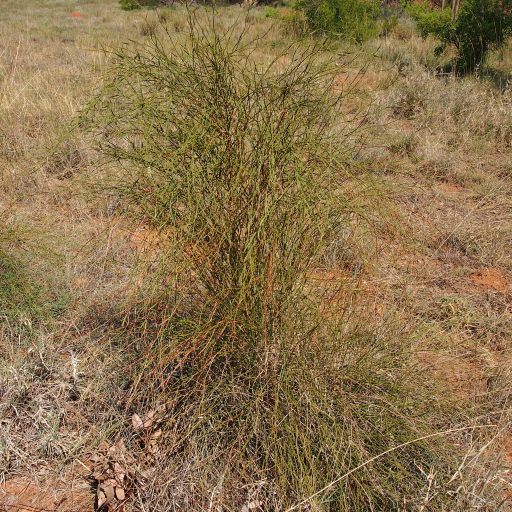
Meet the "Tangled Lignum," the architectural minimalist of the Australian outback. Often resembling a messy ball of wire or a discarded thicket, this hardy shrub is a master of survival in harsh, flood-prone landscapes. While it might not win a beauty contest for its foliage, its ability to transform from a dry skeleton into a lush "wildlife hotel" after rain makes it a cornerstone of wetland ecology.
🔍 How to Identify
- 🌿 The Stems: Look for complex, tangled, and wiry grey-green branches that zigzag to form a dense, almost impenetrable mound.
- 🍃 The Leaves: Leaves are small, narrow, and fleeting; the plant often drops them entirely during dry spells to conserve water, relying on its green stems for photosynthesis.
- 🌼 The Flowers: During bloom, you’ll spot tiny, star-shaped blossoms tucked into the stem joints, ranging in color from creamy white to a soft yellowish-green.
🏡 In Your Garden
- 💧 The "Boom or Bust" Cycle: This plant is genetically programmed for extremes. It can survive years of total drought by appearing dormant (or even dead), only to burst into vibrant green growth within days of a heavy watering or "flood" event.
- 🐦 A Natural Fortress: If you want to support local biodiversity, this is a top-tier choice. The dense, twiggy interior provides a predator-proof sanctuary for small nesting birds, like wrens and finches.
- 🌱 Erosion Control: Because it possesses a deep and vigorous root system, it is an excellent candidate for stabilizing soil around dams, ponds, or areas of your property prone to runoff.
⚠️ Safety & Toxicity
- ✅ Status: Duma florulenta is generally considered non-toxic to humans, cats, and dogs.
- 🩹 Physical Scratches: The primary "danger" is physical rather than chemical. The dry, stiff stems can be quite sharp and scratchy; it is wise to wear thick gardening gloves and eye protection if you are pruning a mature thicket.
✨ Fun Fact
The common name "Lignum" is actually a historical linguistic accident! It is a corruption of the genus name Polygonum (to which it was once thought to belong). Early Australian settlers shortened the name over decades until "Lignum" became the standard common name, despite lignum being the Latin word for wood.

Detailed Care Instructions








