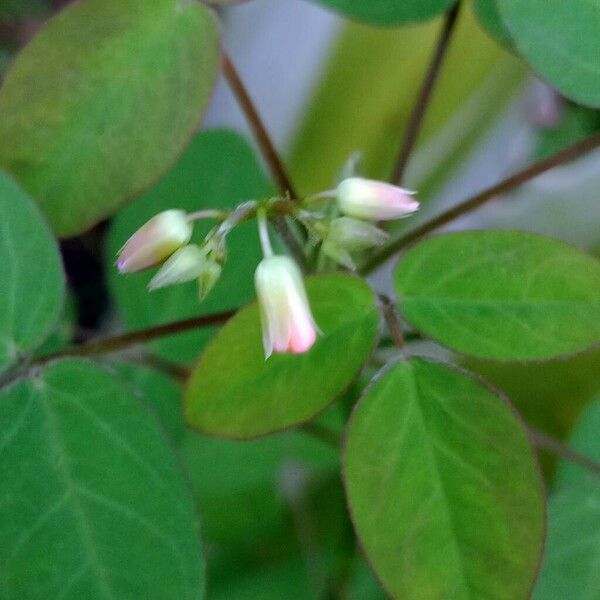
Plant Overview
Often found draping gracefully over shrubs in the humid woodlands of East Asia, Dumasia truncata is a delicate and understated member of the legume family. Known to some as the Truncated Wild Pea, this climbing vine is a master of the forest edge, using its slender stems to reach for dappled sunlight. While it may not have the showy fame of garden sweet peas, its geometric precision and subtle blooms make it a favorite for lovers of wild, naturalistic landscapes.
🔍 How to Identify
- 🍃 Trifoliate Leaves: The plant features classic "three-leaflet" foliage. The leaves are thin, soft to the touch, and usually a vibrant, medium green.
- 🌼 Pale Pea Blooms: It produces drooping clusters of small, cream-colored or pale yellow flowers that possess the characteristic "banner and keel" shape of the pea family.
- 📐 The "Truncated" Calyx: Look closely at the base of the flower (the calyx). Unlike most flowers that taper into a point, the calyx of this species looks remarkably flat or "cut off," which gives the plant its botanical name.
🏡 In Your Garden
- 🧗 The Scrambling Habit: This is a twining vine, not a self-clinging one. It requires a fine trellis, netting, or neighboring sturdy shrubs to climb. It is excellent for "softening" the look of a fence or a hedge.
- 💧 Moisture Consistency: Because it originates in valley forests and montane thickets, it dislikes drying out completely. It performs best in organic-rich soil that stays consistently moist but never waterlogged.
- 🌤️ Dappled Light: Think of its natural home under the canopy; it prefers "bright shade" or morning sun. Harsh afternoon sun can scorch its delicate, thin leaflets.
⚠️ Safety & Toxicity
- 🐾 Mildly Concerning: Like many wild legumes, the seeds and pods may contain saponins or other compounds that can cause digestive upset if eaten in large quantities.
- 👶 Keep Out of Reach: To be safe, ensure children and pets do not graze on the pea-like pods, as they are not edible like garden peas and may cause nausea or vomiting.
✨ Fun Fact
- Dumasia plants are "soil healers." Through a symbiotic relationship with Rhizobium bacteria in their roots, they take nitrogen from the atmosphere and "fix" it into the earth, naturally fertilizing the soil for themselves and the plants growing around them!

Detailed Care Instructions

Place in a bright room that is sun drenched almost all day. Or directly in a south-facing window.

Some plants require more regular watering than others, which should be done every few days. It's critical to maintain the soil moist all of the time. The water requirements of the same plant placed in pots with varying sizes will differ. Because the water in the smaller pot evaporates faster than the water in the larger pot, it will require more watering. Regardless of pot size, the surface should constantly be maintained moist.








