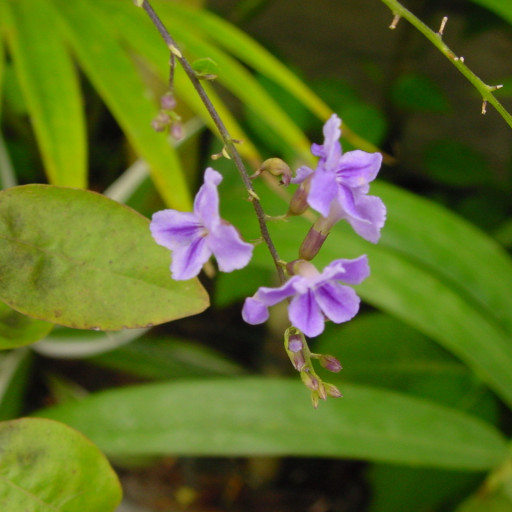
Plant Overview
Often called the "Golden Dewdrop" or "Skyflower," Duranta erecta is a sprawling evergreen shrub that brings a tropical, vibrant energy to any landscape. Native to the Americas and the Caribbean, it is beloved for its "two-for-one" display: cascading clusters of sapphire-blue flowers that eventually transform into heavy, ornamental golden berries. It’s a fast-growing favorite for gardeners who want to attract pollinators while adding a touch of elegance to fences or borders.
🔍 How to Identify
- 🌸 The Blooms: Small, tubular flowers that grow in drooping clusters (racemes). They are typically a rich lavender or blue, often edged in white, giving them a "picotee" appearance.
- 🍂 The Foliage: Bright green, oval-shaped leaves with finely serrated edges. Be careful when pruning—older specimens may develop small, sharp spines along the stems.
- 🟠 The Berries: Once the flowers fade, they are replaced by pendulous bunches of spherical, orange-yellow fruits that hang like heavy teardrops.
🏡 In Your Garden
- 🦋 Pollinator Magnet: This plant is a five-star hotel for butterflies and hummingbirds. Its high nectar production makes it an essential "anchor plant" for any wildlife-focused garden.
- ✂️ Growth Habits: Because it grows so vigorously, it can become "leggy" or unruly if left to its own devices. It responds exceptionally well to hard pruning, allowing you to train it into a formal hedge, a small tree, or even a cascading patio plant.
- ☀️ Sun & Soil: To get the best floral display, give it as much sun as possible. While it’s drought-tolerant once its root system is established, it prefers well-draining soil and hates "wet feet" (standing water).
⚠️ Safety & Toxicity
- 🚫 Toxic Status: Poisonous. While beautiful, all parts of the plant—especially the golden berries—are toxic if ingested.
- 🐾 Pets & Kids: The berries contain saponins which can cause severe stomach upset, drowsiness, and respiratory distress in dogs, cats, and humans. It is best planted in areas where curious toddlers or pets won't be tempted by the "fruit."
✨ Fun Fact
🌟 The genus name Duranta was chosen to honor Castore Durante, a famous 16th-century Italian botanist and physician. Despite its toxicity to mammals, many species of birds can eat the berries without harm, acting as the plant's primary seed dispersers in the wild!

Detailed Care Instructions
Some purple Phlox paniculata varieties have similar-looking flower clusters to the duranta plant. In fact, gardeners in northern growing zones can try growing phlox as an alternative to duranta plant. Garden phlox bloom in the summer, reaching a mature height of about 3 to 4 feet. 'Laura' and 'Blue Paradise' are two varieties that deliver the same blue and lilac tones gardeners appreciate in duranta plants. Unlike duranta, which doesn't tolerate frost, garden phlox readily survives in zones 4 to 8.
How is duranta plant used in the landscape?
Duranta plants are easy to grow in warm weather and full sun. They will quickly fill up a blank spot in the garden and can serve as a privacy screen in areas where they are winter hardy.In a container garden, you can grow the duranta as a long-blooming annual for the patio or even prune the plant into a topiary tree form. If you live outside the plant's hardiness zones, you can still grow it in the ground as an annual. Plant it in the spring after the last frost has passed, and enjoy its blooms until cold weather returns in the fall. Many gardeners have success bringing containers indoors to continue growing their duranta plant as a winter houseplant.
Are there thornless varieties of duranta?
If the thorny stems found on most duranta plants are a problem, try 'Sweet Memories', which has purple flowers edged with white.
| Color | Blue, Violet, White |
| Soil Ph | Acidic To Slightly Alkaline (5.6-7.5) |
| Humidity | Normal |
| Lighting | Full Sun |
| Toxicity | Poisonous |
| Soil Type | Rich Loam Is Best, But Tolerates Rocky Soil |
| Bloom Time | Spring Through Frost |
| Difficulty | Medium |
| Plant Type | Tropical Shrub |
| Hibernation | Cold Period |
| Mature Size | 18 Feet |
| Native Area | Mexico, Central And South America |
| Temperature | 15°C - 25°C |
| Sun Exposure | Full To Partial Sun |
| Hardiness Zones | Usda Growing Zones 10, 11 |
To grow Duranta Erecta plant, you can follow these steps:
- Choosing a location: Select a sunny spot in your garden that receives at least 6-8 hours of direct sunlight each day. Ensure that the soil is well-draining and fertile.
- Soil preparation: Before planting, prepare the soil by loosening it with a garden fork or tiller. Remove any weeds or rocks and amend the soil with compost or well-rotted manure to improve its fertility and drainage.
- Planting: Dig a hole that is slightly larger than the root ball of the Duranta plant. Gently place the plant in the hole, making sure the top of the root ball is level with the surrounding soil. Fill the hole with soil, firming it gently around the base of the plant.
- Watering: Water the plant deeply after planting to settle the soil around the roots. Afterward, water the plant regularly but be cautious not to overwater, as Duranta prefers slightly dry conditions. Allow the top inch of soil to dry out between waterings.
- Fertilizing: Apply a balanced, slow-release fertilizer in early spring and mid-summer to provide essential nutrients. Follow the instructions on the fertilizer package for the correct dosage.
- Pruning: Duranta can benefit from regular pruning to maintain its shape and promote bushiness. Prune in early spring before new growth emerges. Remove any dead, damaged, or crossing branches to improve airflow and control the plant's size.
- Mulching: Apply a layer of organic mulch, such as wood chips or straw, around the base of the plant to help retain soil moisture, suppress weeds, and regulate soil temperature.
- Pest control: Keep an eye out for common garden pests such as aphids, mealybugs, and spider mites. If necessary, treat the infested plants with an appropriate natural or chemical insecticide.
- Winter protection: In colder regions, Duranta Erecta may not be winter hardy and could be damaged by freezing temperatures. Consider bringing potted Duranta plants indoors or protect outdoor plants with frost blankets or by moving them to a sheltered location.
By following these guidelines, your Duranta Erecta plant should thrive and grow into a beautiful addition to your garden.

Place in a bright room that is sun drenched almost all day. Or directly in a south-facing window.

Duranta Erecta plant requires regular watering but ensure that the soil does not get too soggy or waterlogged. It is essential to allow the top layer of soil to dry out before watering again. When watering, thoroughly saturate the soil until water drains out of the bottom of the pot. During the winter months, reduce watering and allow the soil to dry out between watering. Always avoid getting water on the leaves or flowers as this can cause damage or disease.
To fertilize this plant, use a fertilizer high in nitrogen, phosphorus, and potassium. Apply the fertilizer every 2-3 months during the growing season, making sure to follow the manufacturer's instructions for proper dilution and application. Water the plant well before and after fertilization to ensure the nutrients are absorbed effectively. Avoid over-fertilization, which can lead to leaf burn and stunted growth.
For Duranta Erecta plant, the ideal soil to use is well-draining soil that is rich in nutrients. It is recommended to use a mixture of sandy loam soil, perlite, and compost to create a well-draining and nutritious soil. The soil pH should be around 5.5 to 6.5. Avoid using heavy clay soils that can lead to waterlogging and root rot. Additionally, adding some organic matter such as peat moss or leaf mold can help to improve the soil structure and retain moisture. Overall, the soil should be able to retain moisture while also allowing excess water to drain away easily.
Duranta Erecta plant can be propagated easily through cuttings. First, select a healthy mother plant with stem cuttings that are at least 4-6 inches long. Cut the stem at a 45-degree angle using a sharp knife or pruning shears. Make sure to remove any leaves from the bottom 2 inches of the stem to prevent rotting.
Next, dip the cut end of the stem in rooting hormone powder. This helps to promote root growth. Place the stem cutting in a pot filled with well-draining soil. Make sure that the soil is moist but not soggy.
Cover the pot with a clear plastic bag to help maintain humidity levels. Place the pot in a bright, but shaded spot that is protected from direct sunlight. Keep the soil moist and mist the cutting with water every day to improve humidity.
After a few weeks, check for root growth by gently pulling on the stem cutting. If you feel resistance, it means that roots have developed. Remove the plastic bag and move the pot to a location with more sunlight. Gradually acclimate the new plant to outdoor conditions and water it regularly.
With proper care, your Duranta Erecta plant will flourish and grow into a beautiful, mature plant.
Common pests of the golden dewdrops include Scale insect, mealybugs, whiteflies. Make a habit of checking your golden dewdrops frequently for pests so that any infestations can be caught and managed early.








