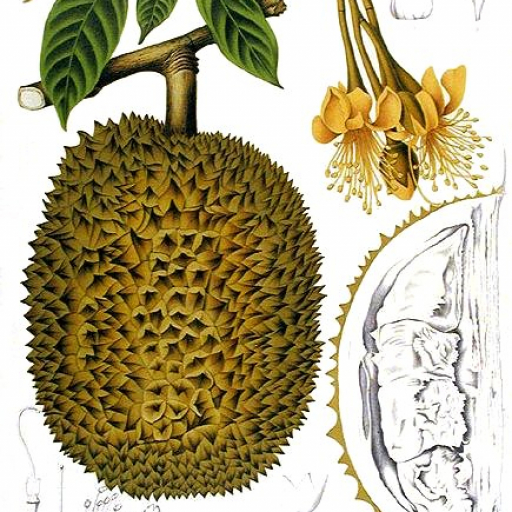
Plant Overview
Known worldwide as the "King of Fruits," Durio zibethinus is a tropical giant that commands absolute attention. While it is most famous (or infamous) for a scent often described as "rotten onions mixed with sweet custard," it holds a prestigious status across Southeast Asia. In local folklore, the durian is a symbol of abundance, though its polarizing aroma means it is frequently banned from hotels and public transport.
🔍 How to Identify
- 🍈 The Spiky Armor: The most iconic feature is the large, oval fruit covered in thick, sharp, thorn-like protuberances that act as a natural defense.
- 🍃 Bi-colored Leaves: The leaves are elliptic and leathery; they feature a glossy dark green top and a shimmering coppery or golden-silvery underside.
- 🌸 Hidden Blooms: It exhibits "cauliflory," meaning the large, heavy, creamy-white flowers grow directly from the main trunk or large branches rather than at the tips.
🏡 In Your Garden
- 🌳 Space Requirements: This is not a plant for the casual windowsill gardener. It is a massive tree that can reach heights of 100 to 150 feet in the wild, requiring significant vertical and horizontal space to thrive.
- ☁️ Tropical Temperament: The Durian is incredibly sensitive to cold and drought. It requires a high-humidity environment and deep, well-draining soil to accommodate its sensitive root system, which hates being waterlogged.
⚠️ Safety & Toxicity
- 🍽️ Edible but Formidable: The creamy flesh is a culinary delicacy, but the heavy, spiked fruit falling from a height of 100 feet poses a genuine physical danger to anyone standing below.
- 🐕 Pet Caution: While the fruit pulp is non-toxic to most mammals, the large seeds and the sharp, fibrous husk can cause serious internal blockages or physical injury to pets if chewed or swallowed.
✨ Fun Fact
The Durian's potent scent isn't just to annoy humans—it is a specialized evolutionary tactic to attract orangutans and elephants from miles away, who then eat the fruit and help disperse the large seeds throughout the rainforest.

Detailed Care Instructions
| Lighting | Full Sun |
| Hardiness Zones | Min 10B |
Here are some steps to help you grow a Durio zibethinus plant:
- Obtain Seeds or Seedlings: You can either purchase Durio zibethinus seeds or seedlings from a reputable nursery or collect them from a ripe fruit. If you choose to collect seeds from a fruit, remove the flesh and wash them thoroughly before planting.
- Choose the Right Location: Durio zibethinus plants thrive in warm and tropical climates. They require full sun, so choose a location where they will receive at least 6-8 hours of direct sunlight daily. Ensure that the soil is well-draining and rich in organic matter.
- Prepare the Soil: Before planting, prepare the soil by adding compost or well-rotted manure to improve fertility. This will provide the necessary nutrients for the plant's growth.
- Planting: If planting seeds, sow them about 1 inch deep in the soil. If using seedlings, dig a hole twice as wide and deep as the root ball and gently place the plant in the hole, ensuring that the top of the root ball is level with the soil surface. Fill the hole with soil and firmly press it down to eliminate air pockets.
- Watering: Durio zibethinus plants require regular watering, especially during the first few months after planting. Keep the soil consistently moist but not waterlogged. Once the plant is established, reduce the frequency of watering but ensure that the plant doesn't dry out completely.
- Mulching: Apply a layer of organic mulch around the base of the plant to help retain moisture, suppress weed growth, and regulate soil temperature. This can be done using straw, wood chips, or compost.
- Pruning: As the plant grows, you may need to prune to maintain its shape and remove any dead or diseased branches. Pruning also promotes better air circulation and light penetration, which can benefit fruit production.
- Fertilizing: Fertilize the Durio zibethinus plant regularly with a balanced organic fertilizer. Follow the instructions on the fertilizer package for application details. Fertilize during the active growing season, typically from spring to summer.
- Pollination: Durian trees are primarily pollinated by bats and some species of insects like beetles. If there are no natural pollinators around, hand pollination may be required. Use a small brush or cotton swab to gently transfer pollen from the male to the female flower.
- Harvesting: Depending on the specific variety, it can take around 3-5 years for Durio zibethinus to start bearing fruit. The fruits are usually ready for harvest when the husks start to crack and emit a strong aroma. Use caution when harvesting, as the husk is spiky and the fruit can be heavy.
Remember, growing Durio zibethinus requires patience and time as it takes several years to produce fruits. It is also important to research and consult local experts for specific recommendations based on your growing region.

Place in a bright room that is sun drenched almost all day. Or directly in a south-facing window.

1. Identify the plant: Before watering any plant, it is important to correctly identify it. Durio zibethinus plant has unique characteristics such as large leaves, woody trunk, and fruit that are helpful in identifying it.
2. Watering frequency: The frequency of watering depends on various factors such as the plant's age, the size of the pot, humidity levels, and temperature. Generally, the durio zibethinus plant requires regular watering to maintain soil moistness.
3. Soil moisture level: It is essential to check the soil moisture level before watering the plant. The best time to check the soil moisture level is in the morning before the temperature rises. Insert your fingers deep into the soil to check its moisture level. The soil should be slightly moist but not sodden.
4. Watering technique: The best way to water the durio zibethinus plant is to pour water slowly onto the soil over a few minutes. Avoid getting water on the foliage, as this can cause fungal diseases.
5. Avoid overwatering: Overwatering can cause root rot and lead to the plant's death. Make sure that the water drains well from the pot and doesn’t accumulate in the bottom.
6. Water quality: The quality of water used for watering the durio zibethinus plant is equally important. Chlorine and fluoride in tap water can harm the plant. Use filtered or distilled water if possible.
7. Avoid drought stress: Durio zibethinus plant can tolerate some drought stress, but if it occurs for a prolonged period, it can cause damage to the plant. Signs of drought stress include the leaves turning brown, dropping or wilting. To avoid drought stress, make sure to maintain a consistent watering schedule.
8. Humidity: The durio zibethinus plant prefers high humidity levels. In hot and dry conditions, you can use a humidifier or place the pot in a tray filled with water and pebbles to maintain humidity levels.
9. Fertilization: Watering can be done while fertilizing the plant. Regular fertilization can help improve plant growth and fruiting. Follow the manufacturer's instructions for proper application.
To fertilize this plant, use a balanced fertilizer with equal parts nitrogen, phosphorus, and potassium. Apply the fertilizer every three months during the growing season. Be careful not to over-fertilize as it can damage the plant. Water the plant after fertilizing to help distribute the nutrients evenly throughout the soil.
Durio Zibethinus plant prefers a soil that is well-draining and of moderate fertility. The soil should have a pH level that falls within the slightly acidic to neutral range. It is recommended to use a soil mix with a good amount of organic matter that can provide nutrients and promote healthy root growth. The ideal soil mix for this plant should consist of a combination of loamy soil, sand, and compost. The loamy soil provides excellent drainage and aeration, while sand improves drainage and prevents waterlogging. The addition of compost enhances the soil fertility and improves water retention. The soil mix should not contain clay or peat moss, as they tend to become waterlogged and can cause root rot. It is essential to ensure that the soil is moist but not waterlogged and to avoid over-fertilization, as it can lead to excessive vegetative growth and poor fruit production.
To propagate this plant, start by collecting seeds from a ripe fruit. Use a sharp knife to carefully remove the seed coat, being sure not to damage the seed inside. Place the seeds in a bowl of water and separate any that float to the top, as these are usually not viable.
Next, prepare a pot of well-draining soil mixture and plant the seeds about half an inch deep. Water the soil well and cover with plastic wrap to create a humid environment. Place the pot in a warm and bright location, but avoid direct sunlight.
In about two to four weeks, the seeds should begin to germinate and you can remove the plastic wrap. Once the seedlings have produced their first true leaves, you can transplant them into larger pots or directly into the ground.
Alternatively, you can also propagate this plant through grafting. Take a scion (a small branch of the plant that contains at least one bud) and carefully cut it at a 45-degree angle. Then, make a matching cut on the rootstock (a young seedling or sapling of the same species) and fit the two pieces together. Secure the graft with tape or a clamp and keep it in a warm and bright location until it has fully healed.
Common pests of the durian include Scale insect, mealybugs, spider mites, fungus gnats, thrips, whiteflies. Make a habit of checking your durian frequently for pests so that any infestations can be caught and managed early.








