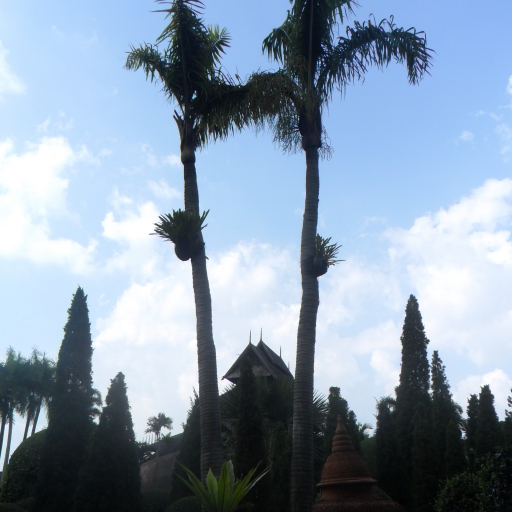
Plant Overview
Known as the Mahajanga Palm or "Lucubensis," this elegant giant is a true masterpiece of the Madagascar wilderness. While it shares a name with the spiny, cactus-like Pachypodium, this Dypsis is a true palm that brings a lush, architectural "resort feel" to any landscape or large indoor space. It is prized for its symmetrical growth and its ability to withstand slightly more wind and sun than its delicate cousins.
🔍 How to Identify
- 🌿 The Fronds: Features large, plumose (feathery) leaves that arch gracefully. The leaflets often grow in multiple planes, giving the fronds a thick, "busy" appearance compared to flatter palms.
- 🎋 The Trunk: A striking, smooth trunk marked with prominent horizontal rings (leaf scars) that resemble bamboo. As it ages, the trunk often develops a beautiful silvery-gray or waxy white sheen.
- 📐 Growth Habit: It can grow as a single-trunk specimen or in a clumping "multi-stem" form, often reaching impressive heights with a crown that fans out like a green explosion.
🏡 In Your Garden
- ☀️ Light Nuance: This palm is a sun-lover but needs a "childhood" in the shade. While mature specimens thrive in full tropical sun, young plants should be transitioned slowly to avoid bleaching their vibrant green leaves.
- 🏜️ Thirsty but Picky: While it enjoys regular watering, it is highly susceptible to root rot if the soil is heavy or compacted. It prefers a sandy, fast-draining mix that mimics the coastal forests of Madagascar.
- 🌬️ Wind Resistance: Unlike the fragile Areca palm, Dypsis madagascariensis has sturdier leaflets that don’t shred easily in the wind, making it an excellent choice for poolside planting or breezy balconies.
⚠️ Safety & Toxicity
- ✅ Friendly Status: This palm is generally considered non-toxic to humans, cats, and dogs. It is a "safe" choice for a family-friendly garden.
- 🧤 Mechanical Irritation: While not poisonous, the dried leaf bases (boots) can be quite tough and scratchy. Always wear garden gloves when pulling away old, brown fronds to protect your skin from abrasions.
✨ Fun Fact
In its native habitat, this palm is a survivor! It has evolved to grow in everything from humid rainforests to dry, rocky scrublands, which is why it is much hardier in home gardens than many other exotic palm species.

Detailed Care Instructions
To grow Dypsis madagascariensis, also known as the Madagascar palm, you can follow these steps:
- Climate and Environment: Ensure that you can provide the appropriate conditions for the plant. Dypsis madagascariensis thrives in tropical climates with warm temperatures, high humidity, and indirect sunlight. It can also tolerate partial shade.
- Soil: Use well-draining soil with a mix of organic matter, such as peat moss or compost. The pH level should be slightly acidic to neutral.
- Potting: Choose a pot that is large enough to accommodate the palm's current size and gives room for future growth. Make sure it has drainage holes to prevent waterlogging.
- Watering: Water the plant thoroughly and deeply. Allow the soil to dry out slightly between waterings, but avoid fully drying it out. Overwatering can lead to root rot, so ensure the pot has proper drainage.
- Fertilization: Feed the plant with a balanced, slow-release fertilizer during the growing season. Follow the manufacturer's instructions for the dosage.
- Pruning: Prune any dead or damaged fronds to enhance the plant's appearance and overall health. Remove any suckers that appear at the base to maintain a single-stemmed appearance.
- Propagation: Madagascar palms can be propagated by collecting the seeds from mature fruit, which should be soaked in water for a few days before sowing. The seeds take a while to germinate, so patience is key.
- Pest and Disease Control: Monitor the plant regularly for pests such as mealybugs or spider mites. Use a suitable insecticide if necessary. Additionally, ensure the palm is not exposed to cold drafts or extremely cool temperatures, which can cause damage.
Remember to research any additional care requirements specific to your location or microclimate as certain conditions may vary.
To water this particular plant, it is important to know where it originates from, as well as its preferred growing conditions. Understanding the climate and soil in its native environment will help in determining an appropriate watering schedule.
This plant is native to Madagascar, where it can grow in a range of environments, from humid, rainy forests to drier areas with long periods of drought. It prefers well-draining soil that is slightly acidic to neutral.
When watering, it is important to ensure that the soil is evenly moist but not waterlogged. It is best to allow the soil to dry out slightly between waterings. In general, it is better to err on the side of underwatering, as overwatering can lead to root rot.
Another important factor to consider when watering this plant is the temperature and humidity. It prefers warm, humid conditions, so it may require more frequent watering in dry, arid climates.
In summary, to water this plant effectively, it is important to:
- Understand its native environment and preferred growing conditions
- Water evenly but avoid waterlogging
- Allow the soil to dry out slightly between waterings
- Consider the temperature and humidity when determining watering frequency.
To fertilize this plant, you should use a balanced fertilizer specifically designed for palm trees. Apply the fertilizer evenly around the root zone of the plant, being careful not to let it come in contact with the plant's trunk. Water the plant thoroughly after fertilizing. Repeat this process every 3 to 4 months during the growing season. Be sure to follow the instructions on the fertilizer package for dosage and application frequency.
When planting Dypsis Madagascariensis, it is important to choose a soil that is well-draining and nutrient-rich. The soil should be able to retain moisture without becoming waterlogged, as this can cause root rot. A mixture of peat moss, perlite, and sand can provide good drainage and aeration. Adding compost or a balanced fertilizer can also help provide the necessary nutrients for healthy growth. It is important to avoid using soil that is too heavy, as it can impede root growth and lead to fungal issues. Overall, the goal is to provide a soil medium that is well-balanced in terms of drainage and nutrients, but also allows for adequate root development and water retention.
To propagate this plant, you will need:
- Sharp pruning shears
- Soil mixture (organic matter and sand)
- Rooting hormone
- A pot with drainage holes
- Water
Here are the steps to propagate the plant:
- Sterilize your pruning shears to prevent the spread of any disease.
- Cut a healthy stem of the plant to propagate from. Make sure the stem has at least two nodes (points where leaves grow) on it.
- Remove any lower leaves, leaving only a few at the top.
- Dip the cut end of the stem in rooting hormone.
- Plant the stem in the soil mixture, ensuring it is firmly anchored in the soil.
- Water the cutting and keep the soil moist.
- Cover the pot and cutting with a clear plastic bag, creating a greenhouse effect to encourage growth.
- Place the pot in a warm, bright location but out of direct sunlight.
- Monitor the cutting and keep the soil moist. After about a month or so, the cutting should have developed roots.
- Once established, you can slowly transition the plant to its permanent location by gradually removing the plastic cover and increasing its exposure to sunlight.
Note: It's important to use caution when handling Dypsis Madagascariensis as it has sharp spikes along its stem.








