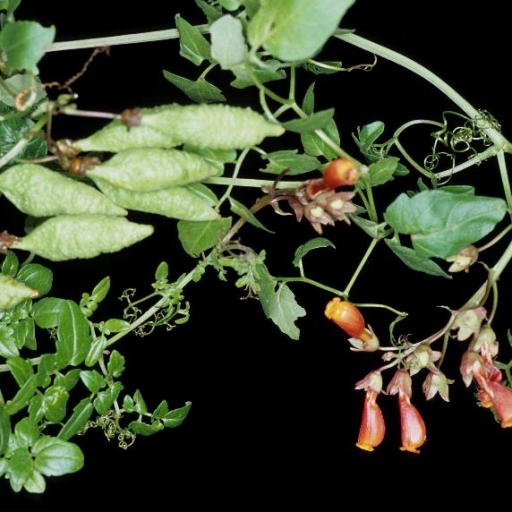
Plant Overview
Known as the Chilean Glory Flower, this vibrant climber is a living waterfall of tropical trumpets. Hailing from the Andean slopes of Chile and Peru, it is a favorite for gardeners who want fast vertical coverage without the aggressive, heavy woodiness of ivy. It is a "scrambler" by nature, weaving itself through trellises and neighboring shrubs with a delicate, airy grace.
🔍 How to Identify
- 🌸 Tubular Blooms: It produces dense clusters of slender, trumpet-shaped flowers that flare at the tips, usually in fiery shades of orange, scarlet, or golden yellow.
- 🌿 Fern-like Foliage: The leaves are bipinnate and deeply divided, giving the vine a light, lace-like appearance that won't overwhelm a small garden space.
- ➰ Sensitive Tendrils: Look at the tips of the leaves; you will find tiny, branched tendrils that act like sensitive fingers, reaching out to hook onto any thin support they can find.
🏡 In Your Garden
- 🏗️ Climbing Mechanics: Because it uses leaf-tendrils rather than suction cups, it needs fine support like bird netting, thin wire, or "chicken wire" to climb. It struggles to grip thick wooden fence posts on its own.
- 🌬️ Cool Feet, Hot Head: This vine loves basking in the sun to produce flowers, but it prefers its roots to stay cool and moist. Planting low-growing flowers at its base or applying a thick layer of mulch helps mimic its mountain home.
- 🌱 Self-Seeding Habit: While often grown as an annual in colder climates, it is a prolific self-seeder. If you leave the ornamental seed pods on the vine, you will likely find "volunteer" babies popping up the following spring.
⚠️ Safety & Toxicity
- ✅ General Safety: Eccremocarpus scaber is generally considered non-toxic to humans, dogs, and cats.
- 🧤 Pruning Precaution: While it isn't poisonous, the sap can occasionally cause mild skin irritation for those with very sensitive skin. It is always a good idea to wear gloves when cutting back the spent vines in autumn.
✨ Fun Fact
In its native South American habitat, the Chilean Glory Flower is a primary "fast-food" stop for hummingbirds. The flower's narrow, curved shape is perfectly evolved to fit the long, slender beaks of these birds, who act as the plant's main pollinators!

Detailed Care Instructions
To grow Eccremocarpus Scaber, also known as Chilean Glory Vine or Flame Vine, follow these steps:
- Choose a suitable location: Select a sunny spot in your garden with well-drained soil. The vine prefers at least 6-8 hours of direct sunlight per day.
- Prepare the soil: Amend the soil with organic matter, such as compost, to improve drainage and fertility. Loosen the soil to a depth of 12-18 inches.
- Planting: Plant the Eccremocarpus Scaber seeds or young plants in spring after the last frost date in your area. Ensure that the soil temperature is consistently above 50°F (10°C) for successful germination.
- Watering: After planting, water the vine regularly to keep the soil moist but not waterlogged. Provide enough water to keep the soil evenly moist until the plant is well-established.
- Support: Install a trellis, arbor, or other support structure to provide a sturdy framework for the vine to climb. Eccremocarpus Scaber is a twining vine that requires support for proper growth.
- Fertilizing: Apply a balanced slow-release fertilizer or a liquid fertilizer diluted according to package instructions. Fertilize once a month during the growing season to promote healthy growth and flowering.
- Pruning: Prune the vine regularly to remove dead or damaged growth and to control its size and shape. Prune in early spring before new growth begins. Pinch back the tips of the vine to encourage branching and fuller growth.
- Mulching: Apply a layer of organic mulch around the base of the plant to help retain moisture, suppress weed growth, and insulate the roots. Keep the mulch a few inches away from the stem to prevent rotting.
- Pests and diseases: Eccremocarpus Scaber is generally resistant to pests and diseases. However, keep an eye out for common garden pests like aphids, slugs, and snails. Treat any infestations promptly with organic insecticides or other appropriate methods.
- Propagation: If you want to propagate more plants, gather seeds from mature flower pods and sow them directly into the garden in spring. Alternatively, take semi-ripe stem cuttings in mid-summer and root them in a well-draining rooting medium.
By following these guidelines, you can successfully grow Eccremocarpus Scaber and enjoy its beautiful flowers throughout the growing season.

Place in a bright room that is sun drenched almost all day. Or directly in a south-facing window.

To properly water this plant, it is important to place your finger into the soil to check for moisture levels before watering. If the soil feels dry to the touch, it is time to water. The plant should be watered deeply, ensuring that the water reaches the roots. It is important to avoid getting water on the leaves or flowers as this can cause damage or encourage fungal growth. A good rule of thumb is to water the plant once a week. However, watering frequency may vary depending on environmental factors such as humidity, temperature, and sunlight. It is best to monitor the moisture levels of the soil consistently to ensure optimal growing conditions.
To fertilize this plant, use a balanced fertilizer with equal ratios of nitrogen, phosphorus, and potassium. Apply the fertilizer every two weeks during active growth periods, such as spring and summer. Follow the instructions on the fertilizer package for the recommended amount and method of application. Water the plant thoroughly before and after fertilization to prevent leaf burn and ensure that the nutrients are absorbed properly. Avoid fertilizing during the plant's dormant period, which typically occurs in the fall and winter.
Eccremocarpus Scaber plant grows well in well-drained soil that is rich in organic matter. The ideal soil pH for this plant is slightly acidic to neutral. It is essential to ensure that the soil is well-draining to prevent waterlogging that can cause root rot and damage to the plant. To enhance drainage, adding sand, grit, or perlite can be helpful. Additionally, the soil to be used for Eccremocarpus Scaber plant should be nutrient-rich. Therefore, incorporating compost or aged manure into the soil before planting can help to improve soil fertility. Finally, the soil should be kept moist but not wet, as this helps the plant to grow optimally while preventing soil-borne diseases.
To propagate this plant, take a cutting of about 4-6 inches in length from the tip of a healthy stem. Remove the bottom leaves and dip the cut end in rooting hormone powder. Plant the cutting into well-draining soil in a small pot and water it thoroughly. Keep the soil moist and place the pot in a warm, bright location that receives indirect sunlight. The cutting should root in about 4-6 weeks. Once established, the new plant can be transplanted into a larger container or directly into the garden.








