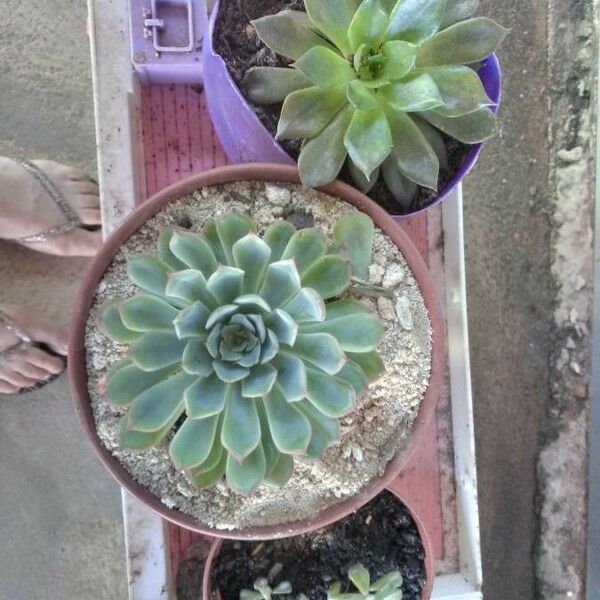
Plant Overview
Known as the "Andean Rosette," Echeveria chiclensis is a hardy traveler from the steep, rocky slopes of the Peruvian mountains. Unlike the pampered, soft-petaled hybrids found in many nurseries, this species retains a rugged, wild elegance that reflects its high-altitude origins. It is a favorite for collectors who want a succulent with a bit of "mountain grit" and a storied history of survival in thin air.
🔍 How to Identify
- 🍃 Lanceolate Leaves: Unlike the rounded leaves of many cousins, these are long, pointed, and lance-shaped, forming a starburst-like rosette.
- 🎨 Sun-Kissed Edges: While the base color is a dusty olive green, the leaf margins and tips often blush into a deep mahogany or wine-red when "stressed" by sun or cold.
- ✨ Waxy Farina: The leaves are coated in a delicate layer of epicuticular wax (farina), which gives the plant a matte finish and protects it from intense UV rays.
🏡 In Your Garden
- ⛰️ The "Cliff-Dweller" Logic: In the wild, this plant grows on vertical rocky outcrops. In your home, it demands exceptional drainage. A gritty, mineral-heavy soil mix (plenty of pumice or perlite) is essential to keep its roots happy.
- 🌬️ Fresh Air Enthusiast: Because it hails from the breezy Andes, it dislikes stagnant, humid air. It performs best near a window with good circulation or on a porch where it can feel the shift between warm days and cool nights.
⚠️ Safety & Toxicity
- ✅ Non-Toxic: Echeveria chiclensis is generally considered safe and non-poisonous for both humans and animals.
- 🐾 Pet Friendly: If your cat or dog decides to take a curious nibble, there is no need to panic, as it lacks the toxic alkaloids found in other succulent families like Kalanchoe or Euphorbia.
✨ Fun Fact
This species is named after the Chicla District in Peru. It is a true high-altitude specialist, often found growing at elevations of over 3,700 meters (12,000 feet)—that is higher than many clouds!

Detailed Care Instructions
Growing an Echeveria chiclensis, like other succulents, is quite straightforward if you follow some essential care guidelines. Here are some steps to help you grow a healthy Echeveria chiclensis plant:
1. Light Requirements
Echeveria chiclensis thrives in plenty of bright, indirect light. They can also tolerate direct sunlight for a few hours, especially in the morning or late afternoon. If the plant is kept indoors, place it near a south or east-facing window. If it's getting leggy or its leaves are turning pale, it may need more light.
2. Temperature and Climate
Echeverias prefer temperatures between 70-85°F (21-29°C) during the day and cooler temperatures at night. They are not frost-tolerant, so if you live in a colder climate, bring the plant indoors when temperatures drop below 50°F (10°C).
3. Soil
Use a well-draining soil mix specifically designed for succulents and cacti. You can also make your own by mixing regular potting soil with coarse sand, perlite, or pumice in a ratio of about 2:1.
4. Watering
Watering is crucial for succulent care:
- Water deeply but infrequently. Allow the soil to dry out completely between waterings.
- Water the soil directly, avoiding getting water on the leaves, which can lead to rot.
- In the growing season (spring and summer), you may need to water once a week, but frequency can vary based on your specific environment.
- In the dormant season (fall and winter), reduce watering to about once a month.
5. Fertilizer
Echeverias don't require a lot of fertilizers. During the spring and summer, you can feed them with a balanced, water-soluble fertilizer diluted to half strength, once a month. Avoid fertilizing during the dormant period.
6. Propagation
Echeveria chiclensis can be propagated through leaf cuttings or offsets (baby plants that grow at the base of the parent plant). Here's how you can do it:
- Leaf Cuttings:
- Gently remove a healthy leaf from the main plant.
- Let the leaf dry out for a few days until the cut end forms a callus.
- Place the callused end on top of a well-draining succulent soil mix.
- Water sparingly until roots and new rosettes form, then treat it as a mature plant.
- Gently remove a healthy leaf from the main plant.
- Offsets:
- Gently remove the offset from the parent plant.
- Let the offset dry for a day or two until the cut surface calluses.
- Plant it in a well-draining soil mix and water sparingly until it establishes.
7. Pests and Problems
Echeveria chiclensis can be susceptible to common succulent pests like mealybugs, aphids, and spider mites. Inspect the plant regularly and treat infestations with insecticidal soap or a diluted alcohol solution.
8. Repotting
Repot your Echeveria chiclensis every 2-3 years or when you notice that the plant has outgrown its container. Use a pot that is one size larger and ensure it has good drainage holes.
By following these guidelines, you can enjoy a healthy and beautiful Echeveria chiclensis in your home or garden!
- Gently remove the offset from the parent plant.

Place in a bright room that is sun drenched almost all day. Or directly in a south-facing window.

When watering your Echeveria chiclensis, it's essential to follow a few guidelines to maintain the plant's health:
1. **Watering Frequency**: Allow the soil to dry out completely between watering sessions. Overwatering can lead to root rot, while underwatering can cause the plant to shrivel. Generally, during the growing season (spring and summer), water your Echeveria chiclensis every 1-2 weeks. In the dormant season (fall and winter), watering needs will be significantly reduced—about once a month might suffice.
2. **Watering Method**: Use the 'soak and dry' method. Water the soil thoroughly until water comes out of the drainage holes at the bottom of the pot. Ensure that the pot has good drainage to prevent water from accumulating at the base, which can cause root rot.
3. **Avoiding Water on Leaves**: Try to water the soil directly and avoid getting water on the leaves, as this can lead to fungal diseases and leaf rot. If water does get on the leaves, make sure it has a chance to dry quickly, preferably in the morning so it can evaporate with the day's heat.
4. **Type of Water**: Use room temperature water. Rainwater or distilled water is often preferred if your tap water is high in minerals or chlorine, as these substances can build up in the soil and affect the plant's health.
5. **Environmental Factors**: Monitor the plant’s environment and adjust watering frequency based on humidity, temperature, and light conditions. Echeveria chiclensis in a dry, hot climate may need more frequent watering than one in a cooler, more humid environment.
6. **Signs of Correct Watering**: Watch for plump, firm leaves as an indicator of proper watering. If the leaves are starting to shrivel or become soft and mushy, adjust your watering accordingly.
By following these guidelines, you can ensure that your Echeveria chiclensis remains healthy and thrives under your care.
The Echeveria chiclensis, a popular succulent, has specific fertilizing needs to maintain its health and vibrant appearance. Here's a step-by-step guide:
- Type of Fertilizer:
- Use a balanced, water-soluble fertilizer with a ratio such as 10-10-10 or 15-15-15, which indicates equal parts of nitrogen, phosphorus, and potassium.
- Alternatively, a fertilizer specifically formulated for succulents and cacti can be used.
- Use a balanced, water-soluble fertilizer with a ratio such as 10-10-10 or 15-15-15, which indicates equal parts of nitrogen, phosphorus, and potassium.
- Dilution:
- Dilute the fertilizer to half or one-quarter strength of the recommended dosage on the package. Succulents are sensitive to fertilizer and can suffer from fertilizer burn if the concentration is too high.
- Dilute the fertilizer to half or one-quarter strength of the recommended dosage on the package. Succulents are sensitive to fertilizer and can suffer from fertilizer burn if the concentration is too high.
- Frequency:
- Fertilize your plant sparingly. Once a month during the growing season (spring and summer) is usually sufficient.
- During the dormant period (fall and winter), avoid fertilizing as the plant’s growth slows down.
- Fertilize your plant sparingly. Once a month during the growing season (spring and summer) is usually sufficient.
- Application:
- Apply the diluted fertilizer directly to the soil, ensuring it reaches the roots but avoids contact with the leaves to prevent any potential damage.
- Water the plant thoroughly a day before fertilizing to prevent root burn and ensure the roots can absorb the nutrients more effectively.
- Apply the diluted fertilizer directly to the soil, ensuring it reaches the roots but avoids contact with the leaves to prevent any potential damage.
- Monitoring:
- Observe the plant for any signs of over-fertilization, such as yellowing leaves, stunted growth, or salt buildup on the soil surface. If such signs appear, flush the soil with water to remove excess fertilizer and reduce the feeding frequency.
By following these instructions, you can help your Echeveria chiclensis flourish with lush growth and vibrant colors.
- Observe the plant for any signs of over-fertilization, such as yellowing leaves, stunted growth, or salt buildup on the soil surface. If such signs appear, flush the soil with water to remove excess fertilizer and reduce the feeding frequency.
For an Echeveria Chiclensis plant, it's crucial to use a well-draining soil mix to ensure the plant thrives. Here are the details on what kind of soil you should use:
- Succulent or Cactus Mix: A commercial succulent or cactus mix is often the best choice because these pre-made mixes are formulated to drain quickly, which is essential for Echeveria to prevent root rot.
- Potting Soil and Additives: If you prefer to make your own mix, combine standard potting soil with materials that promote drainage. A good recipe is 2 parts potting soil to 1 part perlite or pumice to enhance aeration and drainage. You can also add 1 part coarse sand for additional drainage.
- Inorganic Materials: Incorporate additional inorganic materials such as pumice, perlite, or crushed granite to improve drainage. These materials help create air pockets in the soil, preventing water retention that can lead to root rot.
- pH Level: The soil should be slightly acidic to neutral, with a pH of around 6.0 to 7.0. Most commercial cactus or succulent mixes already have the appropriate pH level.
- Avoid Moisture-Retentive Soils: Do not use soils that retain too much moisture, such as peat-based soils or garden soil, as they can lead to waterlogged conditions detrimental to Echeveria.
By using a well-draining soil mix and ensuring proper watering practices, your Echeveria Chiclensis should thrive and avoid common issues such as root rot.
Propagating Echeveria chiclensis can be a rewarding process, whether you're a novice or an experienced gardener. Here's a detailed guide on how to propagate this succulent:
Materials Needed:
- Healthy parent plant (Echeveria chiclensis)
- Clean, sharp knife or pair of scissors
- Shallow container or tray
- Well-draining succulent or cactus potting mix
- Rooting hormone (optional)
- Spray bottle with water
- Small pots for planting rooted cuttings
Methods of Propagation:
There are a few methods to propagate Echeveria chiclensis, including by leaf, offset, and stem cuttings. Each method has its own procedure.
1. Leaf Cuttings:
- Select a Healthy Leaf:
- Choose a plump, healthy leaf from the base of the plant. Ensure it is not damaged or wilted.
- Choose a plump, healthy leaf from the base of the plant. Ensure it is not damaged or wilted.
- Remove the Leaf:
- Gently twist and pull the leaf away from the stem. It should come off cleanly, leaving no part of the leaf on the stem.
- Gently twist and pull the leaf away from the stem. It should come off cleanly, leaving no part of the leaf on the stem.
- Let it Callous:
- Place the leaf on a dry surface away from direct sunlight. Allow it to sit for a couple of days until the cut end forms a callous. This helps prevent rot.
- Place the leaf on a dry surface away from direct sunlight. Allow it to sit for a couple of days until the cut end forms a callous. This helps prevent rot.
- Prepare the Soil:
- Fill a shallow container with a succulent or cactus potting mix. Moisten the soil lightly.
- Fill a shallow container with a succulent or cactus potting mix. Moisten the soil lightly.
- Place the Leaf:
- Lay the calloused end of the leaf on top of the soil. Do not bury it.
- Lay the calloused end of the leaf on top of the soil. Do not bury it.
- Provide Proper Environment:
- Place the container in a bright area with indirect sunlight. Avoid direct sunlight as it can damage the leaf.
- Place the container in a bright area with indirect sunlight. Avoid direct sunlight as it can damage the leaf.
- Water Sparingly:
- Use a spray bottle to mist the soil lightly every few days. Too much water can cause the leaf to rot.
- Use a spray bottle to mist the soil lightly every few days. Too much water can cause the leaf to rot.
- Wait for Roots and Pups:
- Over the next few weeks, roots and small plantlets (pups) will start to form at the base of the leaf. Once the new plants are well-established, you can transplant them into individual pots.
2. Offsets (Pups):
- Over the next few weeks, roots and small plantlets (pups) will start to form at the base of the leaf. Once the new plants are well-established, you can transplant them into individual pots.
- Identify Offsets:
- Look for small rosettes (pups) growing around the base of the parent plant. These can be easily removed and replanted.
- Look for small rosettes (pups) growing around the base of the parent plant. These can be easily removed and replanted.
- Remove the Offset:
- Gently pull the offset away from the parent plant. If necessary, use a clean, sharp knife to cut it free. Ensure the offset has some roots attached.
- Gently pull the offset away from the parent plant. If necessary, use a clean, sharp knife to cut it free. Ensure the offset has some roots attached.
- Let it Callous:
- Just like with leaf cuttings, let the offset sit for a day or two to form a callous on the cut end.
- Just like with leaf cuttings, let the offset sit for a day or two to form a callous on the cut end.
- Plant the Offset:
- Prepare a small pot with well-draining succulent or cactus potting mix. Plant the offset and firm the soil around it.
- Prepare a small pot with well-draining succulent or cactus potting mix. Plant the offset and firm the soil around it.
- Watering:
- lightly water the soil and place the pot in a bright area with indirect sunlight.
- lightly water the soil and place the pot in a bright area with indirect sunlight.
- Aftercare:
- Water sparingly until the offset establishes a robust root system, then you can begin to care for it as you would a mature plant.
3. Stem Cuttings:
- Water sparingly until the offset establishes a robust root system, then you can begin to care for it as you would a mature plant.
- Select a Healthy Stem:
- Choose a healthy stem from the plant.
- Choose a healthy stem from the plant.
- Remove Excess Leaves:
- Remove the lower leaves from the stem, leaving a few at the top.
- Remove the lower leaves from the stem, leaving a few at the top.
- Let it Callous:
- Allow the cut end of the stem to callous over by letting it sit for a few days.
- Allow the cut end of the stem to callous over by letting it sit for a few days.
- Plant the Stem:
- Place the calloused end of the stem in a pot filled with well-draining soil. Firm the soil around the base.
- Place the calloused end of the stem in a pot filled with well-draining soil. Firm the soil around the base.
- Watering:
- Lightly water the soil and place the pot in a bright spot with indirect sunlight.
- Lightly water the soil and place the pot in a bright spot with indirect sunlight.
- Root Development:
- Over time, roots will develop from the cut end of the stem. Once the roots are established, you can transition to your regular watering schedule.
General Care Tips:
- Over time, roots will develop from the cut end of the stem. Once the roots are established, you can transition to your regular watering schedule.
- Light: Provide bright, indirect sunlight. Direct sunlight can cause sunburn, especially for young cuttings.
- Water: Allow the soil to dry out between waterings to prevent root rot.
- Temperature: Echeveria chiclensis prefers temperatures between 60-80°F (15-27°C). Protect it from frost.
- Soil: Use a well-draining succulent or cactus mix to prevent water retention.
By following these steps, you can propagate Echeveria chiclensis successfully and enjoy more of these beautiful plants in your collection.








