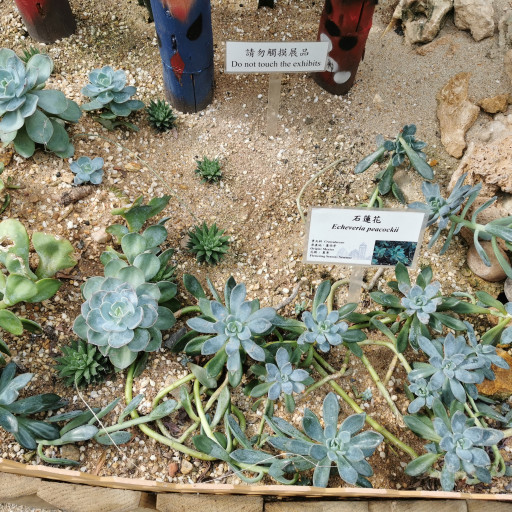
Plant Overview
Known as the "Peacock Echeveria," this stunning succulent is a showstopper from the high-altitude regions of Mexico. It is beloved for its symmetrical, lotus-like rosettes and its ethereal, powdery blue hue that looks almost painted on. Whether perched on a sunny windowsill or tucked into a rock garden, it brings a touch of desert elegance and sculptural drama to any collection.
🔍 How to Identify
- 🦚 The Rosette: Grows in a tight, symmetrical circle of spatula-shaped leaves that can reach up to 6 inches in diameter.
- ❄️ The Farina: The leaves are coated in a thick, silvery-white powdery wax called "farina," which gives the plant an iridescent, frosted appearance.
- 📍 Sharp Accents: Each leaf tip ends in a distinct, tiny point that often turns a soft reddish-pink when the plant is "stressed" by bright sunlight.
- 🌸 Summer Blooms: In late spring or summer, it sends up tall, arching stalks bearing lantern-shaped flowers in shades of coral, orange, or deep pink.
🏡 In Your Garden
- ☀️ Light is Everything: To keep its "peacock" colors vibrant and its shape compact, this plant craves bright, direct light. Without enough sun, it will begin to "stretch" (etiolate), losing its beautiful rosette form.
- 💧 The "Farina" Rule: Avoid touching the leaves! The powdery coating is the plant’s natural sunscreen and raincoat. Fingerprints will remove this wax permanently, leaving smudge marks that never grow back.
- 🌵 Thirst Quenching: Use the "soak and dry" method. It stores water in its fleshy leaves, making it very drought-tolerant, but it is highly susceptible to root rot if left in damp soil for too long.
⚠️ Safety & Toxicity
- ✅ Pet Friendly: Good news for animal lovers! Echeveria peacockii is considered non-toxic to cats, dogs, and horses.
- 👶 Child Safe: It is generally safe for curious toddlers, though the sharp leaf tips might cause a tiny prick, and the powdery wax can be messy if handled.
✨ Fun Fact
The "powder" on the leaves isn't just for looks; it acts like a built-in SPF 50. In its native Mexican habitat, this wax reflects harsh UV rays and helps the plant channel rainwater directly toward its roots while preventing the leaves from rotting in high humidity.

Detailed Care Instructions
| Color | Pink |
| Soil Ph | Acidic |
| Humidity | Dry |
| Lighting | Full Sun |
| Toxicity | Non-Toxic |
| Soil Type | Sandy, Well-Drained |
| Bloom Time | Spring, Summer |
| Difficulty | Medium |
| Plant Type | Succulent |
| Mature Size | Up To 6 Inches |
| Sun Exposure | Full, Partial |
| Hardiness Zones | 9-11 |
To grow Echeveria Peacockii plant, follow these steps:
- Choose a well-draining soil mix: Echeveria Peacockii thrives in a well-draining soil mix. You can use a cactus or succulent soil mix, or create your own by mixing potting soil, perlite, and sand.
- Select a suitable container: Use a pot with drainage holes to prevent waterlogging. A shallow container is preferable, as Echeveria Peacockii has a shallow root system.
- Provide proper sunlight: Place the plant in a location that receives bright, indirect sunlight. Echeveria Peacockii needs at least 6 hours of sunlight per day. If growing indoors, place it near a south or west-facing window.
- Watering: Allow the soil to dry out between waterings as overwatering can cause root rot. Water the plant thoroughly, letting excess water drain out completely. Check the soil's moisture level before watering again.
- Temperature and humidity: Echeveria Peacockii prefers temperatures between 60-85°F (15-29°C). It can tolerate slightly lower or higher temperatures but is sensitive to frost. Maintain average room humidity levels.
- Fertilizing: Feed the plant with a balanced liquid fertilizer diluted to half strength during the growing season (spring and summer) every 2-4 weeks. Avoid fertilizing during winter when the plant is dormant.
- Propagation: Echeveria Peacockii can be propagated through offsets or leaf cuttings. To propagate offsets, gently separate them from the main plant using a clean, sharp knife and allow them to callus for a few days before planting them in a separate pot. For leaf cuttings, let the leaf end dry and callus for a few days before placing it on top of moist soil. New growth should appear in a few weeks.
- Pruning and maintenance: Trim away any dead or damaged leaves to maintain the plant's appearance and prevent diseases. Regularly check for pests such as mealybugs or spider mites, and treat them promptly if detected.
Remember to provide adequate care and attention to your Echeveria Peacockii plant, and it will grow into a healthy and beautiful specimen.

Place in a bright room that is sun drenched almost all day. Or directly in a south-facing window.

To water this plant, make sure the soil is completely dry before watering. Slowly pour water onto the soil, avoiding getting water on the foliage. Allow the water to fully absorb into the soil before placing the plant back in its spot. Avoid watering too frequently, as this can lead to root rot. Provide adequate drainage to prevent water from sitting in the soil.
To fertilize this succulent plant, use a balanced fertilizer with an N-P-K ratio of 10-10-10 or 12-12-12. Dilute the fertilizer to half strength and apply it once a month during the plant's growing season (spring and summer). During the plant's resting period (fall and winter), avoid fertilizing altogether. Make sure the soil is moist before fertilizing and avoid getting the fertilizer on the plant's leaves.
The plant in question would benefit from a well-draining soil mixture that allows for sufficient aeration and moisture retention. This can be achieved by using a combination of sand, perlite, and/or pumice, mixed with a nutrient-rich soil such as a cactus or succulent mix. It is important to avoid soils that are heavy with clay, as this can lead to excessive moisture retention and root rot. Additionally, it is recommended to amend the soil with organic matter such as compost or worm castings to provide additional nutrients and improve soil structure.
Echeveria Peacockii plant can be propagated by using stem cuttings or leaf cuttings. In order to do this, select a healthy stem or leaf from a mature plant and remove it with a clean, sharp pair of scissors or a knife. Allow the cutting to dry out for a day or two to prevent rotting.
For stem cuttings, insert the cutting into a well-draining cactus or succulent soil mix, burying the stem about 1-2 inches deep. Water lightly and place in a bright, indirect light until roots and new growth emerge. For leaf cuttings, lay the cutting on top of the soil mix and mist lightly every few days to keep the soil slightly moist. Eventually, new roots and plantlets will form at the base of the leaf.
Transfer the new plants to individual pots once they have developed roots and are growing well. Water as needed, allowing the soil to dry out slightly between watering. Echeveria Peacockii plants prefer bright, indirect light and warm temperatures, so keep them in a sunny window or under grow lights if possible.
Common pests of the chalk dudleya include Mealybugs, aphids, thrips. Make a habit of checking your chalk dudleya frequently for pests so that any infestations can be caught and managed early.








