Plant Overview
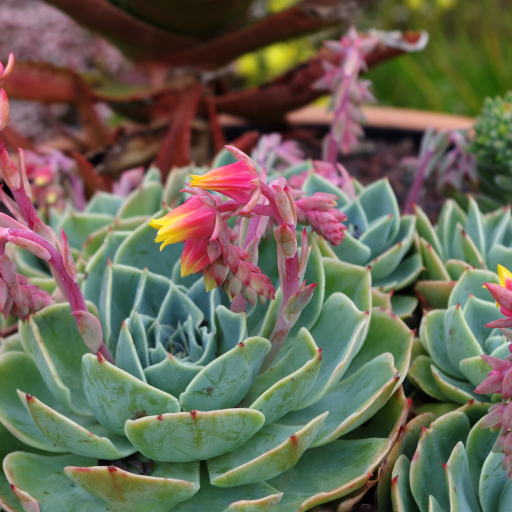
Often called the "Glaucous Echeveria," Echeveria pumila is a Mexican native that looks like a perfectly sculpted ceramic rose. It is a favorite among succulent collectors because of its incredibly compact, symmetrical form and the soft, powdery "mist" that covers its leaves. These hardy little gems are masters of survival, originally thriving in rocky crevices where they wait patiently for the briefest rain showers.
🔍 How to Identify
- 🌿 The Rosette: It forms a tight, stemless cluster of fleshy leaves that grow in a spiral pattern, reaching about 4 inches in diameter.
- 🌫️ Farina Coating: The leaves have a distinct blue-green or "glaucous" hue due to a thick layer of epicuticular wax (farina), which gives them a matte, frosted appearance.
- 🌸 Bell-Shaped Blooms: In late spring, it sends up a slender stalk bearing vibrant lantern-like flowers that are usually coral-pink on the outside and yellow on the inside.
🏡 In Your Garden
- 🏜️ The Drainage Rule: This plant is a "cliff-dweller" by nature, meaning it hates having "wet feet." Use a gritty cactus mix and terracotta pots to ensure moisture evaporates quickly, preventing root rot.
- ☀️ Sun-Kissed Tips: While it loves bright light, the most beautiful feature of Echeveria pumila is "stress coloring." When exposed to plenty of sun and cool (but not freezing) nights, the very tips of the blue leaves turn a delicate rose-pink.
- 🪴 Propagation "Chicks": It is often called a "Hen and Chicks" plant because it produces tiny offsets (babies) around its base. You can easily snip these off to start an entirely new colony.
⚠️ Safety & Toxicity
- ✅ Pet Friendly: Good news for animal lovers! Echeveria pumila is considered non-toxic to cats, dogs, and horses.
- 🚫 Handle with Care: While the plant isn't poisonous, the powdery wax on the leaves is easily smudged by fingerprints. Once rubbed off, this "sunscreen" layer does not grow back, leaving the leaf vulnerable to sunburn and water spots.
✨ Fun Fact
🛡️ Natural Sunscreen: That white, chalky powder on the leaves isn't dust—it’s called farina. It acts as the plant's natural SPF, reflecting harsh UV rays and helping the leaves shed water to prevent fungal growth.

Detailed Care Instructions
To grow an Echeveria Pumila plant, follow these steps:
- Choose a suitable container: Select a well-draining pot with drainage holes to prevent root rot. The size of the pot should accommodate the current size of the plant, leaving some space for growth.
- Soil: Use a well-draining potting mix made specifically for succulents or cacti. It should be a blend of sandy or gritty soil to ensure proper drainage.
- Light: Echeveria Pumila requires bright, indirect light for at least six hours a day. Place the pot near a south or west-facing window where it can receive ample sunlight. However, protect it from intense afternoon sun, especially during summer months, as it can scorch the leaves.
- Watering: Succulents like Echeveria Pumila prefer infrequent watering. Allow the soil to dry out completely between watering sessions. Water deeply until it drains out of the bottom holes, then let it dry before watering again. Overwatering can lead to root rot.
- Temperature: Echeveria Pumila thrives in temperatures between 65-80°F (18-27°C). Protect it from extremely hot or cold drafts and maintain stable indoor temperatures.
- Fertilization: During the growing season (spring and summer), use a balanced, water-soluble fertilizer formulated for succulents or cacti. Dilute the fertilizer to half-strength and apply it once a month.
- Propagation: Echeveria Pumila can be propagated through leaf or stem cuttings. To propagate from a leaf cutting, remove a healthy leaf from the plant and allow it to callus over for a few days. Plant it in a well-draining succulent mix and keep it slightly moist until it roots. For stem-cuttings, cut a healthy stem and let it callus before planting it in the soil. Keep the soil slightly moist until it develops roots.
- Pruning: Trim away any dead or decaying leaves to maintain the plant's overall health and appearance.
Remember, Echeveria Pumila is a slow-growing plant, so be patient with its growth.

Place in a bright room that is sun drenched almost all day. Or directly in a south-facing window.

To water this plant, you should ensure that the soil is completely dry before starting. It is important to avoid over-watering the plant, as this can cause root rot. When watering, you should let the water soak into the soil until it starts to drain out of the bottom of the pot. You can use a watering can or a spray bottle to water the plant, depending on your preference. It is recommended to water this plant once a week or when the soil feels dry to the touch. In addition, it is important to ensure that the plant is not exposed to standing water as this can also cause root rot.
To fertilize this plant, you can use a balanced fertilizer with equal amounts of nitrogen, phosphorus, and potassium. Dilute the fertilizer to half strength and apply it to the soil once a month during the growing season. Avoid getting the fertilizer on the leaves as it can cause them to burn. During the dormant season, do not fertilize the plant. Instead, wait until the growing season begins again.
Echeveria Pumila grows best in a well-draining soil mix that has good moisture retention. The soil should be slightly acidic to neutral (pH of 6.0 to 7.0) and should be rich in nutrients such as phosphorus and potassium. It's important that the soil is not compacted, as this can lead to poor drainage and root rot. A soil mix that includes perlite or pumice is ideal, as it allows for air circulation and drainage. Additionally, adding organic matter such as compost or well-rotted manure can help provide nutrients and improve the soil structure.
To propagate this plant, you need to carefully remove several healthy leaves from the mother plant using clean, sharp scissors. It's important to choose leaves that are firmly attached to the stem and free from any damage or disease. Once you have your leaves, you should let them air dry in a shady, dry place for a few days until the wound heals.
Next, prepare a well-draining soil mix by combining sand, perlite, and potting soil in equal parts. Fill a shallow container with this soil mix and make small holes in the soil with your finger or a pencil tip. Gently place the leaves into the holes so that the end of the leaf touches the soil.
Water the soil lightly to settle it around the leaves, then place the container in a bright, warm location that receives indirect sunlight. Make sure the soil doesn't stay too wet, as this can cause the leaves to rot.
After a few weeks, tiny roots should start to emerge from the base of the leaves, and soon after, tiny rosettes of new plants will begin to grow. At this point, you can gradually start to water the plants more often and move them to a brighter location to encourage growth.
Once the rosettes are large enough, you can gently separate them from the parent leaf and re-pot them in their own individual containers. With proper care and attention, your propagated Echeveria Pumila plants will quickly grow into healthy, beautiful specimens.








