Plant Overview
Hailing from the high-altitude peaks of the Andes in Ecuador and Colombia, the Echeveria Quitensis is a rugged adventurer in the succulent world. Named after the city of Quito, this "Andean Rose" has adapted to survive thin air and intense mountain sunlight, developing a compact, resilient form. Unlike its more delicate lowland cousins, this species brings a touch of wild, high-elevation beauty to any sunny windowsill.
🔍 How to Identify
- 🍃 The Rosette: It forms a tight, geometric star shape with thick, fleshy leaves that are slightly more elongated and spatulate than the common "Petals" of other Echeverias.
- 🎨 Sun-Kissed Edges: While the base color is a soft, waxy green, the leaf margins often flush with a vivid beetroot-red or deep purple when exposed to bright sunlight or cool temperatures.
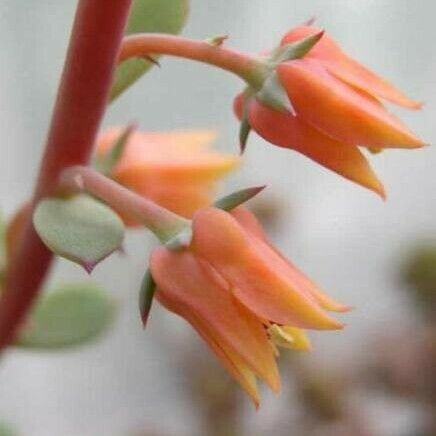
- 🔔 High-Rise Blooms: In the growing season, it sends up a tall, slender stalk topped with nodding, bell-shaped flowers that transition from a fiery red at the base to a bright yellow at the tips.
🏡 In Your Garden
- ⛰️ High-Altitude Habits: Because its ancestors lived in the mountains, this plant craves excellent air circulation. It is more tolerant of cool evening temperatures than many tropical succulents, but it absolutely demands "gritty" soil that mimics its rocky native home.
- 💧 The "Crown" Rule: When watering, always aim for the soil, never the center of the rosette. Water trapped in the "cup" of the leaves can cause fungal rot, especially in indoor environments where the air is still.
- ☀️ Light Seeking: If the plant begins to "stretch" (etiolation) and loses its tight shape, it is telling you it needs more direct sunlight to maintain its vibrant edge-coloring and compact form.
⚠️ Safety & Toxicity
- ✅ Status: Generally Non-Toxic.
- 🐾 Details: This Echeveria is considered safe for households with curious cats, dogs, and children. However, the leaves are brittle and snap easily; while eating them won't cause poisoning, the sap can occasionally cause mild stomach upset if ingested in large quantities.
✨ Fun Fact
The Echeveria Quitensis is one of the highest-climbing members of its genus, having been found growing naturally at altitudes of up to 13,000 feet (4,000 meters)—an elevation where most other garden succulents would struggle to breathe!

Detailed Care Instructions

When the top few inches of soil dry out, water your plants. If the top few inches of soil are still moist, do not water your plant. Wait a few days, then poke your finger into the soil to see if anything has changed. Overwatering poses a disease risk, such as the development of fungal diseases in the roots. These plants have adaptations in there leaves that allow them to survive in low water supply.







