Plant Overview
Often called the "Rosy Echeveria," this stunning succulent is a high-altitude traveler native to the cloud forests of Mexico. Unlike many of its desert-dwelling cousins, this variety is a master of transformation, shifting from a soft, minty green to a dramatic, fiery crimson when the seasons change. It is cherished by collectors for its ability to look like a blooming rose even when it isn't in flower.
🔍 How to Identify
- 🍃 Rosette Form: It grows in tight, symmetrical spirals of fleshy, spatula-shaped leaves that usually reach about 4 to 6 inches in diameter.
- 🎨 Seasonal Blushing: While the center stays pale green, the leaf edges develop a vivid rose-pink or deep burgundy tint when "stressed" by bright sunlight or cool winter air.
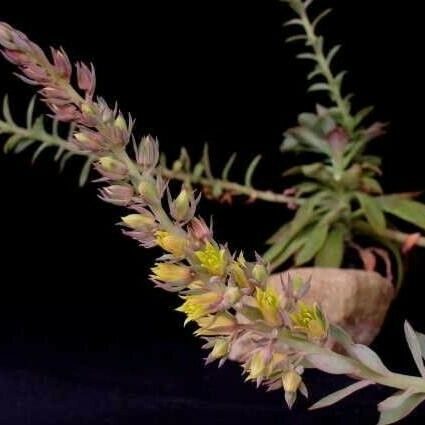
- 🌺 Unique Inflorescence: Unlike the spindly flower stalks of other Echeverias, this species produces thick, leafy spikes adorned with bright red bracts and small, yellow tubular flowers.
🏡 In Your Garden
- 🧗 The Cliff Dweller: In its natural habitat, this plant is often "lithophytic" (growing on rocks) or "epiphytic" (growing on trees). This means it hates "wet feet"—always use a very gritty, fast-draining cactus mix to mimic its rocky home.
- ☀️ Light is Key: To maintain those signature rosy edges, it needs several hours of bright, filtered light. If kept in a dark corner, the plant will "stretch" and lose its compact rose-like shape and vibrant coloring.
⚠️ Safety & Toxicity
- ✅ Non-Toxic Status: This plant is generally considered safe and non-toxic for both cats and dogs, making it a worry-free choice for pet owners.
- 🧤 Gentle Handling: The leaves are covered in a thin, waxy coating called "farina." While not dangerous, touching the leaves can leave permanent smudge marks that strip away the plant's natural UV protection and aesthetic "frosty" look.
✨ Fun Fact
In the wild highlands of Mexico, Echeveria rosea is frequently found growing on the trunks of Oak trees alongside mosses and ferns, behaving much more like an orchid than a typical desert succulent!

Detailed Care Instructions

Place in a bright room that is sun drenched almost all day. Or directly in a south-facing window.

When the top few inches of soil dry out, water your plants. If the top few inches of soil are still moist, do not water your plant. Wait a few days, then poke your finger into the soil to see if anything has changed. Overwatering poses a disease risk, such as the development of fungal diseases in the roots. These plants have adaptations in there leaves that allow them to survive in low water supply.







