Plant Overview
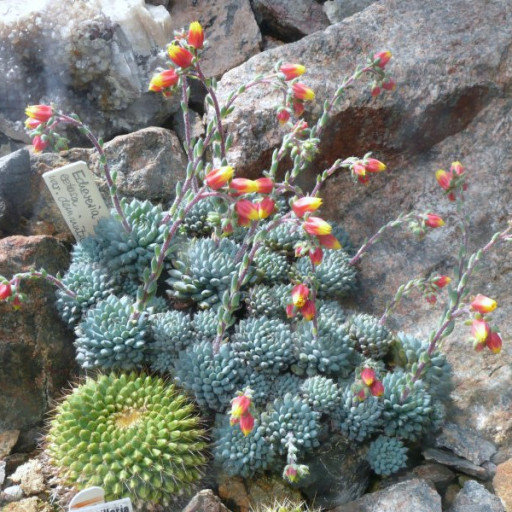
Often called the Mexican Firecracker, Echeveria setosa is a standout succulent known for its tactile, fuzzy charm. Unlike its smooth-skinned cousins, this plant wears a dense coat of white bristles that catch the light, giving it a soft, silvery glow. Native to the mountainous regions of Mexico, its unique "hairy" look isn't just for show—it's a clever survival mechanism for its high-altitude home.
🔍 How to Identify
- 🌵 The Rosette: It grows in tight, symmetrical rosettes of spoon-shaped green leaves, typically reaching about 4 to 5 inches in diameter.
- ☁️ Setose Hairs: The most defining feature is the dense covering of fine, white, stiff hairs (cilia) that give the plant a velvety or "shaggy" texture.
- 🧨 Firecracker Blooms: In late spring, it sends up tall stalks topped with urn-shaped flowers that are brilliant red at the base and bright yellow at the tips.
🏡 In Your Garden
- ☀️ The "Fur" Factor: Those fuzzy hairs act as a natural sunscreen and help the plant trap moisture. While it loves bright, indirect light, the hairs allow it to tolerate slightly more intensity than thinner-leaved succulents, though it still fears a midday scorch.
- 💧 Watering Caution: The very hairs that make it beautiful are its biggest weakness indoors. Water trapped within the "fuzz" of the rosette can't evaporate easily, leading to rapid rot. Always water the soil directly or use the "bottom-watering" method to keep the leaves dry.
- 🪴 Soil & Space: Because it is a mountain dweller, it demands excellent drainage. A gritty cactus mix is essential, and it prefers shallow pots as its root system doesn't venture very deep.
⚠️ Safety & Toxicity
- ✅ Pet & Child Friendly: Echeveria setosa is non-toxic to cats, dogs, and humans, making it a "worry-free" addition to a bright windowsill.
- 🧤 Tactile Note: While the hairs are generally soft, they can occasionally feel prickly or irritating to someone with very sensitive skin if the plant is handled roughly.
✨ Fun Fact
- This species is a famous "parent" in the succulent world! It was used to create the incredibly popular Echeveria 'Doris Taylor' (the Woolly Rose), passing down its signature fuzzy texture to one of the most beloved hybrids in the hobby.

Detailed Care Instructions
| Soil Ph | 6.0 |
| Humidity | Dry |
| Lighting | Full Sun |
| Toxicity | Non-Toxic |
| Soil Type | Well-Draining |
| Bloom Time | Early Spring To Summer |
| Difficulty | Easy |
| Plant Type | Succulent |
| Hibernation | Cold Period |
| Native Area | Central America, Mexico, South America |
| Temperature | 20°C - 25°C |
| Sun Exposure | Bright, Direct Light |
| Hardiness Zones | 9B - 11B |
To grow Echeveria setosa, follow these steps:
- Choose a suitable location: Echeveria setosa requires bright, indirect sunlight for at least 6-8 hours a day. It can be grown outdoors in USDA hardiness zones 9-11 or indoors near a sunny window.
- Prepare the soil: Use well-draining soil that is specially formulated for succulents or cacti. This will ensure that excess moisture is quickly drained away to prevent root rot.
- Watering: Echeveria setosa is drought-tolerant, so it is important not to overwater it. Allow the soil to dry out completely between waterings, and then thoroughly water the plant until water flows out of the drainage holes. Avoid getting water on the leaves to prevent rot.
- Temperature and humidity: Echeveria setosa prefers warm temperatures between 65-75°F (18-24°C). It can tolerate higher temperatures, but it may suffer if exposed to frost or extreme cold. Maintain a relative humidity level of around 40-60%.
- Fertilization: During the growing season (spring and summer), feed your Echeveria setosa with a balanced succulent fertilizer once a month. Follow the instructions on the fertilizer packaging for the correct dosage.
- Propagation: Echeveria setosa can be propagated by stem or leaf cuttings. To propagate via stem cuttings, allow a clean cut end to dry out for a day or two and then place it in well-draining soil. For leaf cuttings, carefully remove a healthy leaf from the plant, let it dry for a couple of days, and then place it on top of well-draining soil. New roots and plants will eventually grow from the cuttings.
- Regular maintenance: To maintain the plant's appearance and promote healthy growth, remove any dead or yellowing leaves. It is also recommended to repot the plant every 2-3 years to refresh the soil and provide more space for growth.
Remember to observe your Echeveria setosa regularly for signs of pests or diseases. Treat any issues promptly to prevent them from spreading to other plants.

Place in a bright room that is sun drenched almost all day. Or directly in a south-facing window.

To water this plant, wait until the soil has completely dried out before giving it a deep watering. It is important to avoid getting water on the leaves, as this can cause damage to the plant. Instead, water the soil directly at the base of the plant, using a watering can with a narrow spout or a spray bottle. Be careful not to overwater the plant, as this can lead to root rot.
To fertilize this plant, use a balanced liquid fertilizer during the growing season (spring and summer). Dilute the fertilizer to half strength and apply every two weeks. Do not fertilize during the winter months. Be sure to water thoroughly before and after fertilizing to prevent burning of the roots.
When growing Echeveria Setosa, it is recommended to use a well-draining soil that has good air circulation. The soil should be loose and light, with a pH range between 6.0 and 7.0. A good soil mix can include a mixture of perlite, pumice, coarse sand, and organic matter such as coconut coir or peat moss. Sphagnum moss can also be added to the soil mix to retain moisture, as these plants prefer a slightly moist soil. It is important to avoid using heavy or clay soils that will not drain well and can cause root rot. Additionally, avoid over-watering, as this can also cause root rot.
To propagate this plant, start by taking a healthy leaf cutting from the parent plant. Using a sterilized knife or scissors, carefully remove a leaf from the stem at the base. Leave the leaf out in a dry, shaded area to dry for a few days until it develops a callus or scab at the end where it was cut.
Once the leaf has developed a callus, plant it into a well-draining potting mix. Make a small hole in the soil and insert the callused end of the leaf into the soil, making sure that it is positioned upright. Water the soil lightly and place the pot in a bright, indirect light location.
After a few weeks, small rosettes should start to emerge at the base of the leaf cutting. This indicates that the plant has successfully rooted and is beginning to grow. Once the rosettes have grown to a good size, they can be carefully separated from the mother leaf and transplanted into their own pots.
To help the new plants establish themselves, water them sparingly and keep them in a bright, indirect light location. Over time, they will grow into their own mature Echeveria Setosa plants.
Common pests of the mexican firecracker include Mealybugs, aphids, thrips. Make a habit of checking your mexican firecracker frequently for pests so that any infestations can be caught and managed early.








