Plant Overview
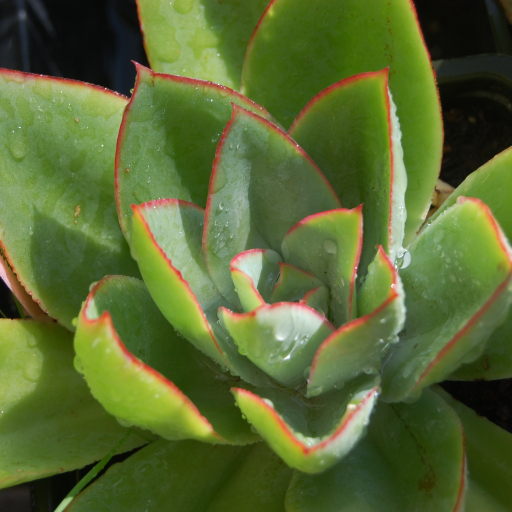
Known as the "Red Edge" or "Giant Echeveria," Echeveria subrigida is a show-stopping succulent that looks more like a sculpted work of art than a living plant. Hailing from the high-altitude cliffs of Mexico, it is famous for its massive size and neon-bright leaf margins. It is often considered one of the most elegant species in the Echeveria genus, acting as a glowing centerpiece in any collection.
🔍 How to Identify
- 📏 Large Rosettes: Unlike many tiny succulents, this variety can grow quite large, with individual rosettes reaching up to 12–15 inches in diameter.
- 🎨 The Farina Glow: The leaves are covered in a thick, powdery wax called "farina," which gives the plant a soft, ghostly blue-green or silver appearance.
- 🔥 Neon Edges: The most striking feature is the thin, wavy margin of each leaf, which glows with a vivid pink or crimson hue, especially when exposed to bright light.
🏡 In Your Garden
- ☀️ Light Sensitivity: While it craves light to maintain its vibrant red edges, "Giant Echeveria" can be sensitive to intense afternoon sun. It prefers bright, filtered light or morning sun to prevent the delicate leaf tips from scorching.
- 💧 Watering Caution: Never water this plant from above. Trapped water in the center of the rosette can cause rapid rot, and touching the leaves will permanently rub off the protective powdery coating, leaving unsightly smudge marks.
- 🏜️ Rocky Roots: In the wild, it grows on vertical cliffs. At home, it thrives in very gritty, fast-draining soil and prefers to be slightly pot-bound rather than in a container that is too large.
⚠️ Safety & Toxicity
- 🐾 Non-Toxic: Echeveria subrigida is generally considered safe and non-toxic for cats, dogs, and horses.
- 👶 Fragility Warning: While it isn't poisonous to humans, the leaves are quite brittle and snap easily. It is best kept on a high shelf to protect the plant from curious hands and to keep its pristine waxy coating intact.
✨ Fun Fact
The thick, powdery "dust" (epicuticular wax) on its leaves acts as a multi-purpose survival tool—it serves as a natural sunscreen to reflect harsh UV rays and makes the leaves waterproof so that rain beads off instantly!

Detailed Care Instructions
To grow Echeveria Subrigida successfully, follow these steps:
- Planting: Start by selecting a suitable pot with drainage holes to ensure proper water drainage. Use well-draining succulent soil or make your own mix by combining regular potting soil with sand and pumice or perlite. Fill the pot with the soil mixture.
- Propagation: Echeveria Subrigida can be propagated from leaf cuttings or offsets (small plantlets that grow from the main plant). Gently remove a healthy, mature leaf or offset from the parent plant, making sure to include the base of the leaf or a small section of the offset's stem. Allow the cuttings to dry and callus for a few days before planting them in the prepared soil.
- Light: Place the pot in a location that receives bright, indirect sunlight for at least six hours a day. Echeverias prefer bright light, but direct sunlight can scorch the leaves.
- Watering: Echeveria Subrigida is a drought-tolerant plant, so water it sparingly. Allow the soil to dry out completely between waterings and then thoroughly saturate the soil. Avoid overwatering, as this can lead to root rot. In winter, decrease watering frequency as the plant goes dormant.
- Temperature and Humidity: Echeveria Subrigida thrives in moderate temperatures between 65-75°F (18-24°C). It can tolerate higher temperatures but may need some protection from excessive heat. This plant prefers low humidity levels, making it suitable for indoor environments.
- Fertilizer: Feed your Echeveria Subrigida with a balanced, diluted succulent fertilizer during the growing season (usually in spring and summer) following the manufacturer's instructions. Do not fertilize in winter when the plant is dormant.
- Pruning: Remove any dead or dried leaves from the base of the plant to maintain its appearance and prevent pests or diseases.
- Repotting: Echeveria Subrigida generally doesn't require repotting frequently. However, if the plant outgrows its pot or the soil becomes compacted, repot it in a slightly larger container with fresh succulent soil.
By providing proper care and attention, your Echeveria Subrigida plant should thrive and grow beautifully.

Place in a bright room that is sun drenched almost all day. Or directly in a south-facing window.

Echeveria Subrigida plant requires a moderate amount of water, and it should be watered deeply but infrequently. The best way to water this plant is to wait until the soil is completely dry before watering it again. Overwatering can lead to root rot, so it is essential to not let the plant sit in soggy soil. Additionally, it is recommended to water the plant from the base, rather than overhead, as it can prevent the leaves from becoming waterlogged and developing fungal infections. When watering this plant, it is also crucial to ensure that the pot has proper drainage holes to prevent water from accumulating in the soil.
To fertilize for this type of plant, mix a balanced fertilizer with equal amounts of nitrogen, phosphorus, and potassium. Start feeding the plant in the summer months with a weak solution of the fertilizer, and increase the frequency to every two weeks during the active growing season. Reduce feeding in the winter months to once a month. Make sure to dilute the fertilizer to half-strength to avoid burning the plant. Apply the fertilizer during the morning hours when the plant is actively growing and is in its best condition to absorb the nutrients.
The ideal soil for the Echeveria Subrigida plant is a well-draining soil mixture that is sandy or gritty in texture. It should be able to retain just enough moisture to keep the roots hydrated while allowing excess water to drain away. Organic matter such as compost or peat moss should be avoided as it can hold too much moisture and cause root rot. The pH level should be slightly acidic with a range of 6.0 to 7.0. It is important to ensure that the soil is aerated and not compacted to prevent suffocating the roots. Adding perlite or coarse sand to the soil mixture can improve aeration. A top dressing of small rocks or gravel can also help with drainage and prevent the lower leaves from coming into contact with the soil.
To propagate this plant, select a healthy leaf from the parent plant and gently twist it off the stem. Allow the leaf to dry and callous over for a few days, then place it on top of well-draining soil in a small pot. Water lightly and keep the soil moist but not soggy. Place the pot in a bright, indirect light and wait for new growth to emerge from the base of the leaf. It may take several weeks or even up to a month for the plantlet to appear. Once it has grown a few leaves and roots, carefully transplant it into its own pot and continue to care for it as you would an adult plant.
Common pests of the echeveria subrigida include Mealybugs, aphids, thrips. Make a habit of checking your echeveria subrigida frequently for pests so that any infestations can be caught and managed early.








