Plant Overview
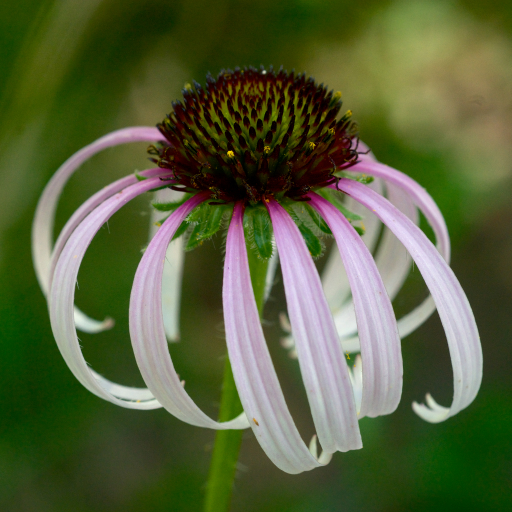
The Sanguine Purple Coneflower, or Echinacea sanguinea, is the elegant, "leggy" cousin of the common garden coneflower. Native to the sandy pine woods of the Southern United States, it is often nicknamed the "Blood Coneflower" due to its species name, sanguinea, which hints at its deep rosy-pink hues. Unlike its sturdier relatives, this wildflower dances on thin, airy stems, bringing a sense of wild, prairie-like grace to any landscape.
🔍 How to Identify
- 🌸 The Petals: Look for narrow, delicate ray florets that droop significantly downward, almost like a shuttlecock, ranging in color from pale pink to deep rose.
- 🌵 The Central Cone: A prominent, prickly dark-brown or copper-colored center that remains standing long after the petals have faded.
- 📏 The Stems: Exceptionally tall and slender (up to 3 feet), usually leafless on the upper half, which gives the plant its distinctive "see-through" appearance.
🏡 In Your Garden
- 🏜️ The Taproot Rule: This plant develops a deep, vertical taproot to find water during droughts. Because of this, it absolutely hates being moved once established; pick its "forever home" carefully!
- 🧪 Soil Preference: Unlike many other Echinaceas that prefer lime-rich soil, E. sanguinea thrives in slightly acidic, sandy soils. It is a champion of "neglect gardening," requiring very little water once its roots are settled.
- 🦋 Pollinator Magnet: Its high-perch cones are like landing pads for butterflies and bees, while songbirds (especially Goldfinches) will visit in the fall to pluck seeds from the dried heads.
⚠️ Safety & Toxicity
- ✅ General Safety: Echinacea sanguinea is considered non-toxic to humans, dogs, cats, and horses.
- 🐜 Skin Sensitivity: While safe to touch, the stems and cones are quite bristly. Some sensitive gardeners may experience minor skin irritation (contact dermatitis) if handling the plant frequently without gloves.
✨ Fun Fact
The name "Echinacea" comes from the Greek word echinos, meaning "hedgehog," a nod to the prickly, spiky center of the flower head that feels just like a tiny hedgehog’s back!

Detailed Care Instructions
To grow Echinacea Sanguinea plant, also known as the narrow-leaved purple coneflower, follow these steps:
- Choose the right location: Echinacea Sanguinea prefers full sun to partial shade. Ensure that the location receives at least six hours of direct sunlight per day.
- Prepare the soil: The plant thrives in well-drained soil. Add organic matter such as compost or well-rotted manure to improve soil fertility and drainage.
- Sow seeds or plant seedlings: Echinacea Sanguinea can be grown from seeds or purchased as young plants. If starting from seeds, sow them on the soil surface in early spring or fall, as they require a stratification period to germinate. If using seedlings, transplant them into the prepared soil, ensuring proper spacing of at least 12-18 inches between plants.
- Watering: Initially, provide consistent moisture to help establish the plants. Once established, Echinacea Sanguinea is drought-tolerant, but regular watering during dry periods will enhance its growth and flowering.
- Mulching: Apply a layer of organic mulch around the plants to conserve moisture, suppress weed growth, and regulate soil temperature.
- Fertilization: Echinacea Sanguinea does not require heavy feeding. A light application of balanced fertilizer in early spring is sufficient to promote growth and blooming.
- Pruning: Deadhead the faded flowers regularly to prolong blooming. Cut the spent flower stalks to encourage continuous flowering and prevent the plant from self-seeding, as Echinacea can become invasive.
- Divide and transplant: After a few years, Echinacea plants may become crowded and benefit from division. This is typically done in spring or fall. Dig up the clumps, gently separate them into smaller sections with roots attached, and replant them into prepared soil.
Following these steps should help you successfully grow Echinacea Sanguinea in your garden or landscape.

Place in a bright room that is sun drenched almost all day. Or directly in a south-facing window.

To water the plant, it is important to understand its watering needs. The plant requires a moderate amount of water, and the soil should be kept moist but not waterlogged. It is essential to ensure that the soil is well-draining and not too compact, as this can lead to waterlogging and root rot.
When watering, it is best to pour the water slowly and evenly over the soil, making sure to avoid wetting the leaves or flowers. Watering should be done early in the morning or late in the evening to allow the roots to absorb the moisture without being exposed to the sun's heat.
It is essential to monitor the soil's moisture level regularly and adjust the watering schedule accordingly. During periods of drought or high temperatures, the plant may require more frequent watering, while in cooler temperatures, it may need less water.
It is also important to avoid overwatering the plant, as this can lead to fungal diseases and other issues. To prevent this, make sure to let the soil dry out slightly between watering sessions.
Overall, proper watering is crucial for the health and growth of the plant, and it is important to approach it with care and attention.
To fertilize this plant, administer a balanced fertilizer with a ratio of 10-10-10 or less, once in the early spring and again in midsummer. Spread the fertilizer evenly around the base of the plant and water thoroughly after applying. Avoid over-fertilization as it can damage the plant.
When planting Echinacea Sanguinea, it is important to use a well-draining soil with a neutral pH level. The ideal soil for this plant should contain a mixture of sand, loam, and gravel to ensure adequate drainage and prevent root rot. The soil should also be enriched with organic matter, such as compost or manure, to provide essential nutrients for healthy growth. Avoid using heavy clay soils that retain moisture as they can lead to fungal diseases. Furthermore, the planting area should receive full sun exposure to maximize growth and flowering.
To propagate this plant, select a healthy specimen and take a cutting from the stem using sterilized pruning shears. The cutting should be at least four inches long and include a few leaves. Remove the lower leaves from the cutting and dip the cut end in rooting hormone powder. Plant the cutting in a pot with well-draining soil and cover it with a plastic bag to create a greenhouse effect. Place the pot in bright, indirect light and keep the soil moist but not waterlogged. After a few weeks, new growth should appear, indicating that the cutting has rooted. At this point, the plastic bag can be removed and the plant can be gradually acclimated to normal conditions.








