Plant Overview
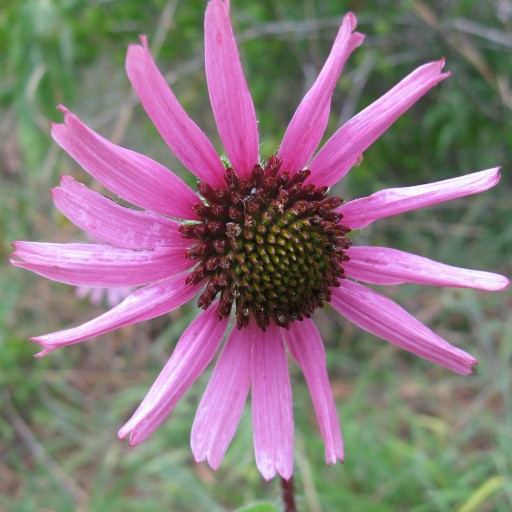
Known as the Tennessee Coneflower, this rare beauty is a living success story for conservationists. Once thought to be extinct and later one of the first plants protected by the Endangered Species Act, it thrives naturally only in the unique limestone "cedar glades" of Middle Tennessee. Unlike its common purple cousins, this wildflower holds its petals with a distinct upward reach, standing proud against the summer heat.
🔍 How to Identify
- 🌸 The Upward Petals: While most coneflowers have drooping petals that hang like a skirt, Echinacea tennesseensis is famous for its petals that curve slightly upward toward the sky.
- 🍩 The Dark Disc: The central "cone" is a deep copper or dark chocolate brown, packed with tiny florets that provide a landing pad for pollinators.
- 🌿 Narrow Foliage: The leaves are much narrower and more linear than the common Purple Coneflower, often covered in fine, stiff hairs that give them a rough texture.
🏡 In Your Garden
- 🪨 Limestone Lover: This plant is a "calciphile," meaning it craves alkaline soil. If your garden soil is too acidic, it may struggle; adding a bit of garden lime can help mimic its native rocky habitat.
- ☀️ Drought Warrior: Because it evolved in thin soil over solid rock, it is incredibly tough. Once established, it rarely needs supplemental watering and can handle intense humidity and baking sun with ease.
⚠️ Safety & Toxicity
- ✅ Pet & Human Safe: Like other species in the Echinacea genus, the Tennessee Coneflower is considered non-toxic to dogs, cats, and humans.
- 🦋 Pollinator Paradise: While safe for your pets, it is "toxic" to a quiet garden—it will attract a constant parade of bees, butterflies, and even goldfinches who love to snack on the dried seeds in autumn.
✨ Fun Fact
The Tennessee Coneflower was delisted from the Endangered Species List in 2011 after decades of intense protection. It is now widely available to home gardeners, meaning you can grow a piece of botanical history in your own backyard!

Detailed Care Instructions
To successfully grow Echinacea Tennesseensis, also known as Tennessee Coneflower, you should follow these guidelines:
- Choose the right location: Echinacea Tennesseensis thrives in full sun to partial shade. Select a location in your garden that receives at least six hours of direct sunlight daily.
- Prepare the soil: The soil should be well-draining and loamy. Remove any weeds or grass from the planting area and till the soil to a depth of 8-10 inches. Mix in organic matter, such as compost or well-rotted manure, to improve soil fertility and drainage.
- Sow the seeds: You can sow the seeds directly in the garden bed in spring or fall. Lightly press the seeds into the soil without covering them completely, as they require light to germinate. Space the seeds around 12-18 inches apart.
- Water appropriately: Keep the soil evenly moist during the germination period, which usually takes 10-20 days. After the plants have established, water them regularly, providing around 1 inch of water per week. Avoid overwatering, as it can lead to root rot.
- Mulch the area: Apply a layer of mulch, such as wood chips or straw, around the plants to help conserve moisture, suppress weed growth, and insulate the soil. Leave a small space around the stem to prevent rotting.
- Provide support: As the Echinacea Tennesseensis plants grow, they may require support to prevent them from falling over. You can use stakes or hoop-like supports to hold them upright.
- Deadhead spent flowers: Regularly remove faded or spent flowers to encourage continual blooming and prevent seed development. This practice also redirects the plant's energy into producing more blooms.
- Pests and diseases: Echinacea Tennesseensis is generally resistant to pests and diseases. However, keeping the area clean from debris and maintaining good air circulation can help prevent any potential issues.
- Divide the plant: Once every few years, divide the clumps of Echinacea Tennesseensis to rejuvenate the plant and promote growth. Dig up the clump and carefully separate it into smaller sections, making sure each division contains both roots and shoots. Replant the divisions at the same depth and distance as before.
Remember, Echinacea Tennesseensis is native to specific regions in Tennessee and prefers similar conditions. However, with proper care and attention, you can grow it successfully in other areas as well.

Place in a bright room that is sun drenched almost all day. Or directly in a south-facing window.

To water this plant, first ensure that the soil around the plant is dry to the touch before watering. This can be checked by sticking a finger into the soil about one inch deep. If the soil is dry, then water the plant deeply, making sure to saturate the soil around the roots. Be careful not to overwater, as too much water can cause root rot. It is also important to avoid getting water on the leaves, as this can lead to fungal diseases. Watering should be done in the morning or evening when the sun is not too strong to prevent evaporation.
To fertilize this plant, it is recommended to apply a balanced fertilizer, such as a 10-10-10 or 20-20-20 blend, during the early spring and midsummer months. Follow the instructions on the fertilizer packaging for the recommended amount and frequency of application based on the size and age of the plant. Avoid fertilizing too much or too late in the growing season, as this may promote excessive foliage growth at the expense of flower production. Additionally, it is recommended to water the plant well before and after fertilizing to prevent any burn or damage to the roots.
The recommended soil type for Echinacea Tennesseensis is a well-draining sandy loam with a pH of 6.5-7.5. It is important to avoid heavy, clay soils as they may retain too much moisture and lead to root rot. The soil should also be rich in organic matter to provide adequate nutrition for the plant. It is best to avoid using soil that has a high nitrogen content, as this may lead to excessive foliage growth at the expense of flower production. Additionally, it is important to avoid using soil that has been treated with herbicides or pesticides, as these may harm the plant.
To propagate this plant, one can collect the seeds from the flowers or divide the root system of an established plant. To propagate through seed, wait for the flowers to fade and the seed heads to dry out on the plant. Collect the seed heads and allow them to dry further in a paper bag. Once dry, carefully remove the seeds from the seed head and plant them in a well-draining soil mix. Water regularly and keep in a bright, but not direct, light until the seeds germinate. To propagate through division, carefully dig up an established plant and separate the root system into smaller sections, each containing at least one shoot and a portion of the root system. Replant the divided sections into separate pots or back into the garden and water regularly until established.








