Plant Overview
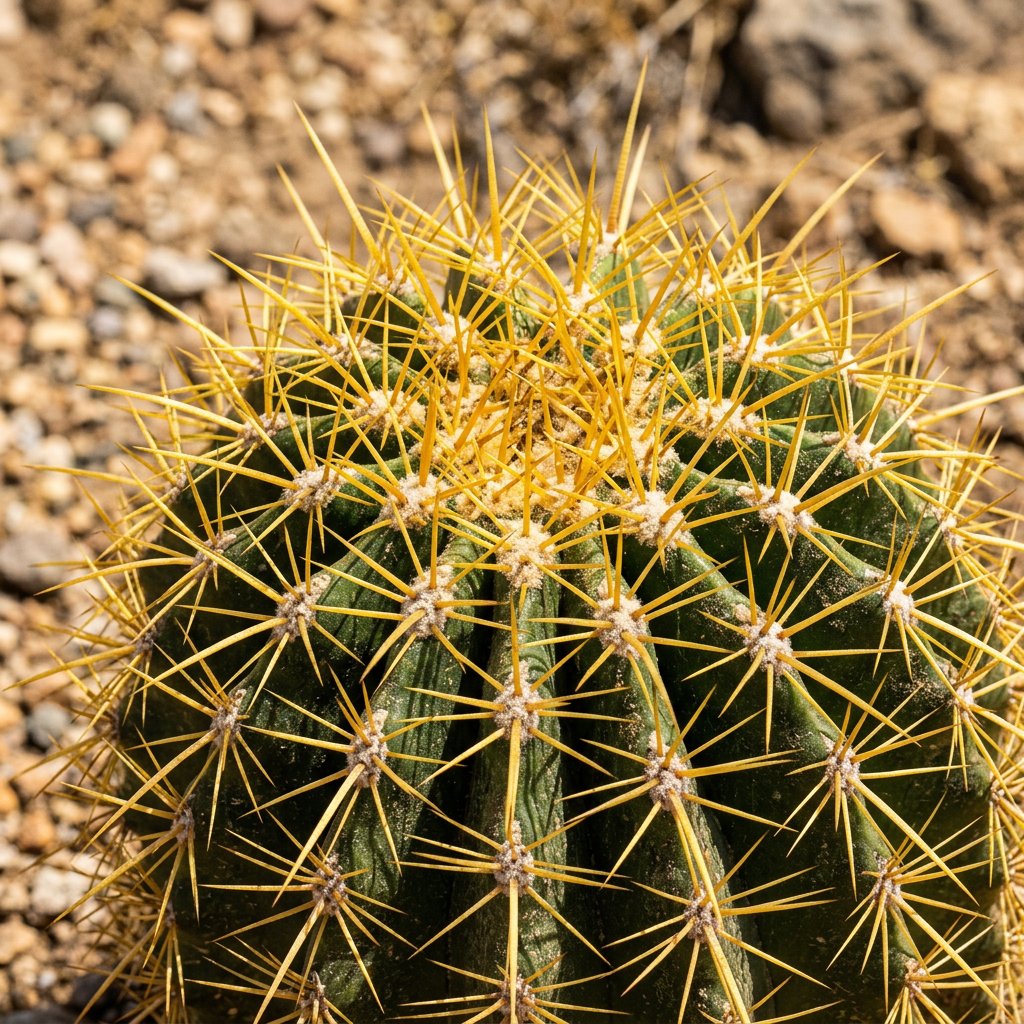
Known affectionately as the "Golden Barrel" or the cheeky "Mother-in-Law’s Cushion," this cactus is a masterpiece of geometric nature. Native to the volcanic slopes of central Mexico, it has become one of the most popular succulents worldwide due to its perfectly round shape and luminous glow. While it looks like a sturdy piece of desert furniture, it is actually a slow-growing marvel that can live for over 30 years.
🔍 How to Identify
- 🌵 Body Shape: It begins as a small, slightly flattened globe and grows into a massive, ribbed sphere. Very old specimens can eventually stretch into an oblong, barrel-like cylinder.
- ✨ The Spines: The plant is armored with stiff, needle-like spines that are a brilliant translucent yellow or gold. These spines are arranged in clusters along distinct vertical ribs.
- 🌼 The Crown: Mature plants (usually over 20 years old) develop a fuzzy, wool-like "cap" at the top where small, bell-shaped yellow flowers emerge during the peak of summer.
🏡 In Your Garden
- ☀️ Light & Color: The "Golden" in its name isn't just a label—it's a requirement. To keep those spines looking like polished brass, it needs intense, direct sunlight. In low light, the plant will stretch (etiolate) and lose its iconic round shape.
- 💧 The Drought Strategy: This cactus is a champion of water storage. It hates "wet feet" because its roots are prone to rot in heavy soil. Use a gritty, porous mix that mimics the rocky slopes of its Mexican homeland to ensure any excess water escapes immediately.
- 🧘 Stability: Unlike many houseplants, the Golden Barrel hates being moved once it reaches a certain size. It naturally orients itself toward the sun; turning it suddenly can cause "sunscald" on the sensitive skin that was previously in the shade.
⚠️ Safety & Toxicity
- 🚫 Physical Hazard: While the plant is non-toxic and contains no poisonous sap, it is physically formidable. The spines are incredibly sharp, stiff, and capable of piercing thick gardening gloves or skin.
- 🐾 Pets & Children: Keep this plant out of reach of curious toddlers and pets. A fall into a Golden Barrel is a serious medical event, as the spines can break off under the skin and cause deep irritation or infection.
✨ Fun Fact
Despite being one of the most common cacti in nurseries and living rooms around the world, the Golden Barrel is "Endangered" in the wild. Its native habitat was nearly wiped out in the 1990s due to the construction of the Zimapán Dam in Mexico!

Detailed Care Instructions
To grow an Echinocactus Grusonii plant, also known as the Golden Barrel Cactus, follow these steps:
- Choose the right location: Place your cactus in a spot that receives plenty of full sun exposure. This plant requires at least 6-8 hours of direct sunlight per day.
- Planting medium: Select a well-draining soil mix specifically designed for cacti and succulents. You can also create your own mix by combining equal parts of potting soil, sand, and perlite.
- Container selection: Choose a container with drainage holes to avoid waterlogged soil. The pot should be slightly larger than the root ball of the cactus.
- Planting: Carefully remove the cactus from its nursery container and gently loosen the roots. Place the cactus in the new pot, ensuring that the roots are spread evenly without bending or crowding. Fill the remaining space with the prepared soil mix, leaving a small gap at the top to prevent overflow during watering.
- Watering: Echinocactus Grusonii is a drought-tolerant plant, so water sparingly. Allow the soil to dry out completely between waterings, and avoid overwatering as it may cause root rot. During summer, provide slightly more water, but still allow the soil to dry out between each watering episode.
- Temperature and humidity: These cacti thrive in temperatures between 70-90°F (21-32°C). They can tolerate a wide range of humidity levels, but it's best to keep humidity on the lower side to prevent any fungal or bacterial diseases.
- Fertilization: Fertilize the cactus sparingly during the growing season from spring to late summer. A slow-release cactus fertilizer or a diluted liquid cactus fertilizer can be applied following the manufacturer's instructions.
- Repotting: Echinocactus Grusonii is a slow-growing cactus and may not require frequent repotting. However, if the plant outgrows its current container, you can repot it into a slightly larger pot using the same soil mix.
- Pruning: This cactus typically does not require pruning. However, you can remove any dead or damaged branches using clean and sterilized pruning tools.
- Pests and diseases: Monitor your cactus for common pests like mealybugs and scale insects. If you spot any, use an appropriate insecticide or remove them manually with a cotton swab dipped in alcohol. Additionally, watch out for signs of root rot, which can occur due to overwatering.
Remember, Echinocactus Grusonii is native to arid regions, so it thrives in dry conditions. By providing the right amount of sunlight, well-draining soil, and limited watering, your cactus should grow and thrive.

Place in a bright room that is sun drenched almost all day. Or directly in a south-facing window.
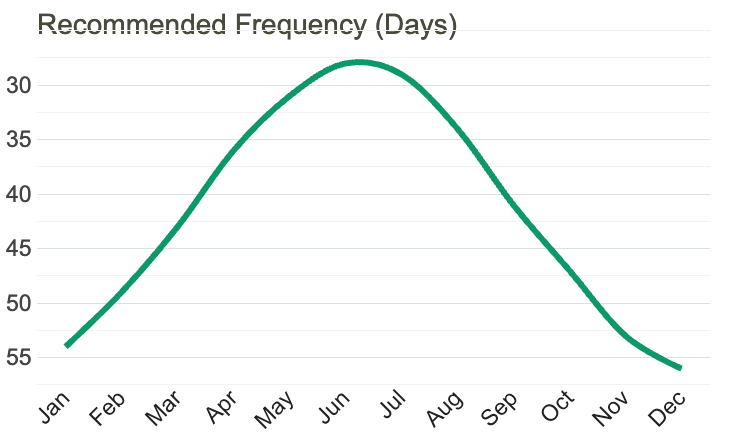
To water this type of plant, you should begin by examining the soil to ensure that it has dried out completely. Once you have established that the soil is dry, you should use a watering can or a hose to water the soil directly around the base of the plant. Be sure not to water the foliage or the stem of the plant, as this can lead to rot or disease. Additionally, it is best to water this plant deeply but infrequently, waiting until the soil has completely dried out before watering again. Finally, be sure to provide good drainage for the plant, as excess water can quickly lead to root rot.
To fertilize this plant, mix a balanced fertilizer with water according to the package instructions. Apply the fertilizer to the soil around the plant, taking care not to get any on the plant itself. Water the plant well after fertilizing. Repeat every two to four weeks during the growing season, reducing frequency in fall and winter. Avoid over-fertilizing, as this can damage the plant.
When selecting soil for this particular plant, it is important to choose a well-draining soil mix. This plant prefers sandy or gravelly soil that drains easily, as it does not like to be kept wet. A soil mix that is rich in organic matter is not ideal, as it can potentially hold too much moisture. Additionally, it is recommended to use a cactus or succulent-specific soil mix that typically includes sand, perlite, and/or pumice to ensure the proper drainage.
The propagation of this particular plant can be achieved by removing offsets from the base of the mother plant. These offsets, also known as pups, typically grow around the edges of the main plant. Using a clean and sharp knife, carefully detach the offset from the parent plant, making sure to sever any connecting roots.
Once the offset has been removed, allow it to dry for a few days in a warm, shaded location to allow the cut to heal over and prevent any potential rot. Once the wound has scarred over, plant the offset in well-draining soil, preferably a mixture of sand, perlite, and potting soil. Water the plant thoroughly, but allow the soil to dry out completely between waterings to prevent overwatering and root rot.
It is important to note that propagation success can be greatly increased when performed during the plant's active growing season, typically in the spring or summer. Additionally, it is recommended to place the young plant in a bright, sunny spot to encourage healthy growth.
Common pests of the golden barrel cactus include Scale insect, mealybugs, spider mites, thrips. Make a habit of checking your golden barrel cactus frequently for pests so that any infestations can be caught and managed early.








