Plant Overview
Known as the Leding's Hedgehog Cactus, this rare beauty is a true mountaineer of the plant world. Native to the "sky islands" of Arizona, it is a collector's favorite due to its striking contrast between shimmering golden spines and electric magenta blooms. It was named in honor of Herman Leding, a dedicated park ranger who first helped identify this high-altitude treasure.
🔍 How to Identify
- 🌵 The Stems: It grows in cylindrical columns that can be solitary or form small, huddling clusters. The body has a distinct bluish-green hue tucked behind its armor.
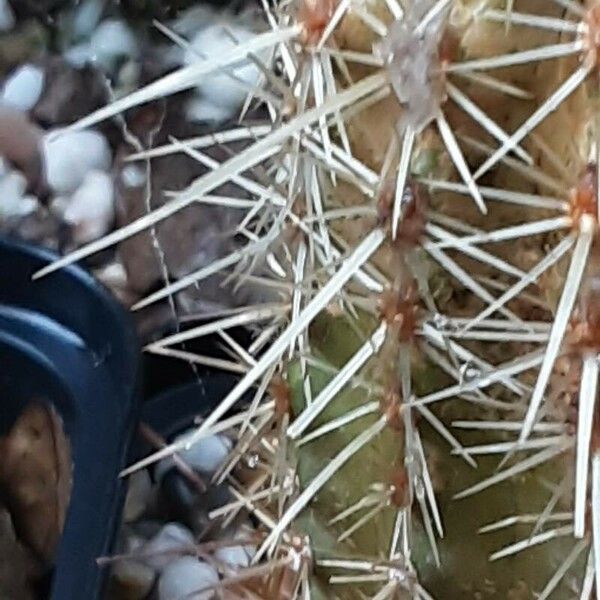
- ☀️ Spine Armor: The plant is covered in straw-colored to bright yellow spines. These spines are often slightly curved and create a "glowing" effect when caught in the afternoon sunlight.
- 🌸 The Bloom: In late spring, it produces large, funnel-shaped flowers. The petals are a deep, vibrant orchid-pink with a characteristic green stigma at the very center.
🏡 In Your Garden
- ⛰️ High-Altitude Resilience: Because it originates from mountain woodlands rather than low deserts, this cactus is surprisingly frost-hardy. It can handle colder winters than many of its desert cousins, provided it stays dry.
- 💧 Drainage is Destiny: In a pot or garden, it demands "hungry" soil—lots of grit, gravel, and perlite. It hates "wet feet," so if the soil stays damp for more than a day or two, the roots may fail.
⚠️ Safety & Toxicity
- 🌵 Physical Risk: The spines are the primary concern. They are stiff and sharp, capable of easily puncturing skin or light clothing.
- 🐾 Pet & Child Safety: While the plant is not considered chemically toxic or poisonous if nibbled, the mechanical danger of the needles makes it a hazard. Keep it on a high shelf or behind a decorative barrier to protect curious paws and hands.
✨ Fun Fact
This cactus is a "Sky Island" specialist! It is found naturally in only a few specific mountain ranges in Arizona (like the Pinaleño Mountains), surviving in a narrow elevation band between 4,000 and 6,000 feet.

Detailed Care Instructions








