Plant Overview
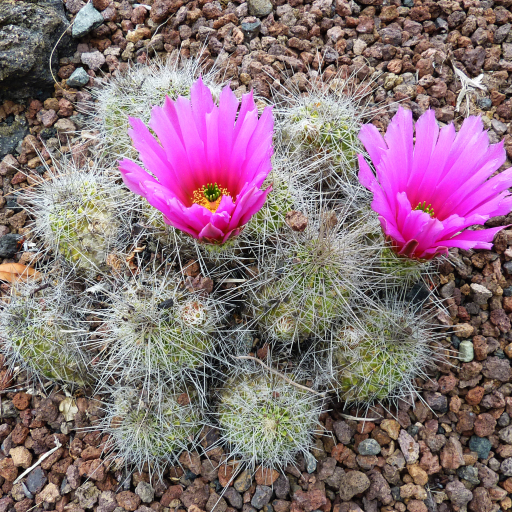
Known as the Strawberry Hedgehog Cactus, this desert gem is famous for producing some of the most vibrant, electric-pink flowers in the cactus world. Often found huddling in massive, prickly mounds across the Chihuahuan Desert, it looks like a resting porcupine until it bursts into bloom in late spring. Its Latin name, stramineus, refers to the distinctive straw-like color of its long, protective spines.
🔍 How to Identify
- 🌵 Mounding Habit: It grows in dense, multi-stemmed clumps that can reach over 3 feet wide, often containing 50 to 100 individual "heads" or stems.
- 🌾 Straw Spines: The stems are heavily guarded by long, thin, papery spines that transition from white to a pale straw-yellow as they age, almost hiding the green body of the plant.
- 🌸 Neon Blooms: Massive, funnel-shaped flowers appear near the top of the stems, showcasing deep magenta or purple petals with striking lime-green centers.
🏡 In Your Garden
- ☀️ Sun Worshiper: To see those legendary flowers, this cactus needs maximum sunlight. It actually uses its dense "straw" spines as a built-in parasol to shade its own skin from intense desert UV rays.
- 🪨 Drainage is Vital: In its natural habitat, it clings to rocky limestone slopes. In a home garden, it has zero tolerance for "wet feet"; if the soil stays damp for more than a day or two, the root system is likely to fail.
- ❄️ Cold Toughness: Unlike many tropical succulents, the Strawberry Hedgehog is quite hardy and can survive significant frosts, provided the soil remains completely dry during the winter months.
⚠️ Safety & Toxicity
- 🧤 Mechanical Hazard: This plant is not chemically toxic, but it is heavily armed. The spines are incredibly sharp and can easily puncture skin or clothing.
- 🐾 Pets & Kids: While non-toxic if ingested, the spines pose a major physical risk to curious noses, paws, and hands. It is best planted in low-traffic areas or "barrier" gardens.
✨ Fun Fact
The "Strawberry" in its name isn't just for the flower color—the spiny green fruits eventually turn a deep reddish-purple and lose their prickles. Inside, the white pulp is considered a desert delicacy and is said to taste remarkably like a vine-ripened strawberry.

Detailed Care Instructions

Place in a bright room that is sun drenched almost all day. Or directly in a south-facing window.

When the top few inches of soil dry out, water your plants. If the top few inches of soil are still moist, do not water your plant. Wait a few days, then poke your finger into the soil to see if anything has changed. Overwatering poses a disease risk, such as the development of fungal diseases in the roots. These plants have adaptations in there leaves that allow them to survive in low water supply.
These plants can thrive without taking help from any fertilizer. However, if the medium of growth is something other than soil for instance sand then you may need to add little fertilizer. The best way to know if your plants need fertilizer or not is to check for yellowing of leaves. If the leaves start to turn yellow it’s fertilizing time.
You may use Cactus Fertilizer for your Strawberry Cactus
Common pests of the strawberry cactus include Scale insect, mealybugs, spider mites. Make a habit of checking your strawberry cactus frequently for pests so that any infestations can be caught and managed early.








