Plant Overview
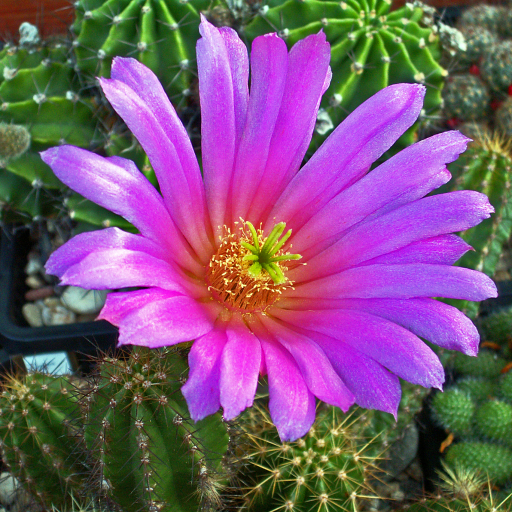
Known as the Green Pitaya or Viereck’s Hedgehog Cactus, this Mexican native is a favorite among succulent collectors for its "sprawl and crawl" growth habit. Unlike many upright cacti that reach for the sky, this species prefers to stay low to the ground, forming dense, emerald-green clusters that hug the earth. When it blooms, the transformation is theatrical, producing neon-magenta flowers that look almost too vibrant to be natural.
🔍 How to Identify
- 🌵 Stem Structure: The stems are soft-textured, cylindrical, and dark green, usually featuring 6 to 9 deep ribs that give them a star-shaped cross-section.
- 🌸 Neon Blooms: It produces massive, funnel-shaped flowers in shades of electric purple or magenta. Look for the distinct green "stigma" (the center part of the flower) which is a signature of the Echinocereus genus.
- 🦴 Spine Character: Depending on the variety, the spines can be short and bristly or almost entirely absent. The popular subspecies morricalii is famous for being nearly spineless and smooth to the touch.
🏡 In Your Garden
- 🪨 Rocky Foundations: This cactus evolved in the limestone crevices of Mexican mountain ranges. It thrives in gritty, mineral-heavy soil and has a low tolerance for organic potting mixes that hold too much moisture.
- 🧺 The Trailing Effect: Because the stems naturally sprawl and offset from the base, this plant is a perfect candidate for hanging baskets or the "spiller" role in a xeriscape container, where the stems can drape over the edges.
- ☀️ Light Nuance: While it loves bright light to produce those famous flowers, it can actually get "sunburned" in extreme, direct afternoon heat. It prefers the dappled light of its native scrubland.
⚠️ Safety & Toxicity
- 🩹 Physical Hazard: While not chemically toxic, the spiny varieties can cause painful punctures and skin irritation. Handle with thick gloves or use a folded newspaper "tongs" method for repotting.
- 🐾 Pet Safety: Echinocereus viereckii is generally considered non-toxic to cats and dogs. However, the spines still pose a mechanical risk to curious noses and paws.
✨ Fun Fact
One subspecies of this plant, Echinocereus viereckii ssp. morricalii, is so smooth and spineless that it is often called the "Spineless Hedgehog." It looks more like a green cucumber than a cactus until its giant, silky flowers erupt in late spring!

Detailed Care Instructions
To successfully grow Echinocereus Viereckii, also known as Viereck's hedgehog cactus, you can follow these steps:
- Obtain a healthy plant: Purchase a young, well-established Echinocereus Viereckii from a reputable nursery or specialized succulent supplier.
- Choose the right container: Select a pot with good drainage holes, as Echinocereus Viereckii prefers dry soil conditions. Ensure the container is at least 4-6 inches deep to allow for root development.
- Soil requirements: Use a well-draining soil mix suitable for cacti and succulents, or create your own by combining regular potting soil with perlite, sand, or pumice for increased drainage.
- Planting process: Carefully remove the plant from its nursery pot and place it in the new container. Ensure the root system is well-distributed. Backfill the container with the soil mix, pressing it gently around the plant's roots to provide stability.
- Light and temperature: Place the Echinocereus Viereckii plant in a location with bright, indirect sunlight. It thrives in full sun but can also tolerate partial shade. Maintaining a temperature range between 65-80°F (18-27°C) is ideal.
- Watering routine: Allow the soil to dry out completely between waterings. Echinocereus Viereckii is drought-tolerant and prefers dryer conditions. Water sparingly, but thoroughly, ensuring excess water drains out of the pot. Avoid overwatering, as it can lead to root rot.
- Fertilization: During the active growing season (spring and summer), you can provide a balanced, slow-release fertilizer specifically formulated for cacti and succulents. Follow the package instructions for application rates. Avoid fertilizing during the dormant period (fall and winter).
- Dormancy period: As temperatures drop during the colder months, Echinocereus Viereckii naturally enters a period of dormancy. Reduce watering during this time but avoid allowing the plant to completely dry out.
- Pests and diseases: Regularly inspect your plant for signs of pests, such as mealybugs or scale insects. If identified, treat them promptly with appropriate insecticides or natural remedies. Proper care and environmental conditions can usually prevent most diseases.
- Propagation: Echinocereus Viereckii can be propagated through seeds or by taking stem or offset cuttings. However, propagation can be challenging and time-consuming. It is recommended for experienced gardeners or enthusiasts.
Remember to research and familiarize yourself with the specific requirements for Echinocereus Viereckii to ensure the best care and growth conditions for your plant.

Place in a bright room that is sun drenched almost all day. Or directly in a south-facing window.

To water this plant, first determine the type of soil it is planted in. It is important to use well-draining soil to prevent root rot. When watering, thoroughly soak the soil with room temperature water until water starts to drain out of the bottom. Wait until the soil dries out before watering again, as overwatering can harm the plant. The frequency of watering will vary depending on the temperature, humidity, and amount of sunlight the plant is receiving. In general, it is better to underwater than overwater this plant.
To fertilize this plant, mix a balanced fertilizer with equal parts nitrogen, phosphorus, and potassium. Apply the fertilizer once a month during the growing season, which is typically from spring to fall. Water the plant thoroughly before applying the fertilizer to prevent root burn, and make sure to fertilize only when the soil is moist. Avoid fertilizing during the winter months when the plant is dormant.
The ideal soil for this plant is a well-draining gravelly mix with a pH between 6.5 and 7.5. A combination of coarse sand, pumice, and perlite can also be added to increase drainage. Additionally, the soil should be slightly alkaline and free of organic materials that can retain moisture and lead to root rot. It is best to avoid using heavy, nutrient-rich soils and instead opt for a lighter mix that promotes healthy root growth.
To propagate this particular plant, you will first need to identify a healthy and mature specimen. Once you have located a suitable plant, carefully remove a section of stem (at least 4-6 inches in length) using a clean and sharp pair of scissors or garden shears.
Next, you will need to allow the cutting to dry out for several days in a shaded and ventilated area. This will help to prevent excess moisture from causing rot and fungal growth in the freshly cut stem. Once the cut end of the stem has calloused over and appears dry and hardened, you can prepare it for planting.
To plant the cutting, simply place the dry end into a container filled with well-draining soil mix. You may also choose to dip the cut end of the stem in rooting hormone powder before planting, which can help encourage faster root development.
Water the newly planted cutting sparingly and avoid overwatering, as this can lead to root rot and other issues. Over time, the cutting should begin to sprout new roots and eventually grow into a healthy and mature Echinocereus Viereckii plant.








